
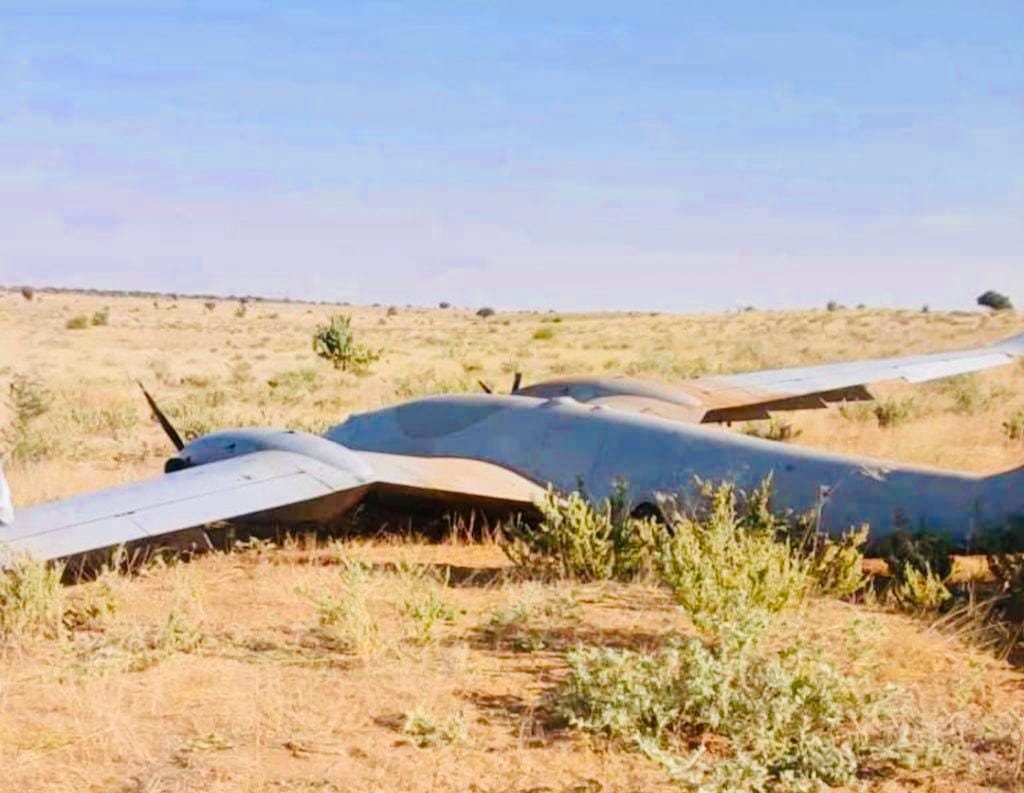
A sharp increase in drone warfare across Sudan since late May has coincided with rising civilian casualties, damage to commercial infrastructure, disruptions to humanitarian access, and growing concern among rights organizations regarding the conduct of the conflict.
Incidents documented by Sudan War Monitor across North Kordofan, South Kordofan, West Kordofan, Darfur, and Khartoum indicate that both the Sudanese Armed Forces (SAF) and the Rapid Support Forces (RSF), alongside allied forces, have increasingly relied on drones to strike targets far beyond active frontlines. Civilian markets, vehicles, residential neighborhoods, fuel facilities, bridges, and displacement sites have all been affected during the reporting period.
The geographical spread of the incidents demonstrates the growing ability of the warring parties to project force beyond traditional battle zones and into areas populated by civilians.
While the intensity and nature of attacks varied from one region to another, Kordofan witnessed some of the deadliest drone attacks during the reporting period, with strikes repeatedly hitting vehicles, markets, and populated areas.
In Darfur, military operations increasingly affected strategic infrastructure and economic activities such as bridges, and fuel depots.
In the capital Khartoum region, continued drone attacks highlighted the ability of armed actors to strike the capital despite major territorial shifts on the ground. Together, these developments underscore the expanding role of drones in shaping both the military and humanitarian dimensions of the conflict.
Khartoum Drone Strikes and Claims of Military Leaders Targeted
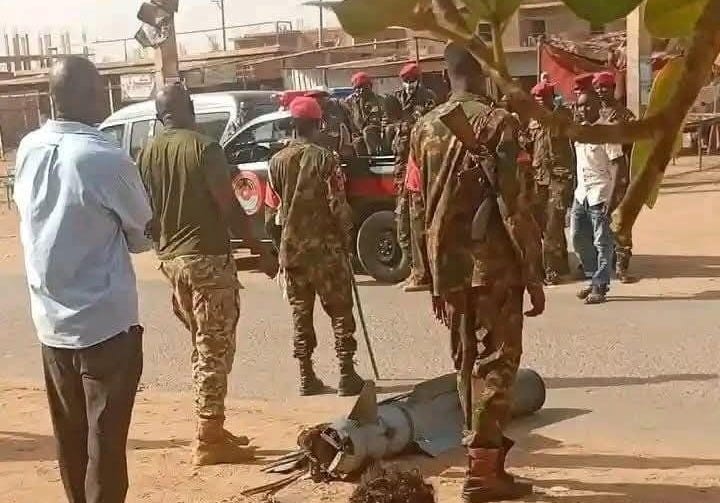
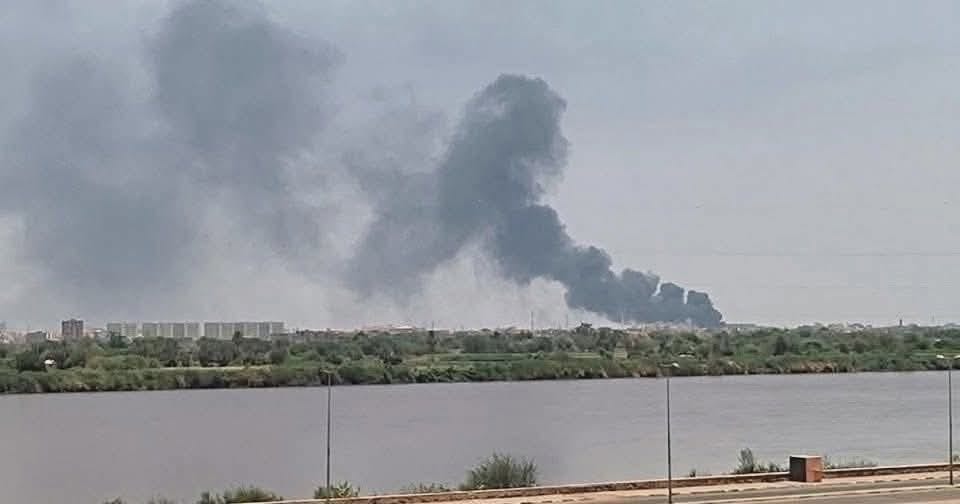
On 9 June, RSF drones targeted several locations in Khartoum State, including Karari and Al-Droushab. Sudan War Monitor sources reported missile strikes near Karari and Bahri.
Media platforms circulated claims that senior military and political figures were killed after drones targeted the medical complex at Karari University during what was described as a closed meeting. Sudanese military-affiliated media stated that air defenses successfully intercepted drones over Al-Droushab and reported no civilian casualties.
RSF-affiliated sources claimed that attacks damaged radar systems, command facilities, and electronic jamming equipment in Karari, Al-Murkhiyat, and Wadi Seidna, all in Omdurman.
Neither the Sudanese Armed Forces (SAF) nor the Rapid Support Forces (RSF) have historically been quick to acknowledge military losses, damage to strategic assets, or the deaths of senior commanders during the conflict.
Both parties have generally sought to project strength and maintain morale among their fighters and supporters, often resulting in competing narratives regarding battlefield developments. Consequently, claims relating to the destruction of military installations, the deaths of senior officials, or the success of aerial attacks frequently remain difficult to independently verify in the immediate aftermath of an incident.
The latest attacks also underscore the RSF’s continued ability to strike targets in Khartoum despite having lost territorial control of the capital region and central Sudan. This is not the first time the RSF has carried out drone attacks against Khartoum and Omdurman, having repeatedly targeted military and civilian sites in recent months.
The continued reach of RSF drones also presents a challenge to the SAF-led government’s efforts to portray the capital as “safe area” following its military gains in early 2025. Since then, one of the government’s primary objectives has been to encourage displaced residents to return to Khartoum and resume normal life.
However, recurring drone strikes on strategic and civilian locations risk undermining public confidence in security conditions and complicating efforts to promote large-scale civilian returns.
Army Drones Destroy Ardamata Bridge in El Geneina
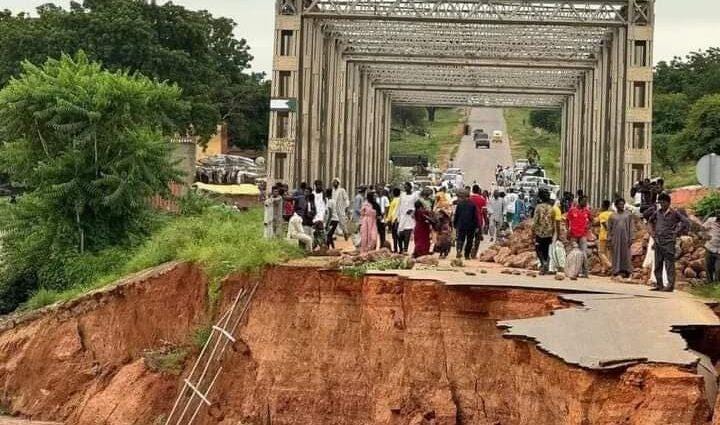
On 8 June, SAF drones destroyed the Ardamata bridge in El Geneina, West Darfur. Local sources said two missiles directly struck the bridge while additional strikes targeted RSF positions in the Al-Naseem neighborhood.
Unconfirmed reports suggested that locations associated with Tassis parallel government’s Prime Minister Mohamed Hassan Al-Taayshi may also have been targeted.
Residents expressed concern because the bridge provides one of the most important connections between Ardamata and El Geneina towns, particularly during seasonal flooding along Wadi Kaja.
The above video footage posted on social media showed the scale of the damage to the bridge, which links Ardamata with El Geneina. The crossing is critical for vehicles and pedestrians moving between the two areas, particularly during the rainy season, when the flooding of Wadi Kaja and deteriorating roads make passage difficult — raising concern among residents with the rains approaching.
Earlier on 5 June, significant economic disruption was also reported in North Darfur where a major fire swept through Mertal market in Tawila locality, destroying more than 100 shops and commercial inventories valued at millions of Sudanese pounds.
Local sources said firefighting efforts were hampered by limited water access and the delayed arrival of volunteers. The cause of the fire remained unknown. Video footage (above) circulating on social media showed flames engulfing large sections of the market as traders and residents attempted to contain the blaze.
Simultaneously, residents in Kutum reported RSF operations targeting privately operated Starlink internet networks in the Al-Salama, Dababin, and Al-Qasr neighborhoods.
Several homeowners alleged that security personnel confiscated equipment, while others accused some members of theft and harassment during searches. Traders also complained of increased taxation and multiple collections occurring on the same day without documentation or receipts, forcing some businesses to close.
Dozens of Civilians Killed in Kordofan
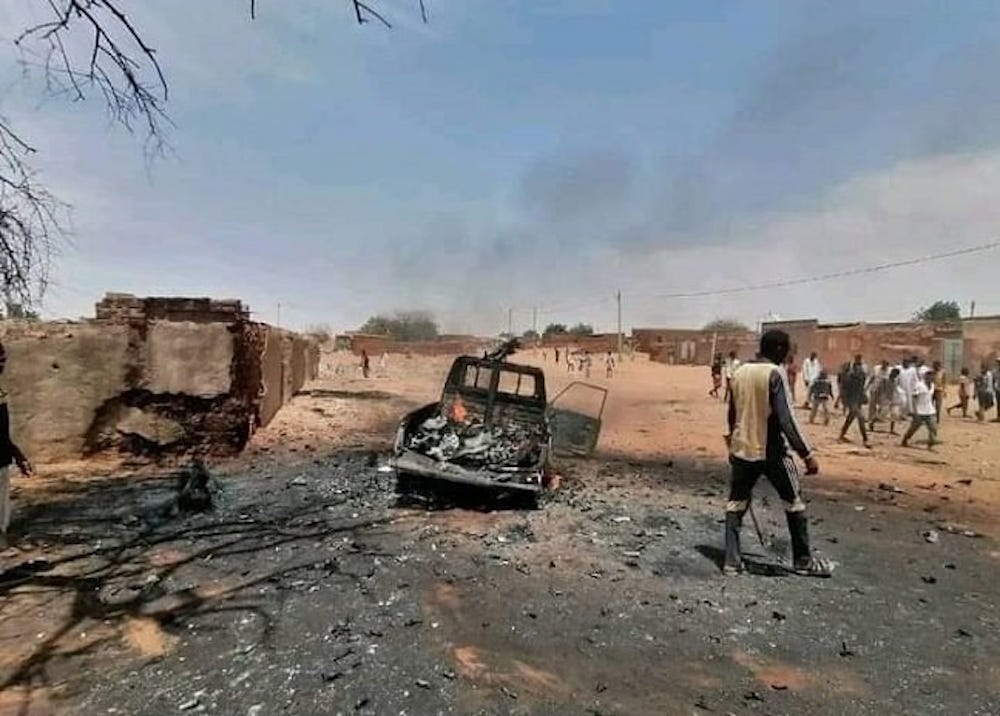
The earliest major incident documented during this period occurred on 28 May in North Kordofan’s Umm Badr locality. According to multiple sources, two civilian commercial vehicles travelling from Umm Badr toward Armal were struck by drones and completely destroyed. The area is controlled by the RSF.
All 18 passengers aboard were killed, including merchants, young men, and two children under the age of 17. The organization said the attack formed part of a broader escalation in drone activity that had expanded across Hamrat El Sheikh, Umm Badr, and Umm Ajeija since 25 May. The group noted that repeated attacks on civilian transportation routes had disrupted trade, increased the cost of basic commodities, and made movement between communities increasingly dangerous.
“The Emergency Lawyers Group condemns this systematic and repeated pattern of direct attacks on civilian vehicles and populated markets located within densely inhabited areas. The group considers such attacks a serious violation of the principles of distinction, proportionality, and civilian protection under international humanitarian law, and states that they may amount to war crimes,” said the group in a statement reviewed by Sudan War Monitor.
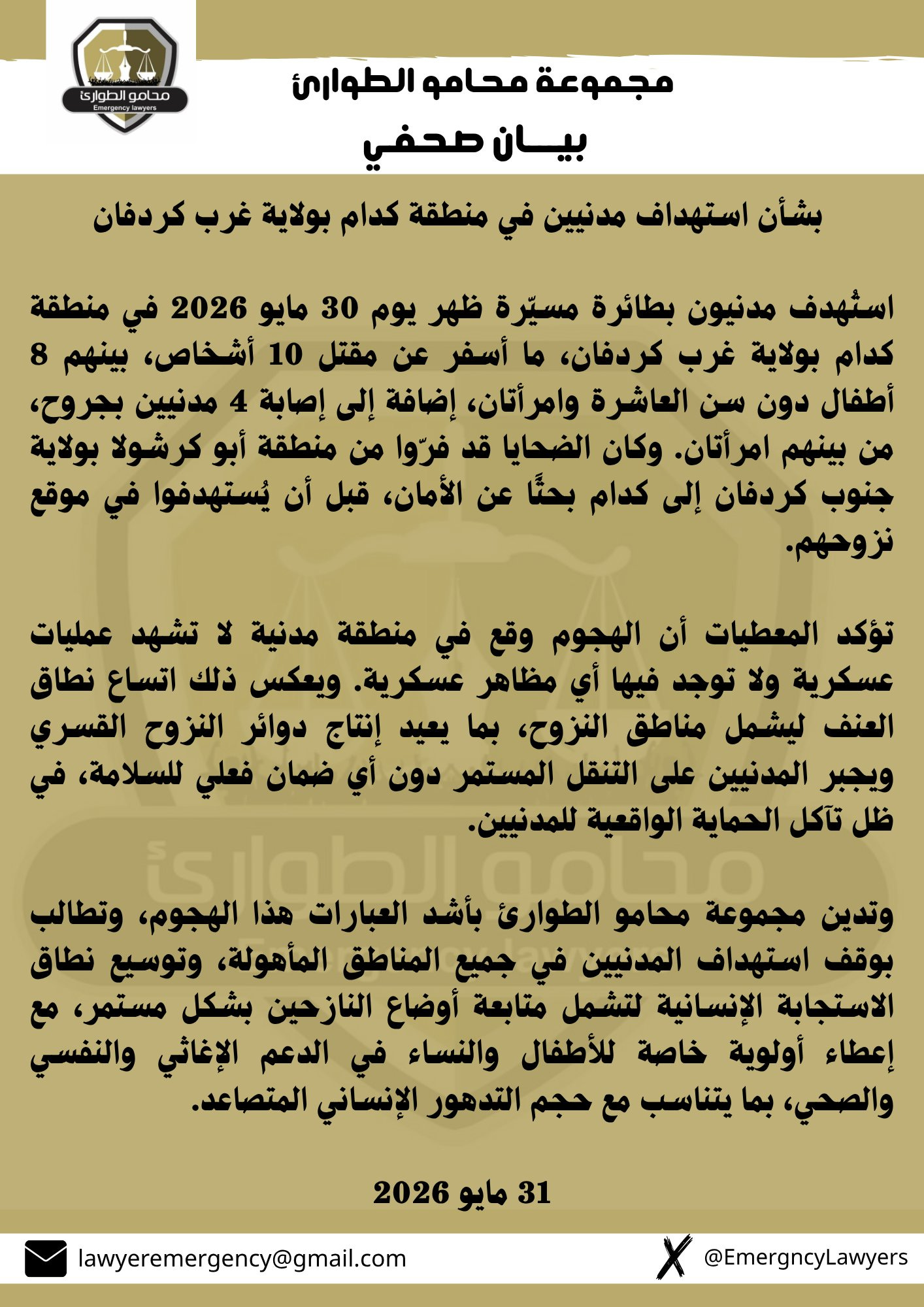
Two days later, on 30 May, another deadly drone strike hit Kedam, West Kordofan. The attack targeted displaced civilians who had previously fled Abu Karshola in South Kordofan seeking safety. Ten people were killed, including eight children under the age of ten and two women. Four additional civilians were injured, among them two women.
According to witnesses and local rights groups, the strike occurred in a civilian area where there were no military positions or active combat operations. The Emergency Lawyers Group said in a statement that the attack demonstrated how violence was increasingly extending into displacement locations, forcing civilians to undertake repeated movements in search of safety while facing diminishing protection.
On 2 June, RSF drones struck Um Rawaba in North Kordofan, killing three civilians identified as engineer Jaafar Hassan, engineer Bareir Al-Dasouqi, and police assistant Hassan Musa Hassoun, an employee of the Civil Registry Department. Residents participating in funeral ceremonies for the victims called on the international community to strengthen protection mechanisms for civilians living in conflict-affected regions.
On 3 June gunmen riding motorcycles and wearing RSF uniforms opened fire on a commercial lorry travelling between Dilling and Kortala along the Dilling–Tukma–Habila road. The attack killed Karamallah Ismail Ahmed and Khamis Abdullah Breima Toto and injured several other passengers.
According to eyewitness accounts, the attackers ambushed the vehicle near Jabal Al-Rutayrit and fired heavily into the truck, which was transporting both civilians and commercial goods. The driver reportedly refused to stop and continued toward Habila, where the injured received treatment. Later that same day, drones linked to the RSF shelled Dilling town, injuring at least four civilians, including trader identified as Imad Ibrahim.
On 4 June, witnesses and local monitors reported that a SAF drone strike targeted the weekly market in South Kordofan at approximately 1:00 pm, when traders and shoppers from surrounding villages had gathered for the market day. Civil society groups reported dozens of casualties, although precise figures remain unavailable.
Organizations monitoring the incident accused the military of targeting a civilian location and appealed to the United Nations Security Council to strengthen protection measures. On the same day, in Shaluat village in West Kordofan’s Al-Khuwai area, Dar Hamar Emergency Room reported that armed men riding motorcycles and allegedly linked to the RSF killed civilian Duwalbeit Abdullah Bashir after attempting to rob him at gunpoint.
On 6 June, North Kordofan experienced one of the most consequential days of drone warfare during the reporting period. RSF drones struck the Al-Mithaq, or “Charter,” fuel station in El Obeid, triggering a major fire that engulfed the facility and destroyed multiple vehicles.
Sudan War Monitor sources reported nine deaths and fifteen injuries, while the Darfur Network for Human Rights (DNHR) documented at least one confirmed fatality and several wounded.
The El Gezira Observatory for Human Rights stated that the drone remained over the city for a prolonged period before conducting the strike. The observatory described the targeting of civilian service infrastructure as a dangerous escalation in a city already subjected to repeated drone attacks.
The same day also witnessed intensified attacks in Hamrat El Sheikh locality. According to DNHR and the Emergency Lawyers Group, drones struck villages near Abu Zaima, killing at least four civilians and injuring several others. Later, a civilian vehicle was hit, causing additional casualties. The following morning, on 7 June, a drone directly struck Abu Zaima market. The Emergency Lawyers Group reported at least eleven civilian deaths and dozens of injuries.
The victims included Abdullah Ahmed Masoud, Mustafa Ahmed Masoud, Mohamed Ali Mohamed Jadallah, Khairallah Gadal, Balla Koko, Musa Abdullah Ballal, Ridwan Mohamed Khalifa, Barai Mohamed Al-Ahmar, Abdulwahab Garan, Abdullah Al-Sheikh, and Hassan Zakaria. The organization stated that the attack occurred less than twenty-four hours after earlier strikes in the same area and described the incidents as part of a continuing pattern of attacks on civilian objects.
Also on 7 June, local sources reported the killing of Mohamed Al-Habib Adam in Karnaka village in West Kordofan’s Al-Khuwai locality. Residents alleged that armed men associated with the RSF routinely established roadblocks, robbed travellers, and used lethal force against those who resisted.
Meanwhile, another major incident occurred near Jabal Salamat along the Rahad–Kortala road. Local reports indicated that suspected RSF gunmen attempted to stop a civilian vehicle for robbery. An exchange of fire reportedly followed between the attackers and armed soldiers travelling in the vehicle, resulting in the deaths of eight civilians, including a woman and a child.
Further civilian losses were documented in Adeid Raha, Sudri locality, on the evening of 7 June. According to the Emergency Lawyers Group, two civilian vehicles carrying patients travelling from Umm Badr toward Northern State for medical treatment were struck by a drone. Three civilians were killed and another injured. The organization stated that preliminary investigations found no military use of the vehicles and warned that attacks on civilians seeking healthcare were becoming increasingly common as medical facilities across conflict zones deteriorated.
On 8 June, military sources in Kadugli accused the rebel coalition of destroying the Hajar Al-Deleib bridge linking Kadugli and Dilling. The bridge serves as a critical transportation route for humanitarian aid, medicine, food supplies, and commercial traffic.
Rebel sources denied responsibility and instead accused forces linked to the Islamic Movement of destroying the bridge to hinder coalition advances toward Kadugli. Regardless of responsibility, local officials warned that the bridge’s destruction could significantly affect humanitarian access during the upcoming rainy season.
By 10 and 11 June, drone attacks intensified further across North Kordofan. On 10 June, RSF drones reportedly struck a vehicle in Al-Awamra village near Um Rawaba, killing two civilians. The previous day, SAF drones had struck Adeid Raha, killing Abdulmahmoud Issa, Bakri Balla Hussein, Musa Ali Jarjir, and Balla Ballal Ajil. The Emergency Lawyers Group condemned the repeated strikes on civilian areas and called for independent investigations and accountability mechanisms.
On 10 June, RSF drones struck mourners near Dalil cemetery attending the funeral of Al-Nour Ahmed Issa, killing Ahmed Issa, Mutasim Ahmed Issa, Abbas Khamis, Kowa Hassan Kowa, and Mohamed Abbas. Another drone attack on the El Obeid–Rahad road killed merchant Al-Amin Musa and injured two others.
On 11 June, drones targeted residential districts near the airport, Al-Muwazzafin neighborhood, and areas surrounding the Fifth Infantry Division headquarters. Medical sources reported at least eleven civilian deaths, including pregnant woman Ikhlas Al-Tijani Fadil and nine-year-old Mutaman Al-Tahir Al-Daw.
Other casualties included Ismail Safi Al-Din Mohamed, Jihad Babikir Khojali, Samir Ahmed Yousif Adam, Sadiq Ahmed Adam Safi Al-Din, Mohamed Omar Al-Jamri, Mawadda Al-Tijani Fadil, Suhail Hassan Duwalbeit, Saif Al-Din Hassan Duwalbeit, Al-Sadiq Hassan Al-Awad, and Mohamed Hassan Obeido.
Sudan War Monitor is an independent publication covering Sudan’s civil war through OSINT, reporting, Arabic-language sources, and political-military analysis. It publishes maps, verified videos, news, and investigative reporting.
Drones, like never before, are being used to deliberately target civilians rather than against military hardware and infrastructure. This is clearly a war crime and which the sponsors of this civil war must take full responsibility for. The world must do everything to end this war, including several of the Gulf States and the Saudis who are the main suppliers of weapons and finance to the warring parties.
Civilians must at all times be protected. This terror must end.
Article restacked.