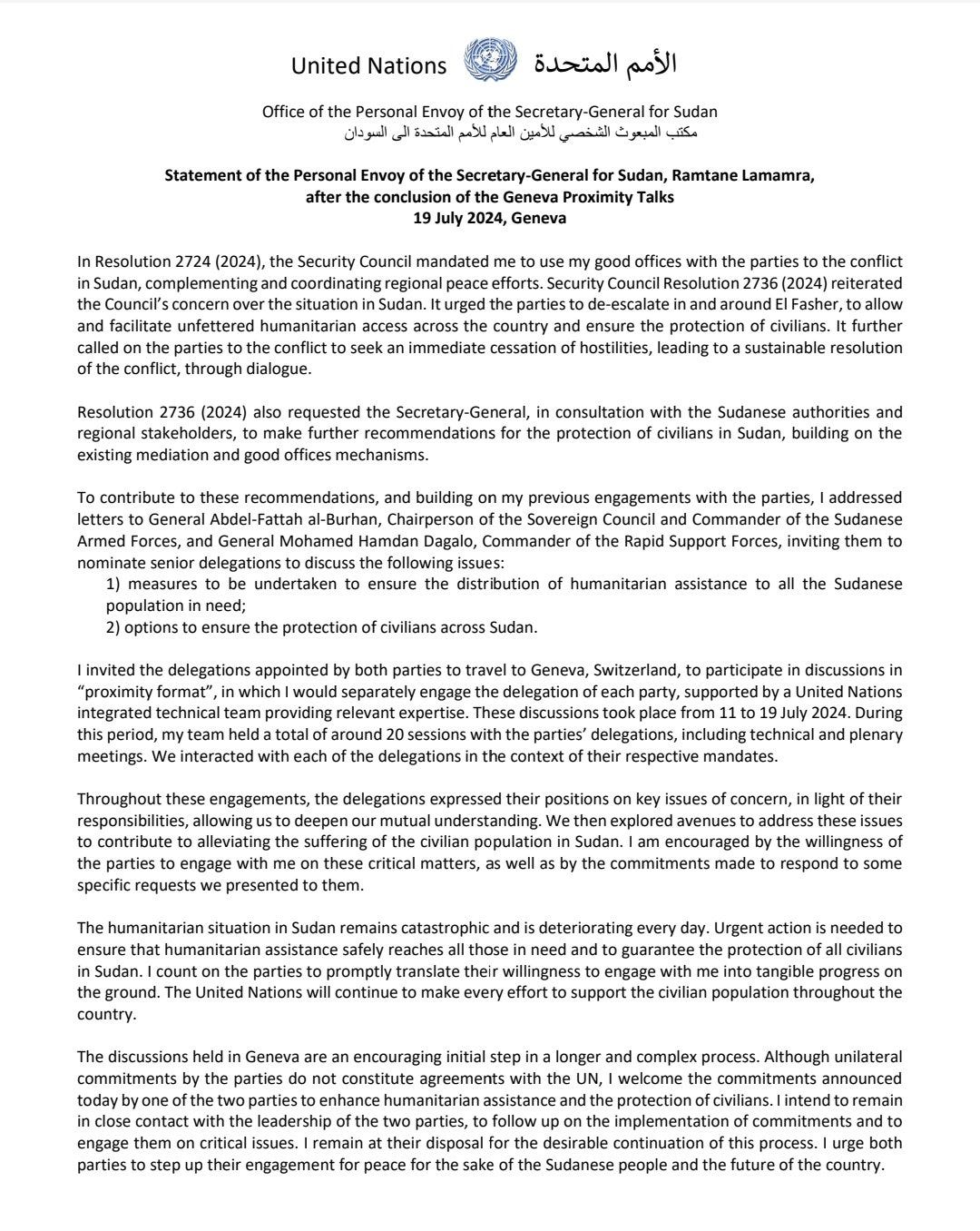
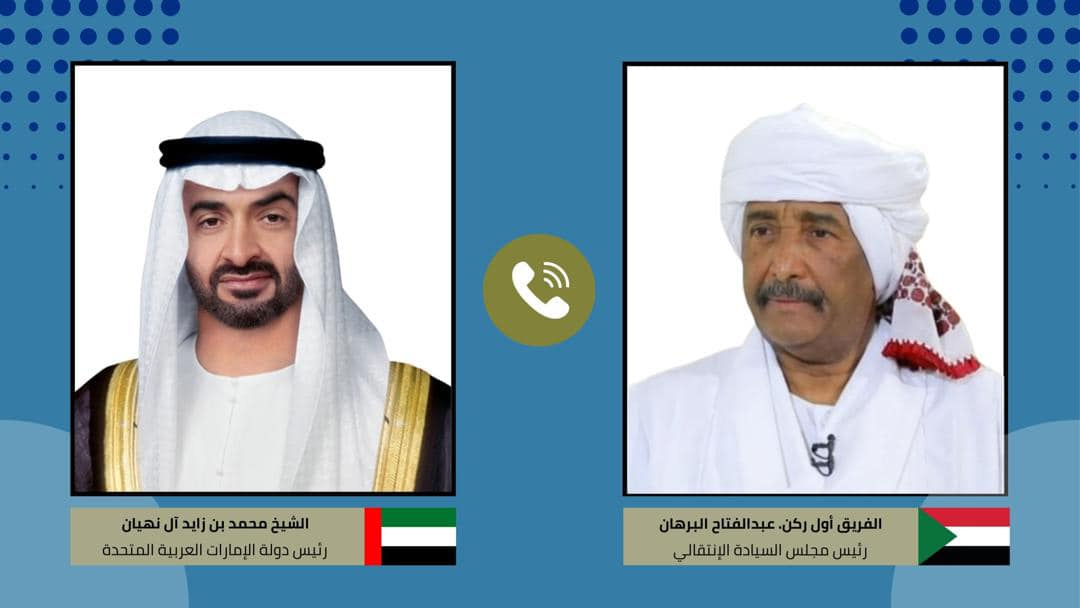
Sudan’s military leader Abdel Fattah Al-Burhan spoke by phone Thursday with Mohamed bin Zayed Al-Nahyan, president of the United Arab Emirates (UAE), who called for “peaceful dialogue” to end the civil war in Sudan.
The phone call took place just two days after another influential member of Sudan’s military junta, Lt Gen Yasser Al-Atta, condemned the UAE and insulted its ruler, saying, “Mohamed bin Zayed is the devil of the Arabs and a dirty Zionist.”
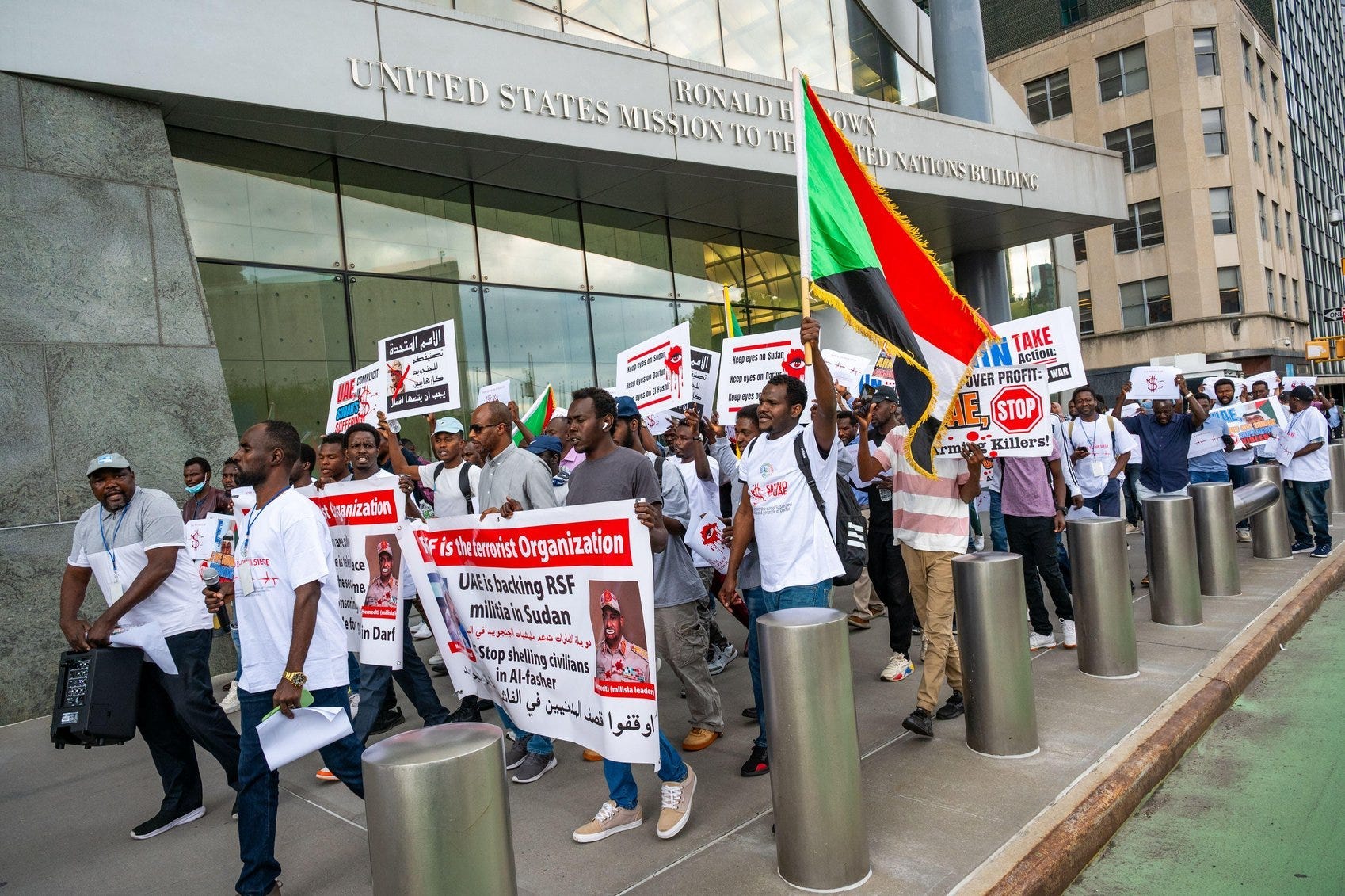
The UAE is the main international sponsor of the Rapid Support Forces (RSF), the renegade paramilitary battling the Sudanese military for control of the country. The Gulf monarchy has employed RSF solders as mercenaries in Yemen since 2016.
Abu Dhabi officially has stayed neutral in the Sudanese civil war, which began in April 2023, but unofficially it provided various forms of support to the RSF, including by sheltering RSF leaders and propaganda teams, facilitating an international tour for the RSF leader Mohamed Hamdan Dagalo, evacuating wounded RSF soldiers, and allegedly sending arms shipments to Darfur, via Chad.
The UAE denies giving military aid to the RSF, which was already well-armed before the outbreak of the civil war, and which captured huge stockpiles of equipment from the Sudanese military over the past year.
Despite this, Sudan’s military regime blames the small but wealthy Arab nation for its defeats on the battlefield, claiming that it is not fighting the RSF alone but rather an international conspiracy.
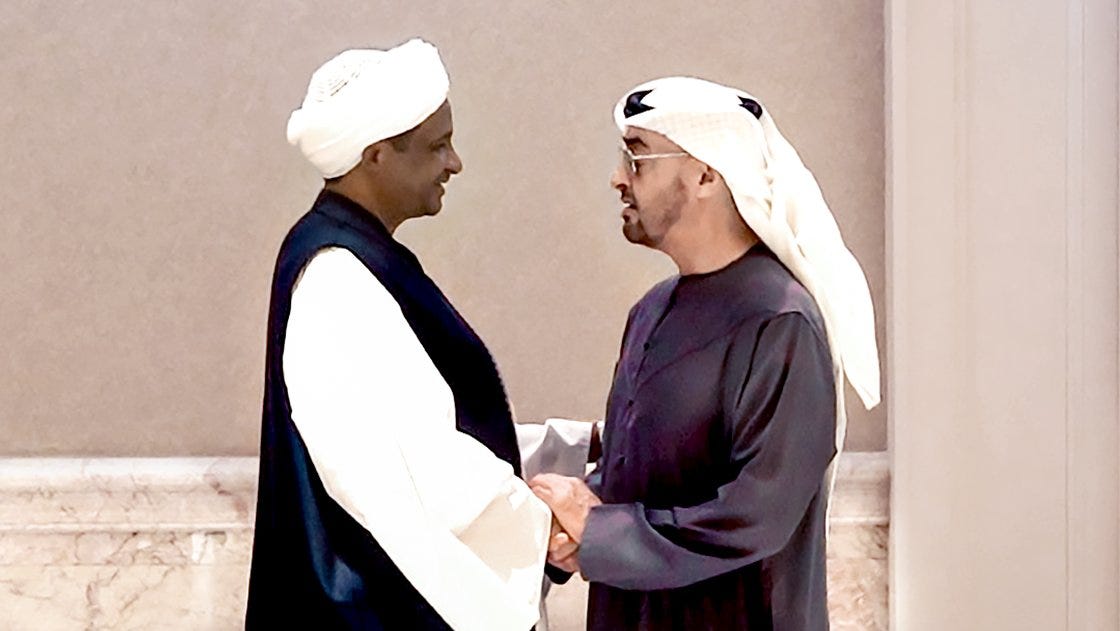
Bin Zayed’s phone call with Al-Burhan was the first known contact between the two leaders since the start of the civil war. Observers are divided over whether the call represents a significant diplomatic breakthrough, which could lead to further peace talks, or is just part of a UAE “whitewashing” effort that will change nothing.
The Sudanese and Emirati governments gave conflicting readouts about the call, with each side saying the other had initiated the contact.
The state-run Emirates News Agency reported,
“President His Highness Sheikh Mohamed bin Zayed Al Nahyan today received a phone call from Lieutenant General Abdel Fattah Al-Burhan, Chairman of the Transitional Sovereignty Council of the Republic of Sudan.”
“During the call, His Highness and the Chairman of the Transitional Sovereignty Council discussed relations between the two countries and their peoples, in addition to developments in Sudan and ways to support it in overcoming the current crisis. In this context, His Highness affirmed the UAE's keenness to support all solutions and initiatives aimed at halting escalation and ending the crisis in Sudan in a way that contributes to enhancing its stability and security and fulfilling the aspirations of its people for development and prosperity.”
“His Highness stressed the importance of peaceful dialogue to uphold Sudan's interests, and preserve its security and stability. His Highness also expressed the UAE's continued commitment to supporting humanitarian efforts to alleviate the suffering of the Sudanese people.”
For its part, the media office of the Sudanese Transitional Sovereignty Council said that Bin Zayed extended an olive branch to the Sudanese leader, but Al-Burhan responded with a demand that the UAE stop supporting the RSF:
“The Chairman of the Transitional Sovereignty Council, Commander-in-Chief of the Armed Forces, Lt Gen Abdul Fattah Al-Burhan, received a phone call from the President of the United Emirates Sheikh Mohammed bin Zayed Al Nahyan.
“During the phone call, Sheikh Mohamed bin Zayed made it clear their desire to help stop the ongoing war in Sudan, whereas the chairman of the Sovereignty Council informed him that the State of the UAE is accused by Sudanese—and with a lot of evidence and witnesses—that prove the support of the UAE for the rebels [the RSF], and its support for those who kill Sudanese, destroy their country and displace them, and the UAE should stop that.”
This statement came a day later than the UAE statement. Middle East Eye reported that the call between Burhan and Bin Zayed was meant to be secret, until the news was broken by the Emirati state news agency.
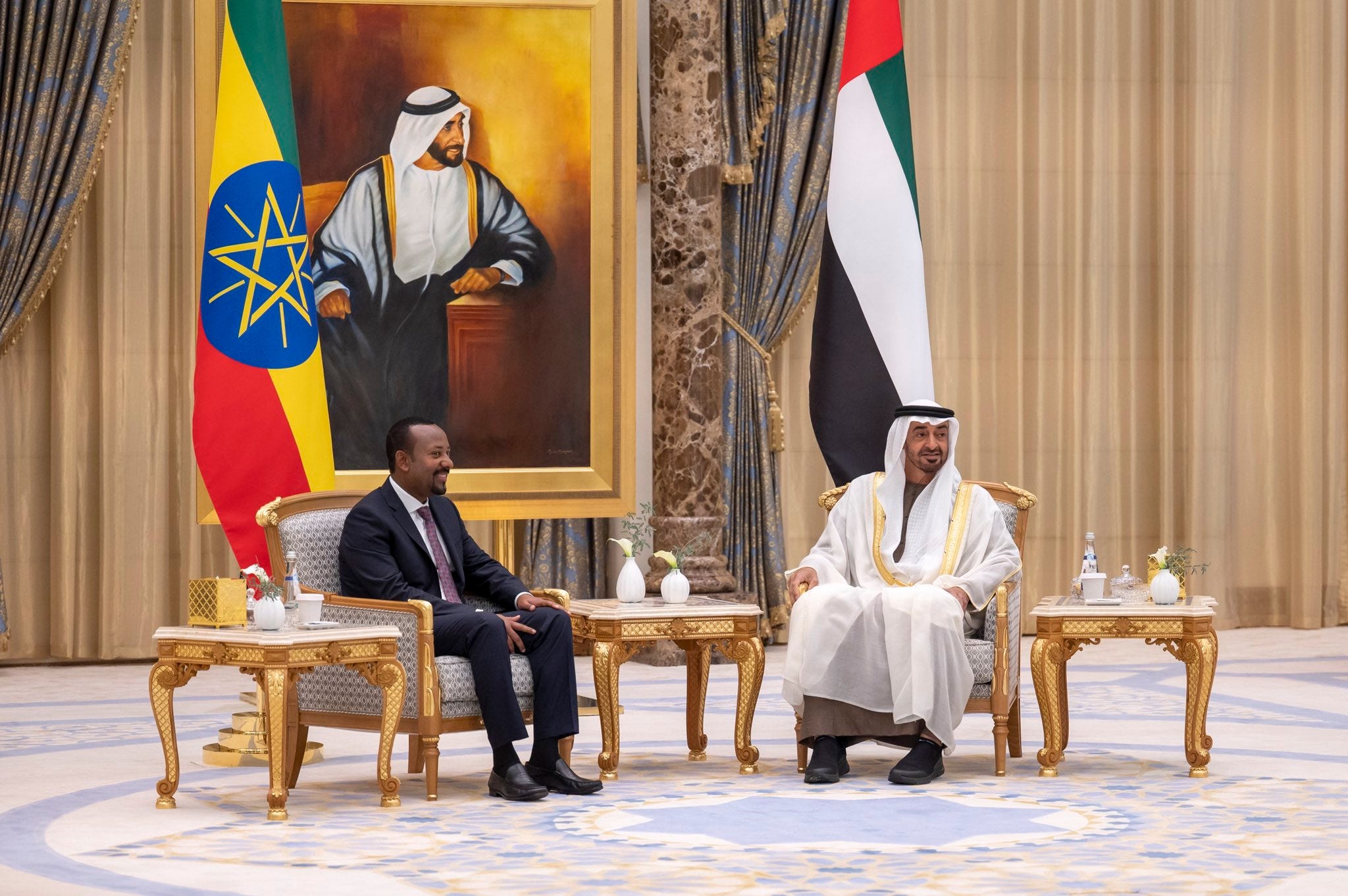
Middle East Eye and other news outlets also reported that the call was arranged by Ethiopian Prime Minister Abiy Ahmed, an ally of the UAE, who visited Port Sudan last week. Abiy was the first foreign head of state to visit Sudan since the outbreak of the civil war in April 2023. (The video below, produced by the Sovereignty Council meida team, shows scenes from his visit). His intervention took place shortly after the RSF conquered Sennar, a state bordering Ethiopia’s Amhara Region.
Sudanese political parties overall responded positively to the news of Al-Burhan’s phone call with the UAE president. Babiker Faisal, head of the Unionist Alliance, called it “a step in the right direction,” adding, “We hope that the UAE will help facilitate the resumption of the negotiation process in the Jeddah Platform.”
Khalid Omer Yousif, a leading figure in the anti-war Taqaddum Coalition and a former cabinet minister, likewise welcomed the development but warned that peace initiatives were causing splits within the military, which could be dangerous. He tweeted, “There is clear confusion in the camp of the Armed Forces and its loyalists.”
He referred to a recent speech by Lt-Gen Yasser Al-Atta, who told military officers in Omdurman on July 15, “Brothers, we will not make a truce, and we will not give up. There is no truce, and there are no negotiations. Even if we have to fight a hundred years, we will not give up until the janjaweed [RSF] surrender… It is in the interests of the people of Sudan to remove these janjaweeds [devils] from the land of Sudan.”
Political analyst Amjed Farid, Executive Director of Fikra for Studies and Development, doubted that the phone call would change anything, predicting that the UAE would continue its support for the RSF:
“Yesterday’s phone call between Burhan and Bin Zayed, which was mediated and arranged by Ethiopian Prime Minister Abiy Ahmed, is part of the UAE’s attempts to whitewash its image and reduce international pressure on them about UAE’s support and arming of the Rapid Support Forces militia.”
“In reality, this call changes nothing. The UAE must cease its financial, political, and military support for the militia that has destroyed Sudan. Additionally, it should provide serious compensation for rebuilding what the war has destroyed and compensate the Sudanese victims for the suffering and violations committed by the RSF.”
“Diplomatic pleasantries via Abiy Ahmed with Burhan or others will not absolve the UAE of responsibility for the actions of its affiliated militia in our country. The destruction of our land, displacement of our people, and the atrocities unleashed by the militia are unforgettable and unforgivable crimes.”
Meanwhile, the Sudanese newspaper Al-Sudani reports that a tripartite summit is planned in Addis Ababa between Sudan’s leader Al-Burhan, the UAE’s Bin Zayed, and Ethiopia’s Prime Minister Abiy Ahmed. Citing “African diplomatic sources,” Al-Sudani stated that the summit would focus on “stopping the diplomatic and media escalation between the two countries… and proposing effective solutions to the Sudanese crisis.”
Such talks with the UAE could be a face-saving way for the Sudanese military regime to try to de-escalate the situation and pause the fighting after a string of military defeats, without yet engaging in direct talks with the RSF. However, this proposal is unconfirmed and it’s unclear what the UAE stands to gain from such a summit.
Al-Atta and other hardliners in the Sudanese military are likely to try to torpedo direct talks with RSF, even if they are willing to tolerate contacts with the UAE.
Less controversially, humanitarian access talks were held in Geneva from July 11 to 19, facilitated by Ramtane Lamamra, the UN Secretary-General’s envoy for Sudan. In a statement Friday, the RSF said the talks were “highly constructive.”
However, the Sudanese military delegation did not comment on the talks, which ended without a concrete agreement.
Lamamra himself released a statement saying the talks were held in “proximity format,” in which he and other UN team members separately engaged each delegation. “My team held a total of around 20 sessions with the parties’ delegations, including technical and plenary meetings…. The discussions held in Geneva are an encouraging initial step in a longer and complex process.”