South Sudan’s Unraveling Regime Appoints Dead Man to Election Authority
Election hopes fade as rebellion spreads; Kitwang faction defects
ANALYSIS
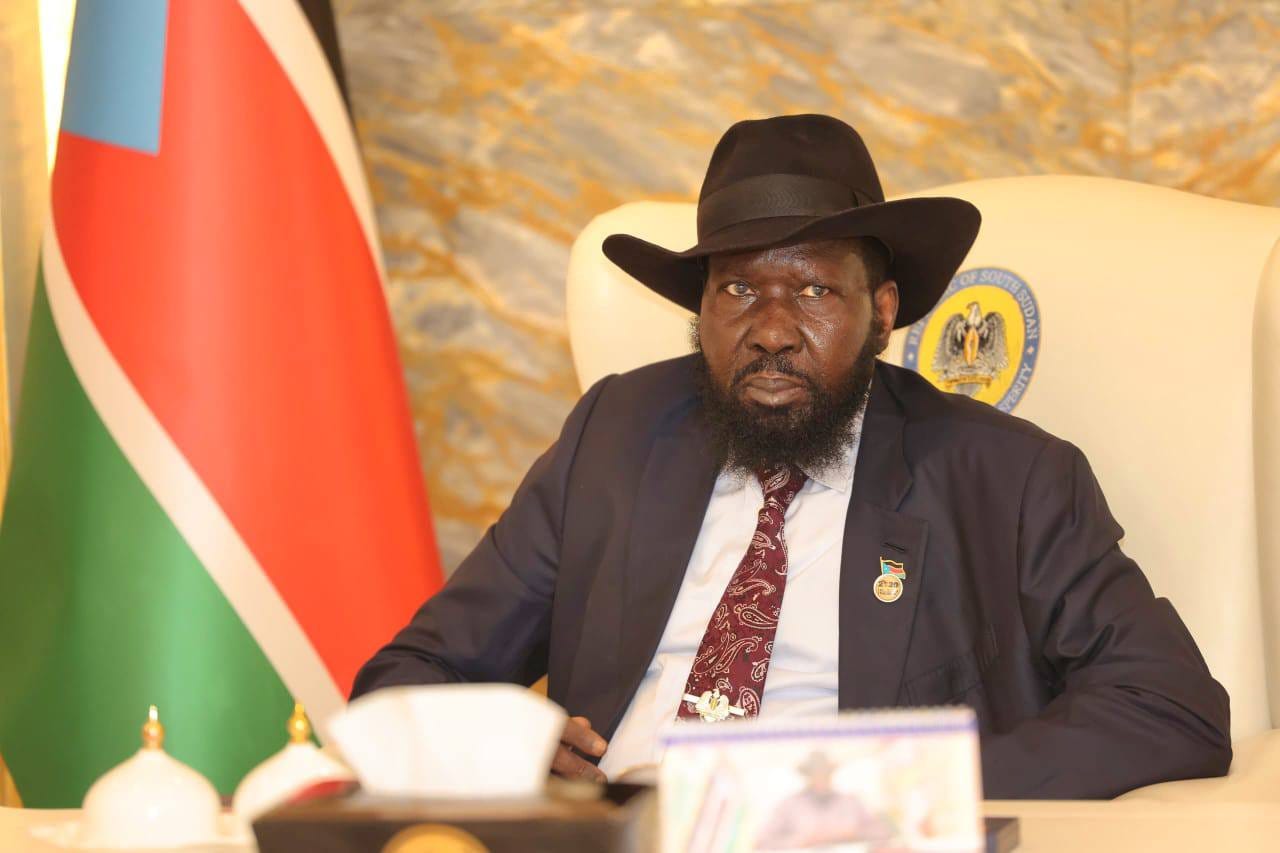
South Sudan’s long-reigning dictator has appointed a politician who died six years ago to an election task force ostensibly composed of signatories of the country’s 2018 peace agreement. “Mr. Steward Sorobo Budia… has regrettably died,” the Office of the President acknowledged in a press release Monday, three days after the announcing the appointment.
The appointment is a potent symbol of administrative incompetence, the death of democracy in South Sudan, and the collapse of the peace deal that was meant to lead to elections.
It also spotlights the growing political isolation of President Salva Kiir and his inner circle, who are mostly aging veterans of the 1986-2005 war of independence. Though once powerful and popular at times, Kiir and his cabinet and aides are now widely faulted for endemic corruption, deepening economic malaise, and the breakdown of the 2018 peace agreement. Many of the regime’s former political allies and the signatories of the peace deal are now in exile, in prison, disgruntled, or openly in rebellion.
The late Steward Sorobo Budia, a former county commissioner and leader of a minor political party that signed the 2018 peace agreement, was appointed in presidential decree January 30 as a member of the “Leadership Body of the Parties Signatory to the R-ARCSS for Dialogue on Election-Related Matters.”
Kiir formed the leadership body in January as an alternative to the election mechanisms in the 2018 peace agreement, which is known as the R-ARCSS, or Revitalised Agreement on the Resolution of the Conflict in South Sudan. He excluded SPLM-IO, the main opposition party and peace signatory.
Under the original timeline of the R-ARCSS, elections were supposed to take place in 2022, but they were delayed repeatedly due to a persistent failure to implement the agreement’s core reforms, including those relating to the security sector, electoral institutions, and the logistical and legal steps needed to support elections and enable a transition to an elected government.
Kiir’s government has steadily dismantled the R-ARCSS while trying to maintain the appearance that the agreement remains in force. The government adheres to the agreement in name to maintain legitimacy, but in practice has been unilaterally “amended” it repeatedly, ignored key provisions, arrested and intimidated other signatories, and sacked opposition politicians who had held positions under the terms of the deal.
Kiir also has backed a dissident faction within the SPLM-IO, elevating its members to government positions while sidelining the original SPLM-IO. These measures have triggered fighting in several parts of the country, including Jonglei, Upper Nile, Unity State, Central and Eastern Equatoria.
Want to keep up with the latest security and political developments in Sudan and South Sudan? Sign up to get weekly updates containing maps, videos, fact-based reporting, and independent analysis. Most content is free to read, while paid subscriptions fund continued coverage & investigations.
Kiir Fires Top Aides
David Majur, the president’s press secretary, called the appointment of late Hon. Sorobo an “unfortunate administrative oversight.” In a statement Monday, he deflected blame for the incident onto unnamed “stakeholders”:
“The decision was reached following wide-ranging consultations where names were adduced by various stakeholders to ensure a representative selection process. To be sure, the Office [of the President] relied entirely on the accuracy and currency of the names submitted by the stakeholders during the formal consultative phase… Moving forward, the Office [of the President] will implement more stringent verification protocols to ensure that all stakeholder submissions meet the highest standards of accuracy.”
Majur himself was fired shortly after issuing this statement, along with Kiir’s chief administrator, Valentino Dhel Malueth. (Both men are likely to be reappointed to key positions eventually. The president relies on a close circle of aides and is known to reappoint officials ousted by failure or scandal).
Meanwhile, the son of Hon. Sorobo, Boboya James, called his late father’s appointment dismaying and spiritually disturbing. He urged the government to accept a family-designated representative to carry forward his father’s political legacy. James is a policy analyst and former leader in the nonprofit and media sectors in Juba, the capital of South Sudan.

Rule by Decree
Surprise appointments are common in South Sudan, where President Salva Kiir has ruled by decree for 20 years, ignoring constitutional and parliamentary constraints on his authority. Though the country is nominally federal, in practice it is highly centralized under the president, who appoints not only members of cabinet but also governors, deputy governors, other state officials, security officers, and even county commissioners.
Members of parliament are appointed under a power-sharing arrangement in the 2018 peace agreement, but they have no real legislative power.
Over the years, Kiir’s control over the appointment function across the entire apparatus of government has allowed him to cultivate a vast patronage network that cut across ethnic lines but mostly benefitted a narrow elite. The president’s appointments are rarely justified in terms of qualifications. Rather, they are seen as tactical and clientelist, serving to reward loyalty and quell opposition to the regime.
Such presidential appointments used to be highly coveted — especially ministerial posts that came with significant financial perks. In recent years, however, they have become more honorary, short-term, and less lucrative; government revenues have dried up, salaries have gone unpaid, and the president has taken to reshuffling his government with growing frequency.
South Sudanese politicians in Kiir’s party have grown accustomed to being appointed and fired without advance notice or consultation. However, appointees are generally known to be alive and politically active; this is the first time that the president has appointed a dead man.
Kiir has weathered past administrative blunders and scandals. For instance, he faced accusations of alcoholism and drunkenness in recent years, and he infamously urinated on himself at a public function in December 2022, resulting in the arrest of several state TV journalists who were accused of circulating footage of the incident.
Members of Kiir’s inner circle have stolen public funds and manipulated government contracts (which Kiir has acknowledged, while claiming to be innocent of any corruption himself). Transparency International, which publishes an annual corruption perceptions index, ranked South Sudan as the world’s most corrupt country in 2021 and 2024.
This latest scandal comes at a delicate time and will be viewed both within the regime and by the opposition as a sign that the president is losing his grip. On social media, hundreds of South Sudanese mocked the government or commented cynically, despite censorship controls that restrict criticism of the president in formal media channels such as newspapers and radio.
Regional Conflict
Salva Kiir, age 74, was the deputy leader of the Sudan People’s Liberation Movement (SPLM) and became the president of the semi-autonomous South Sudan region after the death of SPLM founder John Garang in a helicopter accident in 2005. He won election in 2010 with 93% of the votes, and continued as president after South Sudan formally separated from Sudan in 2011, following a peaceful referendum held under the terms of an earlier peace deal. Since then, Kiir has not allowed elections, locally or nationally.
Kiir survived a five-year civil war soon after independence in 2011, but he has struggled to maintain his authority and popularity during the peace years (2018-2024). The resumption of the SPLM-IO insurgency, coinciding with ongoing war in neighboring (north) Sudan, poses a major risk to his rule.
Although Sudan’s conflict has not yet spilled over directly into South Sudan, it is deeply impacting the country economically and politically. Kiir’s government is formally neutral in the war to its north, maintaining high-level relations with both the Sudanese military and the Rapid Support Forces (RSF).
However, several factors are drawing the South Sudanese government into a closer relationship with the RSF. This could eventually lead to a larger cross-border war between the two nations.
Diplomatically and financially, the South Sudanese government has become more reliant on the United Arab Emirates (UAE), the key international sponsor of the RSF. South Sudan allows the RSF to use its territory to smuggle fuel and other war materiel and trade goods. It also hosts a UAE-funded hospital at the border between West Kordofan and Northern Bahr al-Ghazal, which is rumored to be used for treating wounded RSF fighters.
Secondly, the RSF has directly recruited South Sudanese fighters into its ranks, luring them with promises of money, and by appealing to old ethnic animosities between Kiir’s Dinka tribe and Sudan’s Arab-led government.
Thirdly, the RSF and Kiir’s government are coordinating over the resumption of oil production in Heglig, which is in northern Sudan but is currently jointly occupied by the RSF and South Sudanese troops under an informal or covert arrangement with Sudan’s government. It is in South Sudan’s economic interest to secure the resumption of oil production from the Heglig field, but it is unclear if the RSF will allow this unless they are given a share of the revenues — something the Sudanese government may not accept.
Meanwhile, fighting in Sudan is reaching closer to the border between the two countries, as the Sudanese Armed Forces currently is battling the RSF and the SPLM-North in South Kordofan State and in the southern part of Blue Nile State. Kiir’s government has historic ties with the SPLM-North, a rebel group that controls the Nuba Mountains of South Kordofan and a small corner of Blue Nile. Over the past week, the Sudanese military has made gains against the rebel coalition, relieving the besieged cities of Dilling and Kadugli and threatening to attack the SPLM-North’s mountainous strongholds in the central parts of the state.
The SPLM-North and the RSF formed a military-political pact last year in Kenya. They also announced the formation of a rival government, called Tasis (Establishment), which seeks to overthrow the Sudanese government and claims to be the legitimate government of Sudan. Though not recognized by any country, Tasis is covertly supported by the United Arab Emirates and operates freely in eastern Libya and Chad.
Tasis may seek formal recognition from Chad and South Sudan, if relations deteriorate between those two countries and Sudan.
News in Brief
Kenyan President William Ruto, aided by the Tumaini Initiative Chief Mediator Gen. (ret.) Lazarus Sumbeiywo, is pushing for renewed inclusive peace talks among the South Sudanese warring parties.
The Tumaini Initiative will convene February 9, following a year-long pause. Radio Tamazuj reported, “Initially hailed as a bold intervention by President Ruto to revive a faltering peace process following frustrations with the Italy-based Sant’Egidio talks, the Tumaini Initiative now appears to have collapsed under the strain of mutual suspicion and political infighting.”
General Simon Gatwech Dual, leader of the SPLM-IO Kit-Gwang faction, on Monday announced his formal withdrawal from the Port Sudan Peace Agreement and declared open hostilities against the government in Juba. He alleged violations of the peace agreement and aerial attacks on his forces. Gatwech has close ties with Sudan’s intelligence services.
Following the announcement of a military offensive in Jonglei State, the South Sudan Defense Force claimed to have recaptured Motot and Pieri towns in Uror County, advancing eastward into rebel-held territory.


