

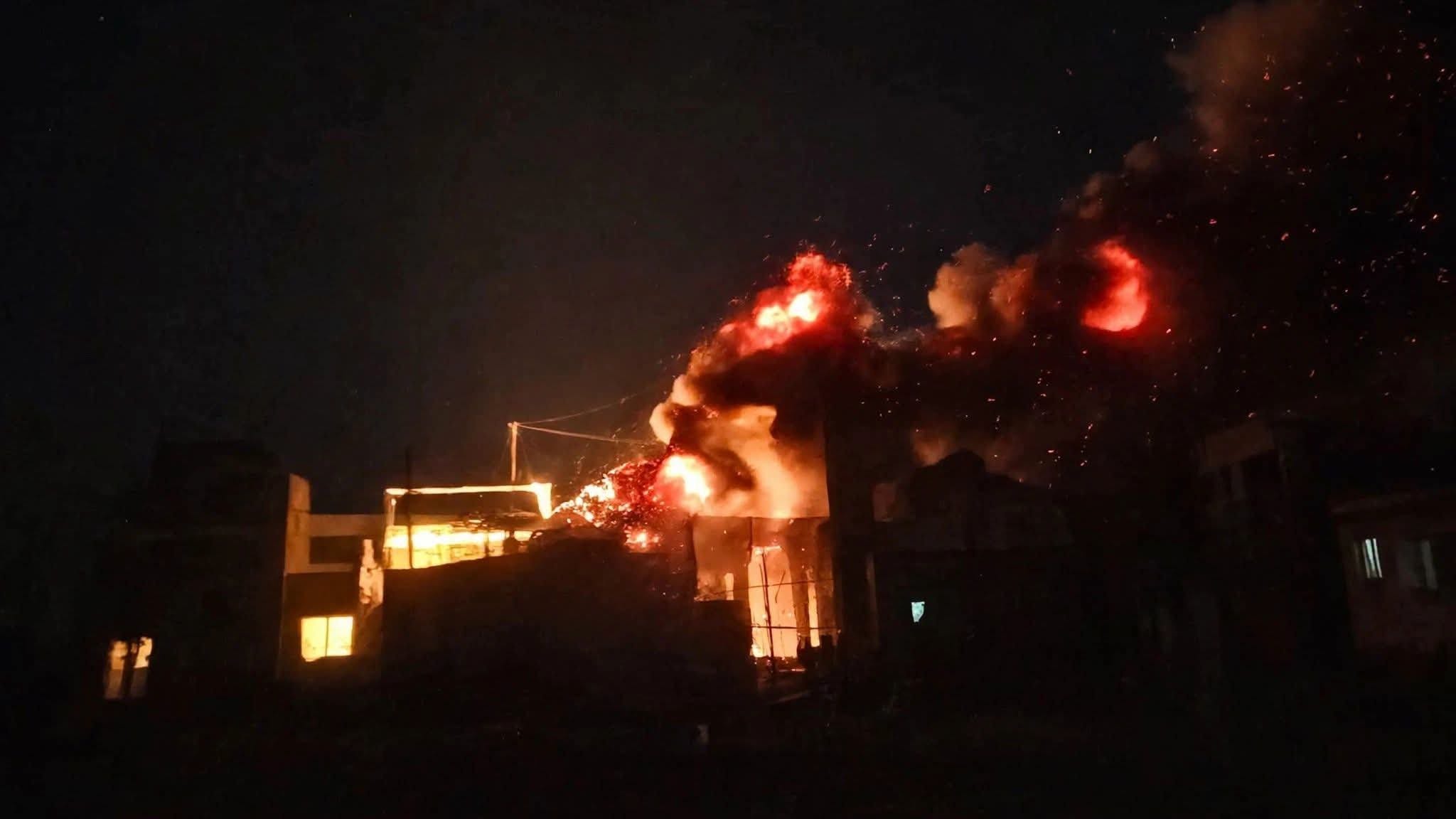
A series of drone strikes by Sudan’s Rapid Support Forces (RSF) has knocked out electricity stations across several states since Monday, leaving large parts of army-controlled Sudan without power. The attacks have damaged transformers, transmission equipment, and fuel installations from eastern Sudan to the capital, Khartoum.
The bombardment began with attacks on five electricity stations in Al-Jazirah, Al-Qadarif, Sennar, and White Nile states. The following day, drones struck Al Markhiyat substation northwest of Omdurman, cutting electricity across large parts of Khartoum. Further attacks followed in Al Managil, Haya, and Rabak.
Sudan Electricity Holding Company attributed the first wave of strikes to the RSF, reporting extensive destruction of equipment and the loss of electricity across the southeastern grid. The attacks reached installations hundreds of kilometers from the nearest major RSF ground positions.
“Sudan Electricity Holding Company wishes to inform the public and the esteemed citizens of Sudan about the details of the treacherous terrorist attacks carried out by the rebel Rapid Support Forces (RSF) militia this morning using drones.”
“The attacks directly targeted several vital electrical substations across the country, including the Singa, Al-Hawata, Al-Faw, and Mashkur substations, as well as the Al-Geneid substation in Al-Jazirah State.”
“These brutal strikes caused extensive damage and widespread destruction to the components of the affected substations, resulting in a complete blackout across the southeastern electricity grid and power outages in Sennar, Al-Qadarif, White Nile, and Al-Jazirah states. The attacks now pose a direct threat to the stability of the national electricity grid,” the electricity company said in the statement.
The bombardment comes as both the RSF and the Sudanese Armed Forces (SAF) increasingly employ drones against targets far behind opposing front lines. The RSF has lost much of its former territory in central Sudan, but it retains the ability to strike fixed infrastructure in areas held by the army.
At approximately 2:30 a.m. on October 26, drones struck the Al Junaid transformer station near the sugar factory in eastern Al Jazirah State. Sources at the factory told Sudan Tribune that the attack disabled the station and interrupted electricity supplies to the surrounding area.
Other drones struck electricity installations at Sinja, the capital of Sennar State, Al Hawata and Al Faw in Al-Gadarif, and Mashkour in White Nile. All five facilities were hit on the same day, damaging parts of the transmission network supplying southeastern Sudan.
The attacks followed an earlier strike on Tendelti electricity station in White Nile, which had already experienced disruptions. At Al Faw and Al Hawata, the strikes affected facilities supplying towns and agricultural communities in eastern Sudan, where electricity is needed for water pumping, irrigation, and commercial activities.
Sudan Electricity Holding Company said the damage caused a complete outage of the southeastern electrical network. The company dispatched engineers to inspect the affected stations, but did not announce when normal electricity supplies would resume.
“Immediately following the attacks, the company mobilized all its engineering and technical teams to reach the affected substations, assess the damage, and take the necessary measures. Engineers and technicians continue to carry out the required technical repairs,” the statement posted on Sudan Electricity Holding Company website reads.
“Through its dedicated workforce, the company reaffirms its commitment to the resilient Sudanese people to repair the destruction caused by these treacherous attacks, restore electricity supplies, and stabilize the national grid as quickly as possible,” the statement said.
Sudan War Monitor reviewed videos and photographs of fires at electricity installations that were circulated on social media following the attacks. For example, the video below shows aftermath of the drone strike at the Al Hawata electricity station in Al-Qadarif State.
Aftermarth of the drone strike at Al Hawata electricity station in southeaster Al-Gadarif State here: 13°26’32.05”N 34°38’48.33”E.
At about 5:00 a.m. on Tuesday, October 27, a drone struck Al Markhiyat electricity station northwest of Omdurman. Residents reported hearing an explosion followed by a widespread power outage.
Some witnesses also described anti-aircraft fire shortly before the strike. The station was badly damaged and taken out of service, according to the Ministry of Energy and Petroleum, which sent technical teams to inspect the installation.
The outage affected extensive areas of Khartoum and River Nile states, with interruptions also reported elsewhere in the electricity network. The attack came less than twenty-four hours after the strikes against substations in eastern and central Sudan.
Al Markhiyat is one of the principal electricity distribution stations supplying the capital. Its destruction interrupted power to neighborhoods where residents have only recently returned following the army’s recapture of Khartoum in 2025.
A video posted by Sudan News Agency (SUNA) on Thursday shows the military-appointed Prime Minister Kamil Iddris instpecting the damage at Al Markhiyat station.
Sudanese Prime Minister Kamil Iddriss inspects damage at the Al Markhiyat power station in Omdurman on aftermath of the October 27 drone strike at Al Markhiyat electricity station, northwest of Omdurman.
The attack raised immediate concerns about the supply of water in Khartoum. Electricity is needed to operate pumping stations along the Nile, while hospitals, bakeries, and other essential services have been struggling with power shortages since the war began.
Al Markhiyat had already been attacked in 2025, during an earlier campaign of RSF drone strikes against installations in Khartoum State. The latest strike hit a station that had previously suffered damage while the authorities were trying to restore the capital’s electricity network.
On Wednesday, drones struck several installations in Al Managil, western Al-Jazirah State. The targets included the town’s electricity station, a fuel distribution facility, and a petroleum storage site.
One video circulating online shows fire at night at what appears to be a fuel depot in Al-Managil,. Civil defence teams extinguished the blazes, while the attack on the electricity station left Al Managil and nearby communities without power. No casualties among personnel at the facilities were immediately reported.
The bombardment followed the attack on Al Junaid two days earlier, bringing the number of damaged electricity installations in Al-Jazirah State to at least two during the latest wave.
In this video, a fire can be seen raging at a fuel depot in Al-Managil, southwestern Al-Jazirah State. Sudan War Monitor geolocated this video to this location here (14°15’14.99”N 33°01’25.92”E), just northeast of Al-Managil town.
Further east, drones targeted fuel infrastructure at Haya in Red Sea State. Sources told Sudan War Monitor that the October 28 attack struck a fuel pumping station, causing minor damage to a principal pipeline.
Other local reports described attacks on petroleum storage facilities and a pipeline associated with the route toward Bashayer, Sudan’s oil export terminal on the Red Sea coast.
Haya lies on the transport corridor connecting Sudan’s eastern interior with Port Sudan. Oil infrastructure in the area is important for the movement of petroleum products and the operation of export facilities along the coast.
The attack extended the drone campaign beyond electricity transmission stations to installations associated with fuel supply and transportation. However, there was no independently confirmed report of a prolonged shutdown of the pipeline.
This video, circulating on X (formerly Twitter), purportedly shows the aftermath of strikes targeting facilities in Haya, Red Sea State. Sudan War Monitor was unable to geolocate the footage due to the lack of clearly identifiable landmarks, as the video was filmed in darkness.
The attacks continued before dawn on Thursday, October 29, when drones struck the Um Dabaker thermal power station near Rabak in White Nile State, damaging electrical equipment and interrupting supplies to White Nile and North Kordofan.
Witnesses told Sudan Tribune that several explosions were heard at the station and that smoke rose from the facility following the attack. Local sources said the drones struck the main electrical feeders and control room, forcing the station out of operation.
Um Dabaker is an important thermal generating station in the regional electricity network. It had already been damaged in January 2026, when an earlier attack affected its transformers and reduced its generating capacity.
The latest strike came three days after drones hit Mashkour in the same state, and after previous attacks on Tendelti. White Nile has therefore experienced repeated damage to electricity facilities during the current campaign.
The Emergency Lawyers group condemned the attacks on electricity and fuel installations, warning that the loss of power threatened water supplies, hospitals, and other civilian services.
The organization said approximately thirteen electricity stations had been targeted during October and accused the RSF of responsibility for the recent strikes.
“This escalation represents a continuation of the targeting of civilian infrastructure, which has contributed to the worsening of crises in electricity, water, fuel, and food supplies, the disruption of essential services, the threat to the operation of health facilities and water sources, and the increased suffering of civilians in securing their daily needs.”
“The number of power stations targeted during October 2026 reached approximately 13 power stations, exacerbating the humanitarian repercussions of the war and undermining the essentials of life.”
“The Emergency Lawyers Group holds the Rapid Support Forces responsible for these attacks, and affirms the necessity of protecting civilian facilities and adhering to the rules of international humanitarian law. It demands an end to the targeting of civilian infrastructure, an investigation into these attacks and accountability for those responsible, and ensuring they are not allowed to escape punishment,” the advocacy group said in a statement.
Sudan War Monitor documents attacks on civilian infrastructure, including electricity stations, fuel facilities, and other essential services affected by Sudan’s war. Through open-source investigations, geolocation, and independent reporting, we examine the impact of these attacks on civilian populations. Support our work by becoming a free or paid subscriber.
Earlier attacks on Merowe, Atbara and Port Sudan
The attacks follow a campaign against electricity and fuel infrastructure that began well before the latest fighting. In January 2025, RSF drones attacked electrical transformers at Merowe Dam in Northern State, cutting power to several regions.
Further strikes against Merowe were reported in March and April. The dam is one of Sudan’s principal hydroelectric installations, and damage to its transformers and transmission equipment disrupted electricity supplies far beyond Northern State.
On April 14, 2025, drones struck electricity and fuel facilities around Atbara in River Nile State. Damage to transformers affected supplies to River Nile and Red Sea states, while fires were reported at installations in the city.
The drone campaign reached Port Sudan in early May 2025. Over several days, attacks struck Osman Digna Airbase, petroleum storage depots, port facilities, and electricity infrastructure.
Large fires broke out at fuel depots near the Southern Port. The Centre for Information Resilience subsequently analyzed satellite imagery and geolocated videos documenting damage at six locations during the attacks.
At the time, Port Sudan served as the seat of Sudan’s wartime government and a principal entry point for humanitarian supplies. The attacks disrupted services and demonstrated that RSF-attributed drones could reach important installations in eastern Sudan despite the army’s territorial gains.
The drone campaign later returned to Khartoum. On May 14, 2025, strikes hit Al Markhiyat, Al Mahdia, and the Military College electricity distribution station in Omdurman, causing further blackouts.
These earlier attacks provide the background to the latest offensive. The October 2026 bombardment has struck some of the same facilities while extending to additional stations across Al-Jazirah, Al-Qadarif, Sennar, White Nile, and Red Sea.
Support our journalism

Sudan War Monitor is a collaborative of journalists and open source researchers tracking the events of Sudan’s war and the search for solutions. We’re building a platform to battle disinformation and warmongering and amplify the voices of victims, humanitarians and peacemakers.