
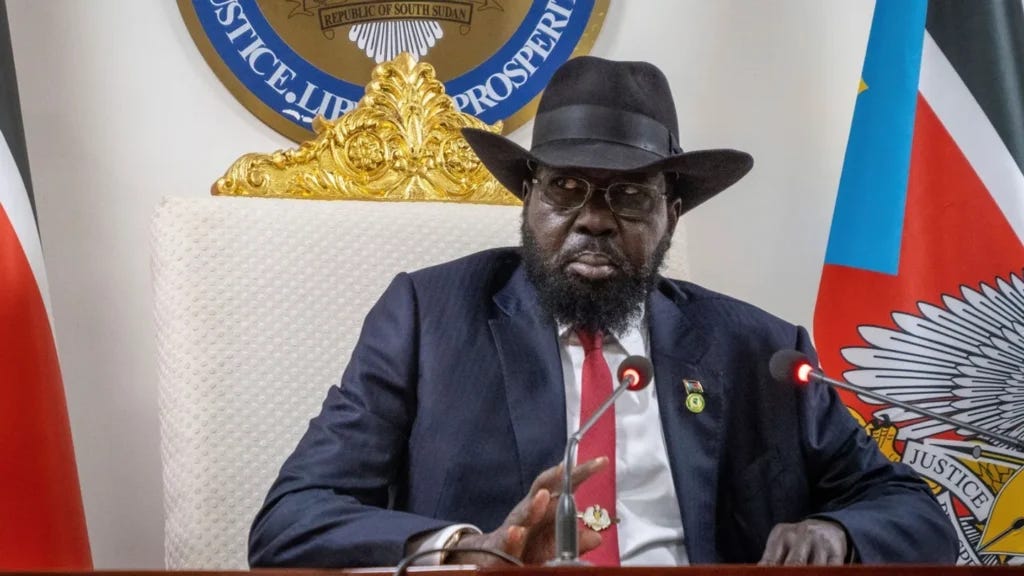
South Sudan’s National Elections Commission has declared December 22, 2026 as the date for the country’s first general elections since independence, a decision that immediately drew threats from the main armed opposition and deepened fears that the country’s fragile peace process is entering another dangerous phase.
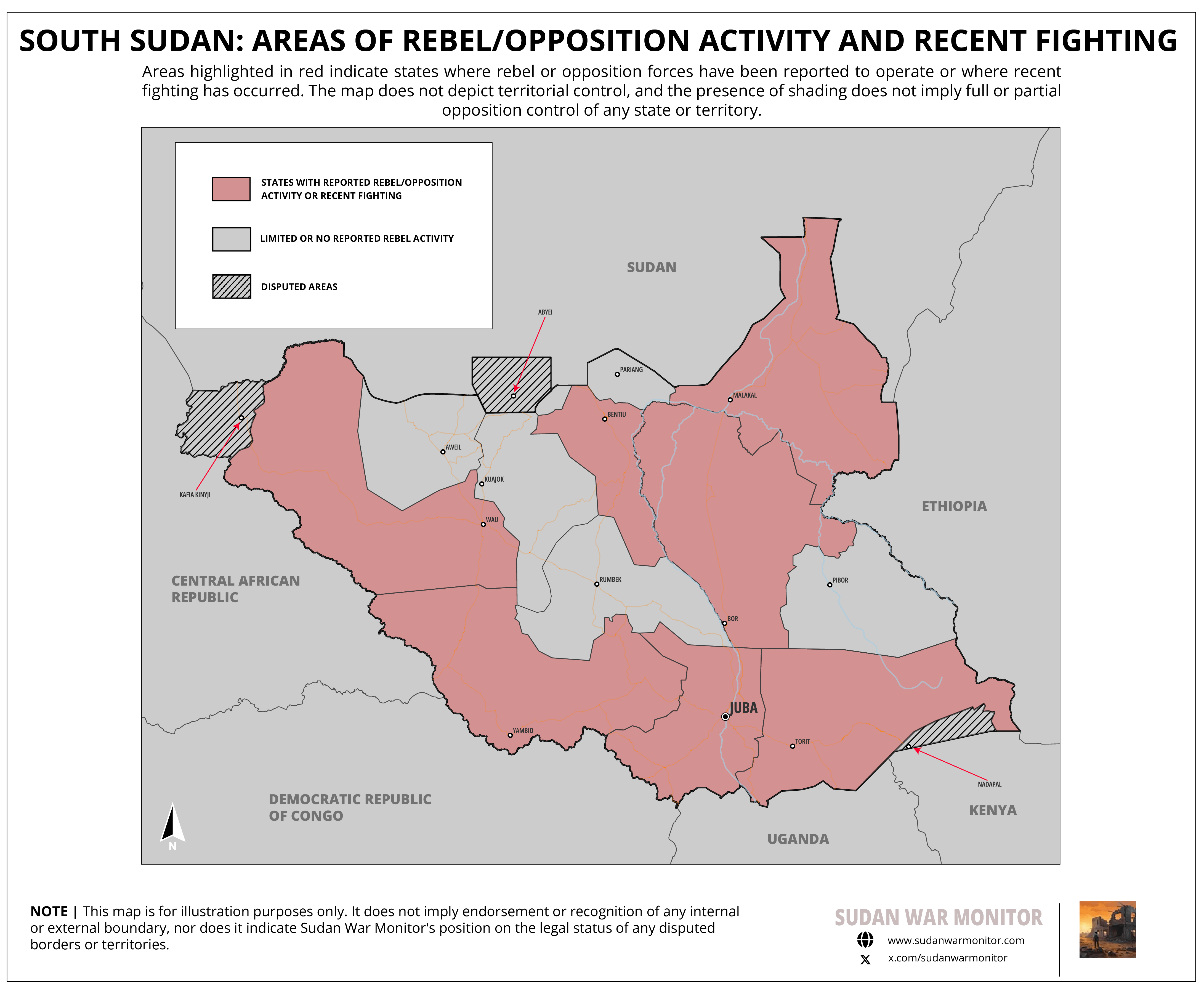
The announcement was made in Juba by the National Elections Commission, headed by Abednego Akok Kacuol, and comes less than six months before the planned vote. No voter registration has yet taken place, millions of South Sudanese remain displaced inside the country or in refugee camps abroad, and large areas of Upper Nile, Jonglei and Unity states, as well as Central Equatoria where the national capital is located, have seen renewed fighting between government forces and opposition troops over the past year.
The commission said the election date was set in line with the National Elections Act 2012, as amended in 2023, which requires the polling date to be announced at least six months before voting. The NEC also declared 102 geographical constituencies, using the old 2010 electoral boundaries after parties to the peace agreement agreed to delink the election from a new census and the permanent constitution-making process provided for in the revitalized peace agreement.
According to the NEC breakdown, Central Equatoria will have 14 constituencies, Eastern Equatoria 11, Western Equatoria 8, Jonglei and Greater Pibor 17, Unity and Ruweng 7, Upper Nile 12, Lakes 8, Northern Bahr el Ghazal 9, Western Bahr el Ghazal 4, and Warrap and Abyei 12. The decision gives the election a formal map but also exposes old and new grievances over representation, including in Unity State where counties such as Koch and Panyijiar are not separately reflected in the declared constituencies.

The announcement was quickly rejected by the Sudan People’s Liberation Movement in Opposition, whose leader Riek Machar remains detained and on trial in Juba. Nathaniel Oyet, Machar’s deputy and acting chairman of the SPLM-IO faction opposed to the government, said the declaration confirmed his movement’s position that the 2018 peace agreement has effectively collapsed.
He also issued a direct warning to election officials and political campaigners planning to operate in areas controlled by SPLA-IO forces, threatening to take them as prisoners of war or even kill them.
“This is just confirming what we have been saying all along! That the R-ARCSS is broken and Abrogated. Holding elections to abrogate the Peace process for South Sudan, is a pure politics, not governance, it is a dangerous escalation and shall throw the Country into more chaos.”
“Anyone coming to register voters and campaigns in territories controlled by the mighty SPLMA-IO, you will be a prisoner of war, at worse, dead. Be reminded, the country is at war! The SSPDF attacked the cantonments and training centers that were meant for security arrangements of the R-ARCSS! We have been fighting back and forth, with each side gaining and losing territories, in all these, we are in a very comfortable position and upper hands,” Oyet wrote on Facebook.
Be part of the change. Every subscriber strengthens our mission to bring critical reporting and analysis to a wider audience.
The statement was unusually blunt but reflected the military reality in several opposition-held or contested areas. Since early 2026, SPLA-IO forces have fought government troops in parts of Jonglei, Upper Nile and Unity, after the political crisis that began in March 2025 around Nasir County turned into a broader collapse of confidence between the parties.
The SPLM-IO’s National Committee on Foreign Relations also issued a formal statement rejecting the election timetable. Reath Muoch Tang, the acting chairperson of the committee, said the election date was premature and detached from conditions on the ground, citing Machar’s detention, ongoing insecurity, shrinking civic space and continued military confrontations.
The statement said elections were never meant to be an isolated event but rather the final outcome of the full implementation of the Revitalized Agreement on the Resolution of the Conflict in South Sudan. It listed the permanent constitution, a credible national census, refugee and displaced persons return, voter registration, security sector reform and political freedoms as prerequisites for credible elections.
Reath also questioned the timing of the announcement, which came while a high-level African Union delegation led by former Tanzanian president Jakaya Kikwete was visiting South Sudan. Kikwete, the AU special envoy for the Horn of Africa and the Red Sea, had arrived in Juba to consult political parties, electoral institutions, opposition groups and international partners on implementation of the peace agreement and preparations for elections.
“SPLM-IO maintains that the only legitimate pathway to elections in South Sudan is through the full implementation of the Revitalized Peace Agreement. Elections were never intended to be an isolated event but rather the final outcome of a successful transitional process. Conducting elections without fulfilling the agreed benchmarks risks transforming the electoral process into a source of instability rather than a mechanism for democratic transition.”
“The parties to the agreement identified clear prerequisites that must be completed before elections can be credibly conducted. These include the completion of the permanent constitution-making process, a credible national population census, the safe and voluntary repatriation of South Sudanese refugees and internally displaced persons, comprehensive voter registration, security sector reforms, and the creation of an environment that guarantees political freedoms and equal participation for all political actors.”
“Millions of South Sudanese citizens remain displaced within and outside the country. Many of these citizens would be effectively excluded from participation if elections were conducted under the current conditions. Such an election cannot credibly claim to represent the will of the people of South Sudan.”
“Furthermore, SPLM-IO questions the timing of this announcement, which comes while a high-level African Union delegation is visiting South Sudan headed by His Excellency Jakaya Mrisho Kikwete, African Union Special Envoy to South Sudan and the Red Sea Region, who is actively engaging stakeholders in efforts to restore peace, revive the implementation of the Revitalized Agreement, and prevent further deterioration of the political and security situation.”
“The announcement of an election date at this sensitive moment sends the wrong message and this signify a dismissal of the efforts being undertaken by the African Union and other regional and international partners. Rather than supporting ongoing peace initiatives, such unilateral actions undermine confidence-building measures and complicate the work of those seeking a peaceful resolution to the country’s political crisis,” the statement said.
Kikwete later briefed President Salva Kiir on his consultations and urged South Sudanese leaders to remain united and ensure successful elections. He said he was encouraged by his discussions with Kiir and looked forward to the successful implementation of the 2018 agreement and subsequent decisions. Kiir, according to a statement from his office, reaffirmed his government’s commitment to the peace agreement and said South Sudan remained on course toward peaceful and democratic elections.
The sharp contrast between the government’s position and the SPLM-IO response shows how far apart the parties remain. For Kiir’s administration, the election date represents a necessary step toward ending a long transition that has been extended repeatedly since the 2018 agreement was signed. For the opposition faction aligned with Machar, it is an attempt to move into elections while one of the main signatories remains detained and the security arrangements remain incomplete.
BACKGROUND
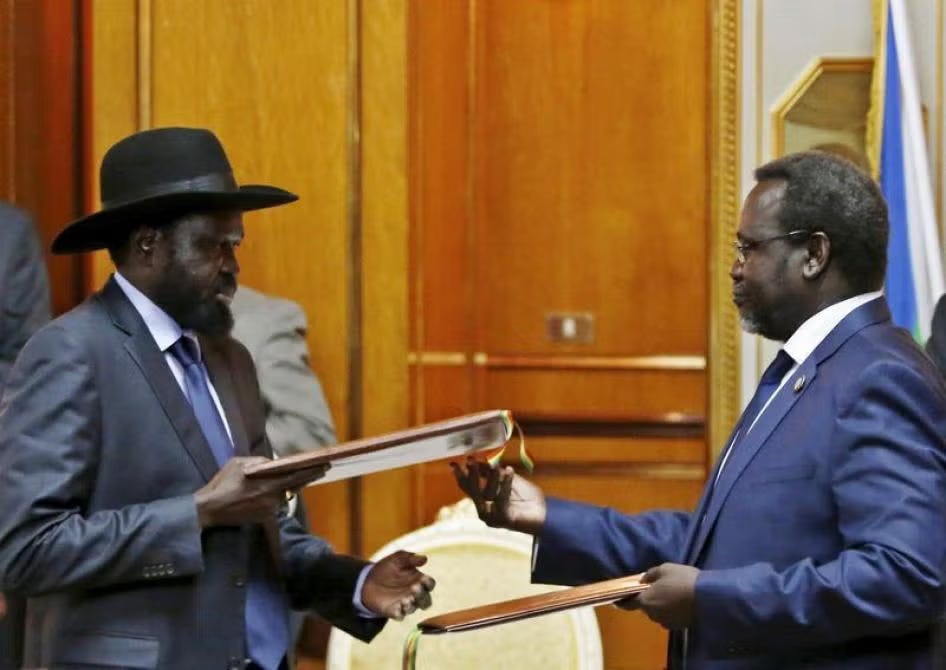
At the heart of South Sudan’s political crisis is the long and troubled rivalry between President Salva Kiir and First Vice President Riek Machar, two men whose relationship has shaped much of the country’s history since the final years of Sudan’s north-south civil war.
The two served together in the leadership of the Sudan People’s Liberation Movement after the death of John Garang in 2005. Kiir became chairman of the SPLM and president of Southern Sudan, while Machar served as his deputy. Their relationship deteriorated steadily after independence, particularly when Machar announced his intention to challenge Kiir for leadership of the SPLM ahead of elections then planned for 2015.
That political dispute exploded into civil war in December 2013, when fighting broke out in Juba and rapidly acquired an ethnic dimension. Troops loyal to Kiir, an ethnic Dinka, killed hundreds and possibly thousands of Nuer civilians in the capital, according to rights groups and United Nations investigations. Reprisal attacks followed in other parts of the country, hardening ethnic divisions that remain deeply embedded in South Sudanese politics.
The conflict lasted five years and devastated the country, displacing millions and destroying much of the optimism that followed independence in 2011. The 2015 peace deal collapsed in 2016 after fighting erupted again in Juba, forcing Machar to flee the capital. A new agreement was signed in September 2018, bringing Machar back into government as first vice president under a power-sharing arrangement with Kiir and several other vice presidents.
The 2018 agreement reduced large-scale fighting but never resolved the underlying mistrust between the rival camps. Seven years later, the power-sharing chapter remains the most visible part of the agreement to have been implemented, while the security arrangements meant to create a unified national army remain incomplete. Prior to return to fighting in early 2026, forces assembled in training centres continued to retain loyalty to their commanders and political movements, making unification more administrative than real.
The latest breakdown began in March 2025 when fighting erupted in Nasir County between the South Sudan People’s Defence Forces and the White Army, an ethnic Nuer militia with historical links to Machar’s forces. The White Army fought alongside the SPLA-IO during the 2013 to 2018 civil war and its political memory is also tied to the 1991 Nasir split, when Machar broke from the SPLA during the second Sudanese civil war, an event followed by the Bor massacre and decades of bitter historical grievance.
The White Army is not directly controlled by the SPLM-IO politically, but the government blamed the opposition for the violence because of the militia’s historical relationship with Machar and its operations in areas associated with the SPLA-IO. The crisis escalated after airstrikes hit Nasir and nearby opposition areas, killing civilians and causing burn injuries. The government confirmed it had bombed Nasir, while some opposition sources claimed Ugandan involvement.
In the weeks that followed, Machar was arrested in Juba along with several senior SPLM-IO figures. Among those detained was Gabriel Duop Lam, the SPLA-IO chief of staff who was also serving as deputy chief of defence forces under the peace agreement. Other opposition officials fled the capital, while several SPLM-IO nominated officials were removed from government positions.
The United States called on Kiir to reverse course and prevent further escalation, while then UNMISS chief, late Nicholas Haysom, warned that unilateral changes to the peace agreement could return the country to war.
That warning increasingly frames the current election dispute. Many opposition figures now regard the peace agreement as effectively collapsed, though the parties still invoke it in diplomatic settings. The government continues to speak of implementation and elections, while the SPLM-IO faction aligned with Oyet says there can be no credible vote without Machar’s release and the restoration of the agreement.
Since Machar’s detention, the government has increasingly dealt with former peace minister Stephen Par Kuol as interim leader of the SPLM-IO. Par remained in Juba after many senior opposition figures fled, but he commands little military support and lacks broad popularity within the movement. Several SPLM-IO officials who did not leave Juba have distanced themselves from him and instead endorsed Oyet as acting chairman.
Kiir’s government consults Par in official engagements, while Oyet’s faction retains the loyalty of many armed elements and senior political figures outside government control. Critics of the government say this approach weakens the opposition by promoting an alternative leadership that lacks military influence, while government supporters argue that it is engaging those who remain inside the peace process.
Kiir has often managed political crises through dismissals, appointments, detentions and reshuffles, a style of rule that has allowed him to survive repeated challenges since 2005. Supporters see these measures as necessary in a country where armed politics can quickly destabilize the state. Critics say the same methods have weakened institutions, empowered security agencies and made political competition dependent on presidential decisions rather than laws.
This governing pattern is not unique to South Sudan. Across several long-ruling systems in East Africa and beyond, leaders have often relied on patronage, security pressure and the fragmentation of rivals to maintain control. In South Sudan, however, the stakes are unusually high because political disputes are tied to armed factions, ethnic constituencies and access to state resources in a country where formal institutions remain weak.
The Conditions for Elections
The election dispute is not only about Kiir and Machar. It is also about whether South Sudan has the institutional, security and political conditions required to conduct a vote that the main parties can accept.
The National Elections Commission’s decision to use the 2010 constituencies solves one technical problem but creates several political ones. South Sudan has not conducted a new national census since independence, and the permanent constitution has not been completed. By relying on old boundaries, the NEC avoided waiting for processes that may not be finished before December, but it also revived complaints from communities that believe the old map no longer reflects population movements, displacement or administrative realities.
The 102 constituencies also represent a sharp reduction from the current transitional legislature, which has 550 members under the peace agreement. The Council of States has 50 members. Moving from a large power-sharing legislature to a much smaller elected system would drastically reduce the number of political positions available to parties, armed groups and community elites.
In South Sudan, legislative seats are not only political offices. They bring salaries, immunity, travel opportunities, access to senior officials and influence over local appointments and resources. For many factions that were accommodated inside the transitional system after years of war, elections could mean the loss of political relevance and material access. This raises the risk that some groups will view the vote not as a democratic opening but as a threat to survival.
The competition will be especially sensitive in areas where constituencies overlap with ethnic or clan boundaries. In norther regionn of Unity, the NEC listed Rubkona, Guit, Mayendit, Mayom and Leer for Unity, plus Pariang and Abiemnom for Ruweng. Counties such as Koch and Panyijiar are not separately named, a point likely to generate complaints in a state where local politics, oil interests and wartime loyalties are deeply intertwined.
Similar disputes could emerge elsewhere. Jonglei and Greater Pibor have 17 constituencies, including Akobo, Nyirol, Uror, Duk, Bor and Pibor areas, many of which have witnessed armed conflict, cattle raiding, communal violence or opposition mobilization. Upper Nile has 12 constituencies, including Nasir, Maiwut, Ulang and Longuchuk, areas central to the latest fighting and historically linked to both SPLM-IO and White Army mobilization.
The security environment remains one of the biggest obstacles. In January 2026, SPLA-IO forces overran government positions in Yuai and Pajut in Jonglei State and launched attacks elsewhere, while government forces prepared counteroffensives. Fighting also spread into parts of Central and Eastern Equatoria, including areas near the borders with Kenya, Uganda and Congo. These conflicts have displaced large numbers of civilians and made electoral operations in several areas difficult or impossible without military escorts.
Government military rhetoric has also raised concern. In January, the government tried to walk back comments by senior commander Johnson Olony after a video showed him making threatening remarks about operations in Lou Nuer areas. The UN Commission on Human Rights in South Sudan warned that such language had preceded atrocities in the country’s past, while Human Rights Watch criticized government evacuation orders in opposition-held areas, saying warnings to civilians cannot justify indiscriminate attacks or unlawful displacement.
The humanitarian situation adds another layer of difficulty, as nearly 80 percent of South Sudan’s population needs humanitarian assistance or depends in some way on aid, according to UN assessments. Millions remain displaced by previous and current conflicts, including refugees in Sudan, Uganda, Ethiopia and Kenya, as well as internally displaced people in camps and informal settlements. Without a credible mechanism for their participation, any election risks excluding a large share of the population.
Western and regional diplomats have repeatedly urged South Sudanese leaders to de-escalate and return to dialogue. European embassies, Japan, Canada and the United States issued a joint statement in January expressing grave concern over renewed violence and calling for an immediate cessation of hostilities. The United States and other Western governments have also called for Machar’s release, viewing his detention as a major threat to the peace agreement.
Related Coverage


This is a very thorough analysis -- helpful to have! Thanks for SWM for all the work you put into this. We can only hope the elections come off and serve the cause of peace and reconciliation!