Sudan Military Strikes Arms Deal With Pakistan as Its Air War Falters
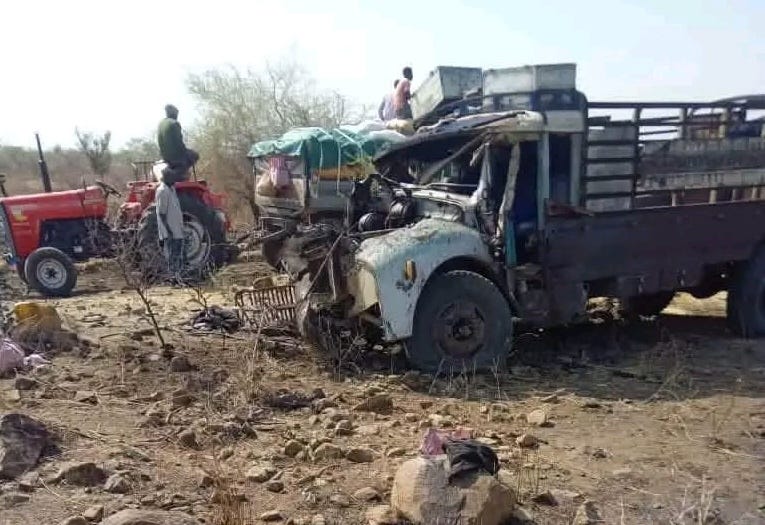
Prized Bayraktar Akinci Drone Lost Over Nyala
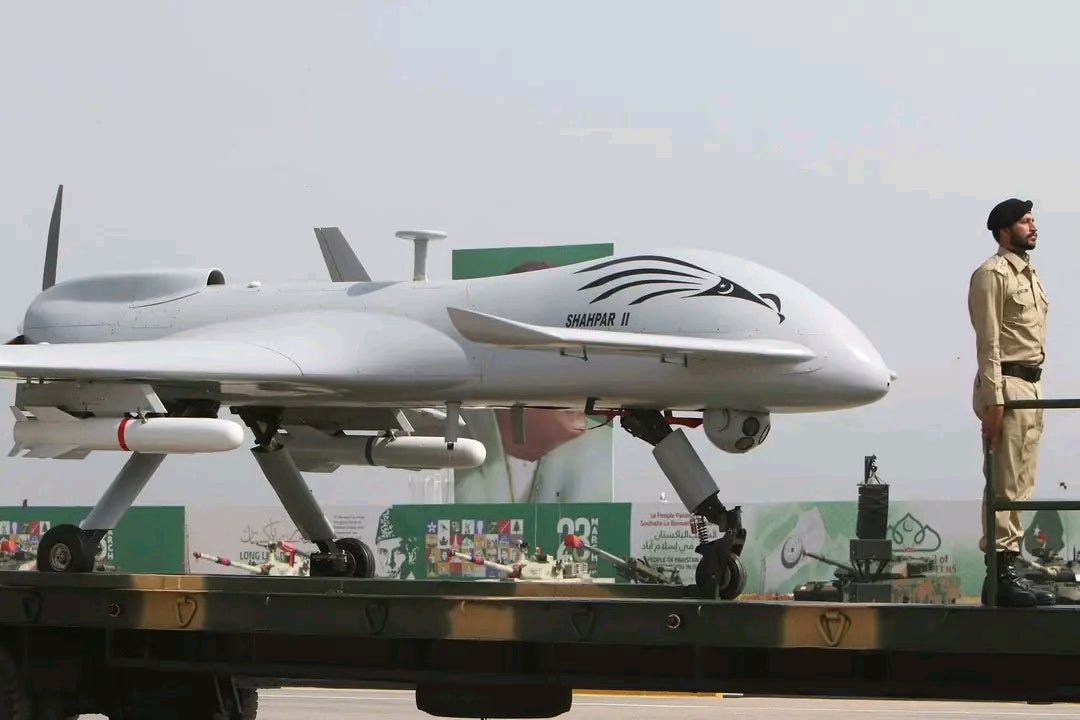
The Sudanese Armed Forces (SAF) is nearing a deal with Pakistan to acquire jets, drones, and air defense systems, according to reporting by Reuters, citing Pakistani military sources.
Sudanese military officials have pinned high hopes on the deal after recent setbacks in Darfur and the central Kordofan region, where the Rapid Support Forces (RSF) are battling the army across a vast theater.
The deal with Pakistan includes more than 200 drones for scouting and kamikaze attacks, 10 Karakoram-8 light attack aircraft/jet trainers, Super Mushshak training aircraft, and potentially some JF-17 “Thunder” combat aircraft, which were developed jointly with China and produced in Pakistan.
This arms package is “a done deal,” said Aamir Masood, a retired Pakistani air marshal who continues to be briefed on air force matters, Reuters reported.
Valued at $1.5 billion, the deal highlights the Sudanese military’s desire to maintain aerial attack capabilities, despite the high price tag and the loss of nearly all the Air Force’s equipment since 2023.
It also spotlights Pakistan’s emerging defense industry, which recently struck arms deals with Bangladesh, Saudi Arabia, and the Libyan National Army (LNA). The deal with Sudan includes a mix of new manufactures and exports from Pakistan’s existing arsenal of weaponry.
Pakistan’s army chief of staff, Field Marshal Asim Munir, recently visited both Sudan and Libya, where Pakistan has agreed to sell warplanes and other equipment worth more than $4 billion to the LNA led by Khalifa Haftar. The LNA, which controls eastern Libya, has supplied arms to Sudan’s RSF, and also facilitates RSF fuel supplies. This relationship means that Pakistani weapons could end up on both sides of the Sudanese conflict shortly.
Drone footage released by the RSF of an attack on a Sukhoi Su-24 tactical bomber at Wadi Saidna Airbase, 20 March 2025.
Sudan’s Air Force lost many of its MiG-29 fighter jets on the first day of the war when the Rapid Support Forces (RSF) attacked the Merowe Airbase. On the same day, four Mi-24 helicopter gunships were destroyed at Jebel Aulia Airbase near Khartoum.
In the following months, the RSF shot down many of the Air Force’s remaining jets, including Guizhou FTC-2000 light combat aircraft, Sukhoi Su-25 ground attack aircraft, and K-8 jets acquired in a pre-war arms deal with Pakistan.
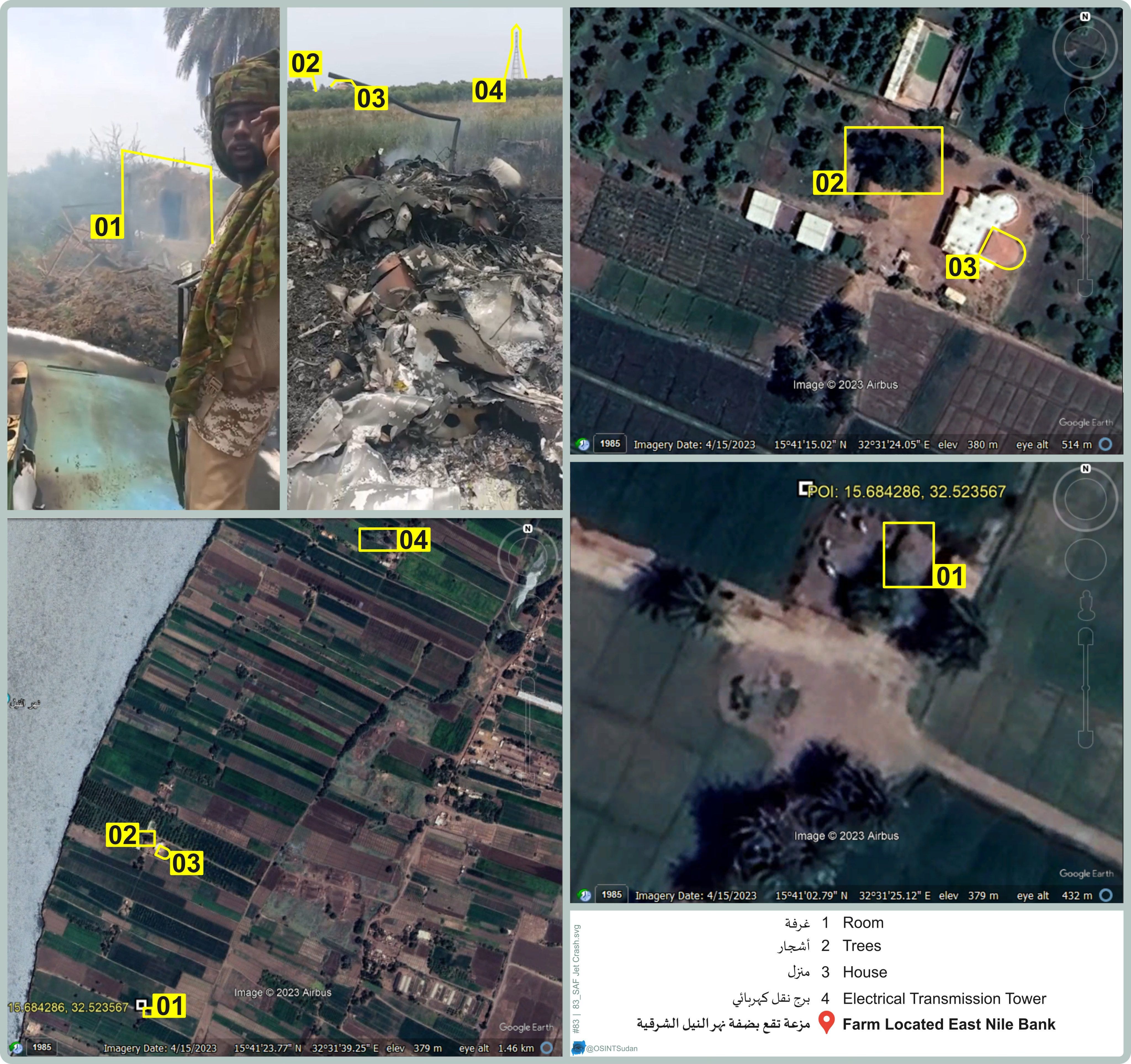
The Sudanese Air Force’s high-altitude bombers (Antonov and Ilyushin cargo planes adapted for high-altitude, low accuracy bombing missions) lasted somewhat longer, but sustained losses in 2024-2025, ending a two-year bombing campaign that killed thousands in Darfur.


The Sudanese Armed Forces (SAF) attempted to replace these aircraft losses by acquiring a package of long-range attack drones from Turkey, including Bayraktar TB2 drones — which first were used in Ukraine, Syria, Libya, and Ethiopia — as well as the larger Bayraktar Akinci variant.
Video of RSF troops with wreckage of a Turkish-made Akinci drone in South Darfur, 8 January 2025. Since last year, Sudan’s Air Force has lost a substantial proportion of its newly acquired Turkish drone fleet.
These drones are capable of carrying out attacks with much greater precision than the manned aircraft owned by Sudan since before the war. The Turkish drones are suspected of carrying out a number of successful attacks in Darfur and Kordofan that hit military vehicles, logistics, leadership targets, as well as civilian targets, including weekly markets (which were also a favorite target of the Ilyushin bombers until they were all shot down).
Recent Air Force attacks on RSF fuel supplies and transports have been particularly effectively, and may have succeeded in degrading the RSF’s operational tempo in Kordofan, temporarily stalling its dry-season offensive.
However, SAF’s arsenal of Turkish drones is dwindling, as the RSF has improved its air defenses and adapted its tactics to evade attack. Our monitoring indicates that the Sudanese military has already lost at least six Bayraktar drones together valued at approximately $40-50 million.
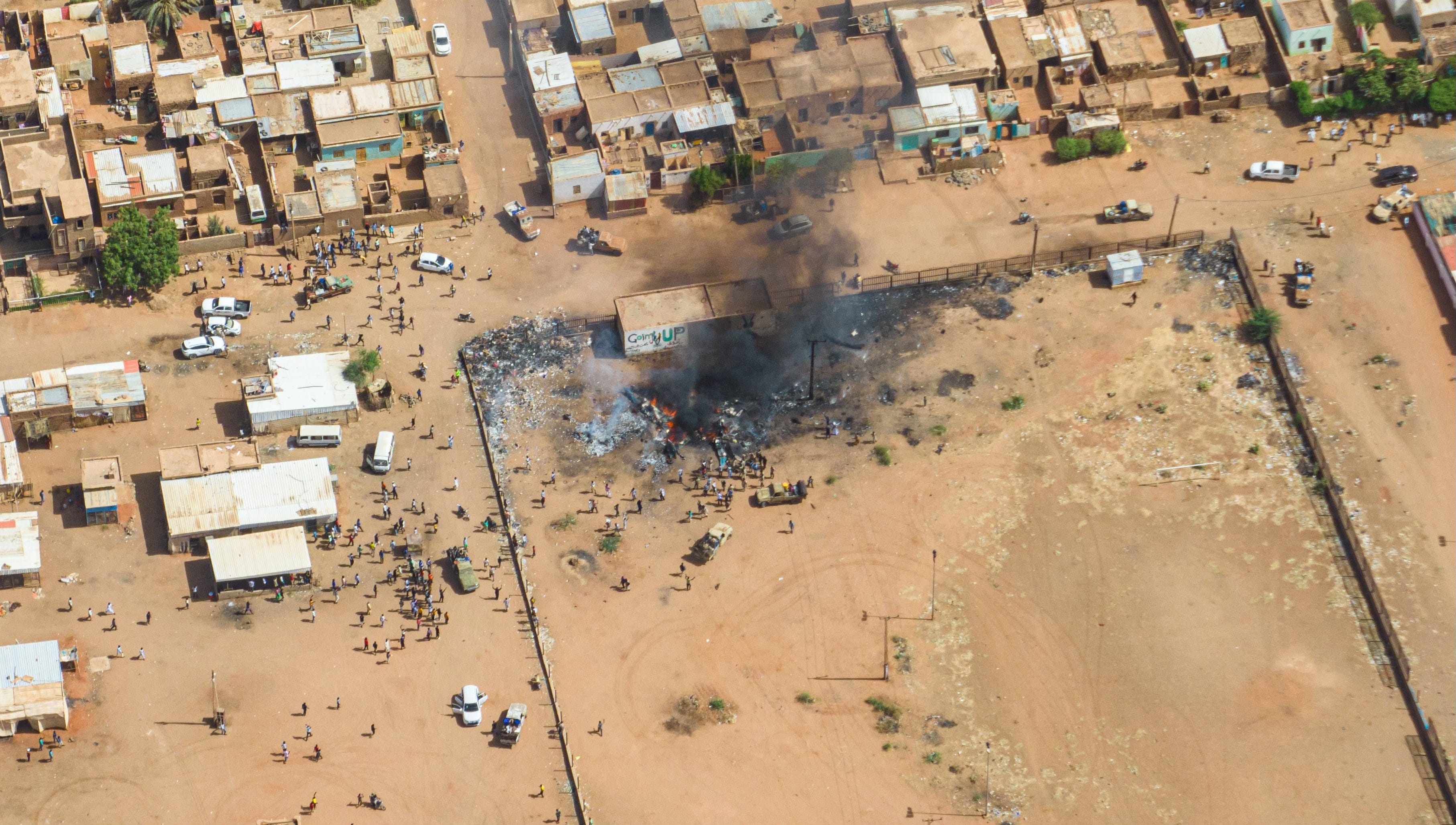
Fire at Al-Fula market, RSF-controlled West Kordofan, 9 January 2026, due to suspected SAF drone attack.
Fire at the Nyala Fuel Market (at the Grand Market), 25 Dec 2025, due to suspected SAF drone attack.
SAF also developed or acquired many smaller unmanned drones capable of carrying out short-range tactical missions. These include both kamikaze drones and bomber drones like the one seen below, which is a Chinese-made DJI drone armed with a Sudanese-made 82mm mortar bomb.
Prestige Weapons
Sudan’s warplanes serve political and propaganda purposes, not just military purposes. Throughout the war, SAF-affiliated media and influencers have portrayed the Air Force as a powerful counterweight to the RSF’s ground power, even as the army suffered a series of defeats.
SAF propagandists consistently portray the Air Force as effective, prestigious, and mysterious. For example, as a series of army bases and cities fell to the RSF in 2023-2025, the army’s influencers often would claim that the garrisons “withdrew” so that the Air Force could annihilate RSF troops that fell into the trap. These claims, though demonstrably false in most cases, were spread by networks of paid influencers, bots, and unwitting members of the public, helping psychologically to mitigate the sting of defeat.
Many attacks by the Sudanese Air Force have killed civilians, according to verified reporting by Centre for Information Resilience, Sudan War Monitor, and other human rights organizations.
Meanwhile, the RSF has built up its own aerial capabilities, carrying out long-range strikes on military training camps, electricity infrastructure, frontline positions, army leaders, and more. Last week, for example, a suspected RSF drone attacked the El Obeid power plant, causing outages.
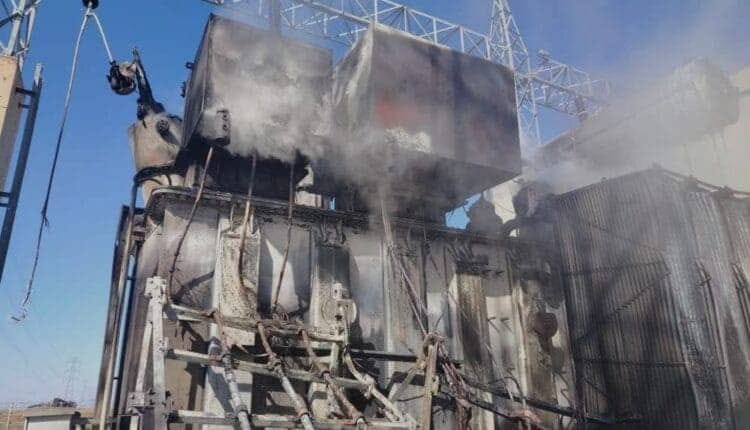
Also, twice within the past week, RSF drones attacked a training camp of the SAF-allied Sudan Shield paramilitary in Al-Jazira State.
The RSF uses Chinese-made strategic drones, including Feihong FH-95 and CH-95 Rainbow. These drones allegedly were supplied or financed by the United Arab Emirates (UAE), which covertly supports the RSF. The RSF also uses smaller drone variants for one-way attacks and reconnaissance.
The RSF’s drone fleet, also called the ‘Tasis Air Force,’ has suffered fewer losses than the SAF Air Force. This may be a result of its target selection, which has been more unpredictable than SAF, which tended to carry out missions over well-defended targets, especially the Tasis capital, Nyala, and the besieged cities of El Fasher and Babanusa.
However, on 9 January 2025, the RSF lost a CH-95 drone over El Obeid.
Drone warfare in Sudan has become increasingly important over the past year, after playing a minimal part in the first year of the conflict (2023-2024). However, drones are still relatively less important in Sudan than in some other conflicts, such as the Ukraine war. Last month, RSF troops succeeded in overrunning army positions north and west of Kadugli, despite recent drone attacks along that front, which failed to deter the ground offensive.
News in Brief
Roundup of key political, military, and humanitarian developments from across Sudan, including news, insights, and videos.
Kamal Idriss, the military-appointed prime minister of Sudan, announced that he and his cabinet had relocated from Port Sudan to Khartoum, marking the end of a nearly three year exile from the capital due to two years of intense urban combat and widespread destruction.
RSF troops mounted in dozens of combat vehicles attacked army positions around Jebel Abu Sinun, which form part of the army’s perimeter defense around El Obeid, North Kordofan, 10 January 2026.
Meanwhile, the army’s short-lived operation south of El Obeid (Kazgil-Dilling axis) has stalled completely. However, a military source in the army’s Joint Operations Room told Al Jazeera news channel that a larger offensive is planned, and that the recent military movements were just intended to evaluate the enemy’s capabilities and probe for weaknesses.
Two women died and several others were injured in a landmine explosion in South Kordofan on the road between Um Barambita and Tandik. The victims were traveling in a truck to a weekly market.
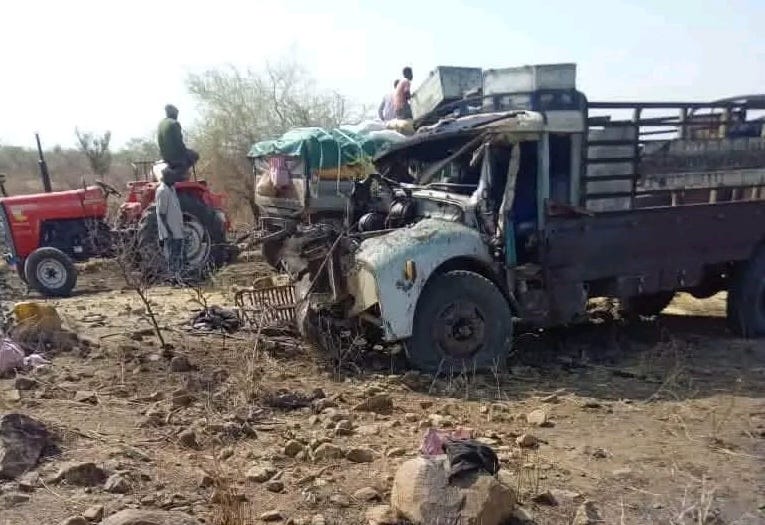
The RSF took control of Jirijira, a border town in West Darfur controlled by the Justice and Equality Movement (JEM), located about 50 km north of Jebel Moon. JEM troops withdrew into Chad.
A suspected army drone attacked a livestock market in Um Jimeina in the Sunut district of the Nuba Mountains region, 6 Jan 2026. The armed group controlling the area, SPLM-N, claimed the attack killed 13 civilians.
SAF also allegedly carried out an aerial attack on Yabus in Blue Nile State, 11 Jan 2026, inflicting casualties. Details pending further verification.
A court in Gedaref sentenced a young man named Ayman Al-Hariri to six months in prison for a Facebook post that said simply, “Youth House, the New Ghost House, Release the Comrades!” The Gedaref Resistance Committees condemned the sentence, saying, “This verdict cannot be separated from the context of the militarization and politicization of the judiciary, and the use of of laws that restrict freedoms as a weapon to terrorize revolutionaries and silence voices opposing the war and the de facto authority… We affirm that such rulings will not intimidate us or deter us from continuing our struggle against war and tyranny…”
The resistance committees were the grassroots organizers of the mass protests in 2018-2019 that toppled the 30-year regime of Omar al-Bashir. However, the military coup in 2022 and the outbreak of war in 2023 resulted in renewed repression and the sidelining of the protest groups.