

Sudan Ruler Names Hardliner Yasser Atta Chief of Staff
Hardliner’s rise to chief of staff underscores SAF’s rejection of ceasefire pressure
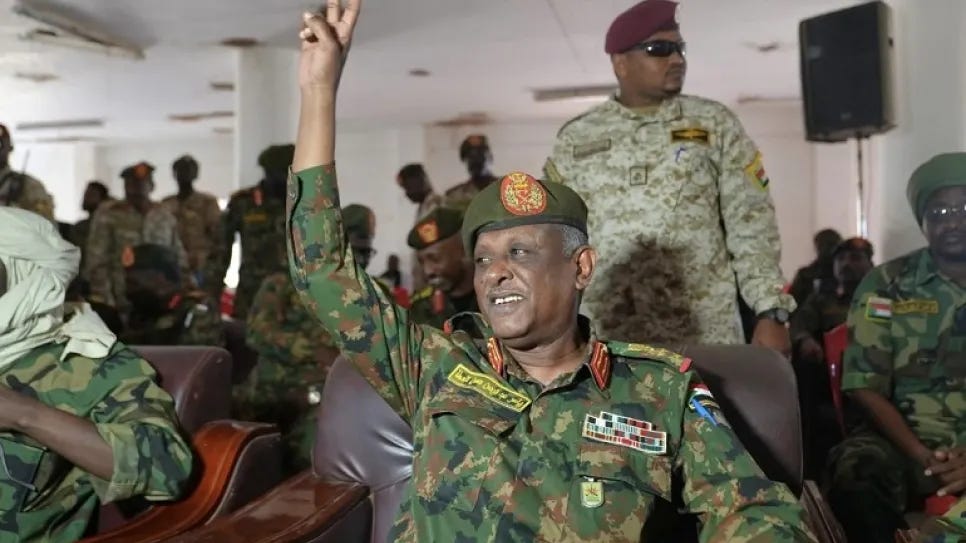
Sudan’s military leader General Abdelfattah al-Burhan has carried out a sweeping overhaul of the Sudanese Armed Forces (SAF) high command, appointing Gen. Yasser Abdelrahman Hassan Al-Atta as Chief of the General Staff in a move that consolidates hardline control over the country’s military and signals a shift toward a prolonged war strategy.
The decision, announced on Thursday, April 2, replaces Gen. Mohamed Osman al-Hussein, who was retired and relieved of his duties the same day. The restructuring also installs a new leadership team across intelligence, operations, logistics, and training—key pillars for sustaining long-term military campaigns.
Al-Burhan’s reshuffle places Al-Atta, a central figure in the military junta and one of its most outspoken commanders, at the helm of day-to-day military operations. His appointment formalizes a consolidation of power that had already been visible since the early phases of the war.
Al-Atta previously served as Assistant Commander-in-Chief and commanded the Omdurman Military Area during the first two years of the conflict, from April 2023 through late 2024. That period saw some of the most intense urban combat, with SAF forces attempting to dislodge the Rapid Support Forces (RSF) from entrenched positions across Khartoum State’s capital region.
His tenure in Omdurman was marked by attritional warfare, artillery-heavy engagements, and repeated offensives aimed at reclaiming strategic corridors. Despite limited territorial gains early on, the army eventually stabilized its positions and launched counteroffensives starting with expansion within Khartoum, River Nile, and Al-Jazira states.
Al-Atta’s elevation now places a battlefield commander, rather than a bureaucratic officer, at the center of military planning. It also reinforces the dominance of officers tied to the Islamist-era command structures that continue to shape SAF’s leadership culture.
The rest of the appointments reinforce this shift toward operational consolidation. Lt. Gen. Moatasim Abbas Al-Toum Ahmed was named Deputy Chief of Staff for Operations, a role that will oversee front-line coordination across multiple theaters, including Darfur, Blue Nile and Kordofan regions where the frontline has shifted to since May 2025.
Lt. Gen. Mohamed Ali Ahmed Sabir was appointed Director of Military Intelligence, placing him in charge of surveillance, counterintelligence, and coordination with allied militias. This position is particularly significant given the increasing role of intelligence in tracking RSF movements and supply routes.
Lt. Gen. Abdel Khair Abdullah Nasser Darjam will serve as Deputy Chief of Staff for Administration, while Lt. Gen. Haidar Ali Al-Turaifi Ali takes over training, and Lt. Gen. Khalafallah Abdullah Idris Abdelrahman assumes responsibility for supply and logistics—an area that has proven decisive in sustaining prolonged engagements.
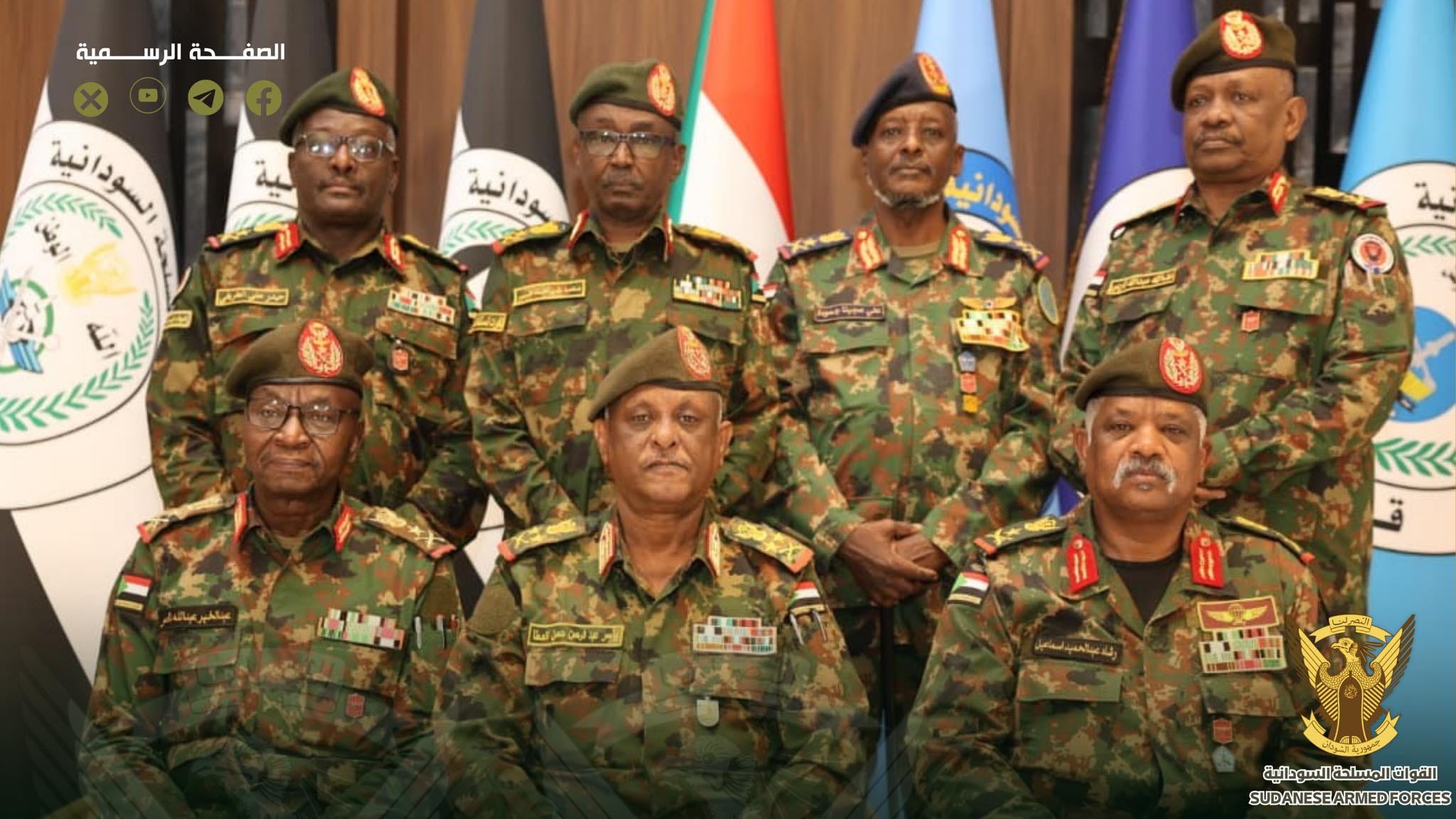
The restructuring also includes a wave of promotions and retirements, signaling a broader generational shift within the officer corps. Several senior officers were elevated to the rank of lieutenant general, while others were promoted and immediately retired, clearing space for a new command structure aligned with the current war effort.
The choice of Al-Atta as Chief of Staff carries clear political and strategic implications. He is widely regarded as one of the most hardline figures within the military leadership, with a record of opposing negotiations and advocating for total victory over the RSF, which Al-Burhan himself has echoed on several occassions.
In previous statements, Al-Atta has rejected ceasefire initiatives and insisted that the war must continue until the RSF is defeated or surrenders. He has also publicly declared that the military intends to maintain power for decades after the war, framing civilian rule as subordinate to military authority.
In one notable remark, he suggested that the armed forces could remain in control for multiple election cycles, effectively sidelining any immediate prospects for a civilian-led transition. That rhetoric places him at odds with both domestic civilian coalitions and international mediators.
“The commander-in-chief of the Armed Forces will remain the head of state with sovereign powers even after the elections—not only during the transitional period, but also after the elections—for up to three or four election cycles.”
“And I swear to God that the military establishment will examine Sudan again with a microscope and there will be no leniency,” he said in September 2024.
His appointment is therefore likely to be interpreted as a signal that the SAF leadership has deprioritized political settlement in favor of a military outcome. It reduces the likelihood of near-term negotiations and strengthens the position of factions within the army that view compromise as a strategic risk.
For the RSF, the restructuring indicates that the SAF is preparing for a sustained campaign rather than a negotiated settlement. The emphasis on operations, intelligence, and logistics suggests a focus on coordinated offensives and territorial consolidation.
This comes at a time when the RSF has maintained mobility across multiple regions, relying on decentralized command structures and cross-border supply lines. Strengthening military intelligence and logistics within SAF could be aimed at disrupting these networks and tightening control over contested areas.
However, the appointment of a hardliner also raises the risk of escalation. Al-Atta has previously issued threats against neighboring countries and accused regional actors of supporting the RSF, contributing to tensions with Chad.
His rhetoric has also targeted international actors, including the United States and Gulf countries involved in mediation efforts. That stance complicates diplomatic engagement at a time when external actors are attempting to revive ceasefire talks.
For international stakeholders—including the United States, Saudi Arabia, the United Nations, and the African Union—the restructuring presents a more rigid negotiating counterpart. Al-Atta’s history suggests limited willingness to engage in compromise or confidence-building measures.
Efforts to bring SAF back to the negotiating table may face increased resistance, particularly if military leaders believe that battlefield momentum is shifting in their favor. The restructuring could therefore stall or derail ongoing diplomatic initiatives.
Support our journalism

Thank you for reading Sudan War Monitor. We do this work because we believe that journalism is one accountability mechanism that ultimately can contribute toward peace and justice in Sudan—however distant that hope may be. Our work is intended to be a resource for humanitarians, civil society, ordinary Sudanese, diplomats, and news media. Subscribe or share to support our work and #KeepEyesonSudan.
Why your topic is without author’s name?