
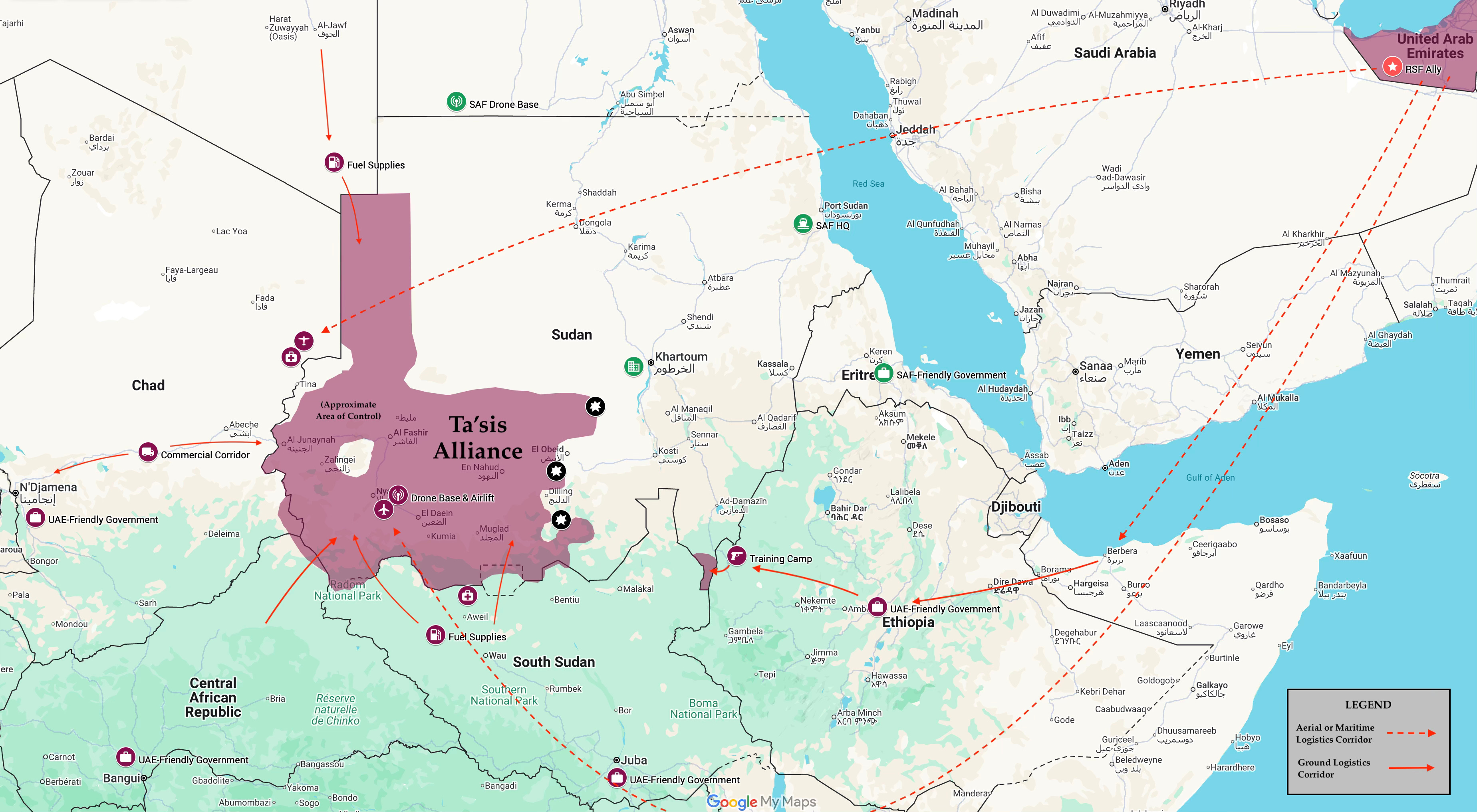
Sudan’s rebel alliance is ostracized by Western governments and frequently condemned, but it is far from isolated regionally. Five of seven countries bordering Sudan now allow the rebels to operate on their territory.
Since the war began in 2023, Chad, South Sudan, the Central African Republic, and Libya (LNA) have all served as conduits for weapons, fuel, and recruits into rebel-held territory in Sudan, with the United Arab Emirates (UAE) acting as financier, organizer, and the supplier of advanced weaponry.
None of these neighbors is openly hostile, but they all fought the Sudanese government in previous eras, either directly or through proxies. Now, a mix of economic incentives, strategic considerations, and historical grievances has driven them to covertly support the Sudanese rebels—or, at minimum, to tolerate rear operations on their territory.
Ethiopia is the latest of Sudan’s neighbors to join the fray. New evidence unveiled by Reuters yesterday, corroborated by Sudan War Monitor’s own conflict monitoring, points to a growing rift between Ethiopia and Sudan. In recent months, Ethiopian military intelligence has facilitated the establishment of a major rebel training and logistics hub in the Benishangul Region near the Sudanese border, according to the Reuters investigation.
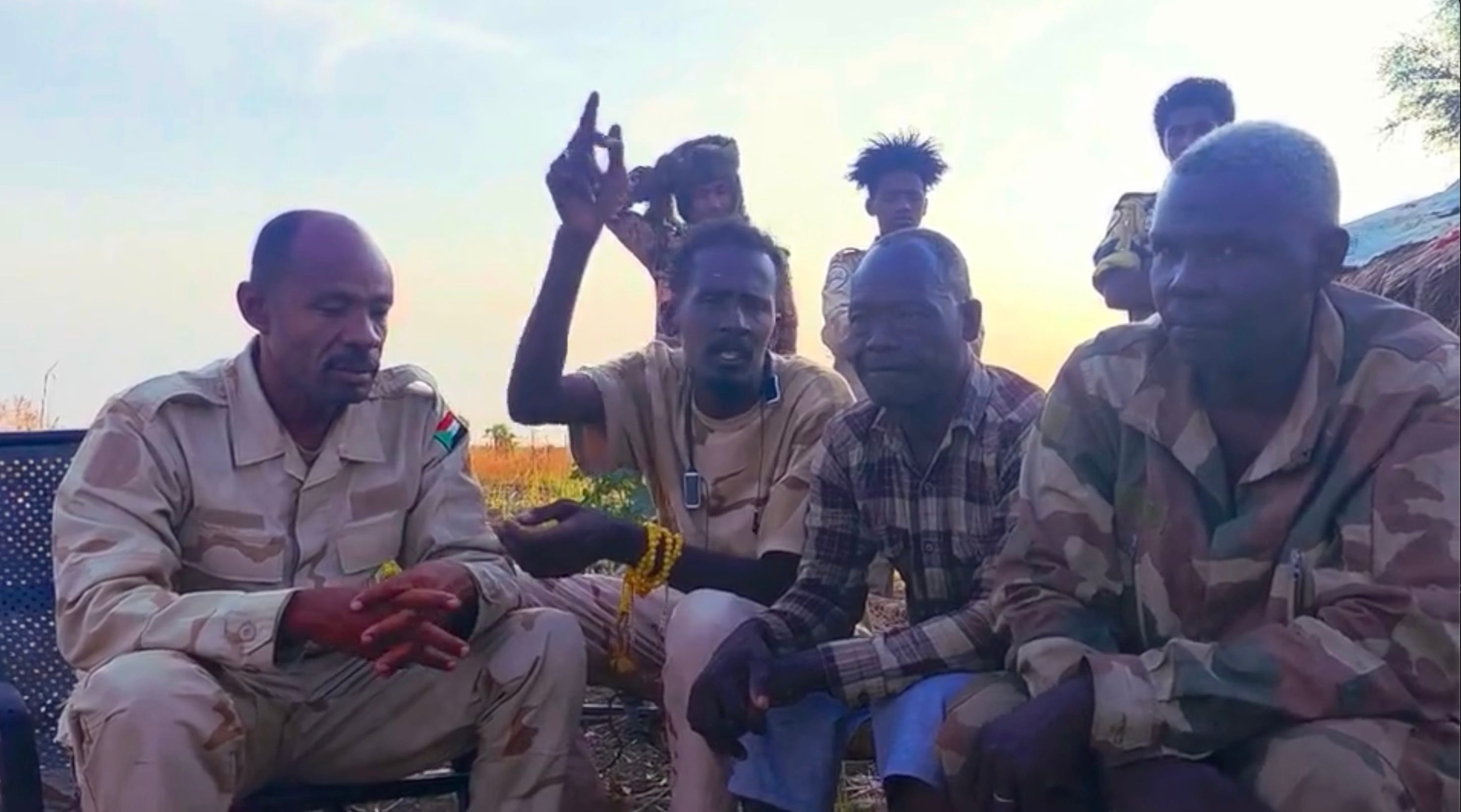
Video: Joint gathering of RSF and SPLM-North troops (identifiable by their uniforms, insignia, and slogans) at the ‘New Funj’ front, which means either in Blue Nile State of Sudan or in the adjoining Ethiopia region. Source: Sudan War Monitor via monitoring of combatant social media pages.
Citing an internal memo of Ethiopia’s security services, Reuters reported that 4,300 Sudanese rebel fighters were in training in the camp as of early January. The document said that Ethiopia’s chief of military intelligence, General Getachew Gudina, was responsible for setting up the camp.
Ethiopian authorities declined to comment.
Satellite photos of the Menge Camp show heavy trucks whose size and shape match those of models frequently used by the Ethiopian military and its allies, according to Reuters analysis. Additional sources pointed to the involvement of Emirati logistics company Gorica Group in setting up the camp.
Diplomatic sources expressed concern about the proximity of the Menge Camp to the Grand Ethiopian Renaissance Dam, Africa’s largest hydroelectric dam, which is about 100 km to the north, fearing it may be damaged or targeted if fighting broke out in the area.
This covert Ethiopian activity coincides with a flare-up of Ethiopia’s own internal conflict against the Tigrayan People’s Liberation Front — a group historically supported by Sudan — as well as escalating fighting in Blue Nile State of Sudan, near the new training camp.
Conflict Background: The Ta’sis Alliance
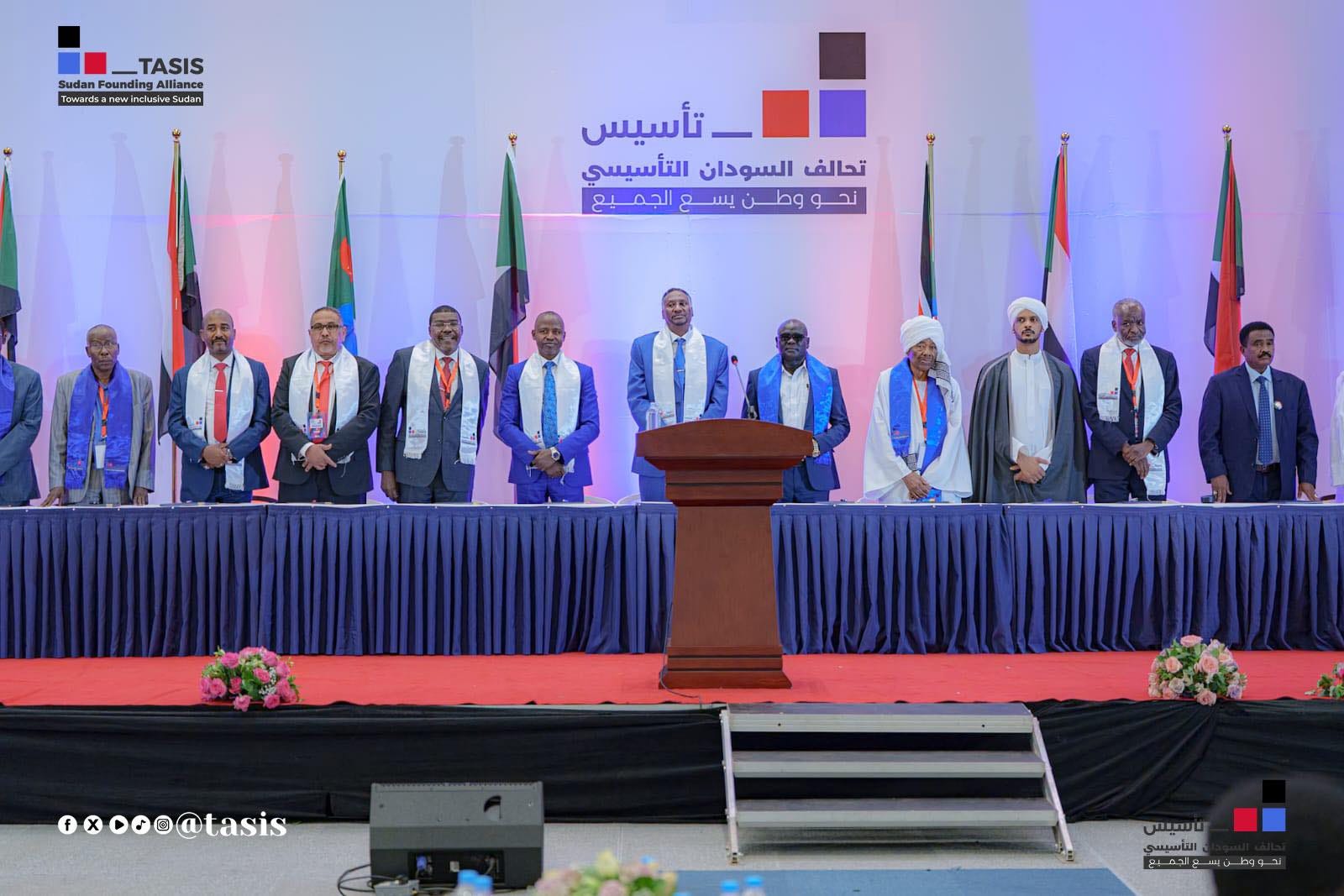
Sudan’s rebel alliance consists of two main partners, the Rapid Support Forces (RSF) and the Sudan People’s Liberation Movement-North (SPLM-N) — former enemies brought together by Emirati money, a common enemy, and a shared political charter and structure that took more than a year to negotiate.
The Sudanese military and its media organs generally attempt to obscure the difference between the RSF and the SPLM-N, portraying them as one and the same. In reality, the rebels are allied but still clearly distinct armed groups.
The Rapid Support Forces (RSF) originated in Darfur as an umbrella group of Arab ethnic militias initially backed by the Sudanese government. After falling out with the military, the RSF mutinied in 2023. The RSF consists mostly of Darfur and Kordofan Arabs of Sudan, but it also recruits among the Arab minorities of Chad and the Central African Republic. Furthermore, the RSF has key commercial and military relationships in Libya.
For its part, SPLM-N originated in South Kordofan and Blue Nile states as a part of a wider insurgency against Sudan’s government. It consist mostly of ethnic Nuba, Ingessana, Uduk, and smaller ethnic groups, and it defines itself in opposition to Islamism and Arabism.
SPLM-N has historic relationships with South Sudan, Kenya, and Uganda. Although SPLM-N is the junior partner in the Ta’sis Alliance, it controls much of the territory near the present frontlines.
The two rebel groups still look upon each other warily, and their forces have not integrated. But there are growing signs of operational cooperation, including in Blue Nile. The state had been largely quiet until RSF troops and equipment began crossing from Ethiopia into a corner of the state historically controlled by SPLM-N, the Yabus/Kurmuk corridor. After a series of clashes near Kurmuk in January, the Sudanese Air Force carried out aerial attacks in the SPLM-N controlled town of Yabus last week, February 4.
Video: RSF fighters in Blue Nile State of Sudan celebrating after overrunning an army outpost near the Ethiopian border, 25 Jan. 2026. Source: Sudan War Monitor via monitoring of combatant social media pages.
The name of the political charter signed by the SPLM-N and the RSF is “Ta’sis,” which means “establishment.” Their stated aim is to topple the “1956 state” — a shorthand for the entire state apparatus established since independence — and to start afresh with a self-declared ‘Government of Peace and Unity,’ which is presently headquartered in Nyala.
The rebel realm, though landlocked, is as big as Ukraine and is home to about a quarter of the Sudanese population. The territory lacks government services, is largely rural, and suffers from widespread food insecurity. Its towns and markets are regularly bombed by the Sudanese Air Force.
Despite this, the Ta’sis Alliance (and in particular the RSF) has posed a formidable military threat to Sudan’s government. The RSF captured and controlled most of the national capital from 2023 to early 2025, overran army units in other cities, and it has acquired sophisticated military equipment, including a growing fleet of kamikaze drones and guided-missile drones.
Together, the RSF and SPLM-N have hundreds of thousands of fighters under arms — perhaps as many as a half million, if local militias that occasionally or seasonally mobilize on behalf of the RSF are included. This total is fewer than the Sudanese military, but it is large enough to make the war look intractable.
Sudan’s civil wars have all been long: the Anyanya War lasted 17 years (1955-1972), the Second Sudanese Civil War (also called the Liberation Struggle by South Sudanese) lasted 22 years (1983-2005), the Darfur War lasted about 17 years, albeit varying in intensity during that time (2003-2020), and the SPLM-North War lasted about eight years (2011-2018).
Without effective mediation, the current war looks unlikely to end any time soon. Political analysts of varying backgrounds now are warning that Sudan’s conflict could spill over to neighboring countries, just as it did during previous Sudanese civil wars. In particular, the RSF deployments to Blue Nile State pose the risk of a new proxy war between Ethiopia and Sudan, echoing the Cold War-era conflict between Sudan and the Ethiopian Derg.
The involvement of Egypt and Eritrea in Sudan (regional rivals of Ethiopia) further complicates the picture and raises the risk of wider regional conflict and massive arms proliferation across the historically volatile Horn of Africa.
UAE-Linked Activity in South Sudan
In parallel with the latest reports of UAE-linked shipments to the RSF routed through Ethiopia, South Sudan has emerged as a logistics hub of growing importance in sustaining the group’s war efforts. Local media and civil society have pointed to the use of South Sudanese territory as a transit corridor for medical supplies, fuel, and other supplies destined for the RSF, reinforcing concerns that Sudan’s neighbors are being drawn into the conflict.
Central to these concerns is a newly constructed UAE-funded field hospital in Madhol, a small town located in Northern Bahr el Ghazal State, approximately 64 kilometers south of the Sudanese border. While publicly framed as a humanitarian donation, the hospital’s proximity to the border, its size, and the level of medical sophistication have prompted security analysts and civil society actors to question whether the facility treats wounded RSF fighters, serving as part of the RSF’s rear-area support network.
The Northern Bahr el Ghazal State government described the project as a “generous gift” from UAE President Sheikh Mohamed bin Zayed al-Nahyan.
Meanwhile, recent events have pointed to growing coordination between the RSF and elements of the South Sudan People’s Defence Forces (SSPDF) in Unity State, particularly following shifts in control along the Sudan–South Sudan border. Multiple sources allege that RSF units have collaborated with South Sudanese government forces to counter South Sudanese opposition (SPLA-IO) forces along key border corridors.
For example, clashes were reported in Qaria (9°45’21.98”N 29°22’5.77”E), a border settlement, which had long functioned as a rear base for SPLA-IO rebels. Following the RSF’s takeover of Heglig, SSPDF commanders reportedly requested RSF support to dislodge SPLA-IO units from the area.
The operation triggered the withdrawal of an SPLA-IO force commanded by Maj. Gen. Moses Ruai Khor back into South Sudan, culminating in armed clashes with SSPDF forces at Kubri Jamus (also known as Kubri Nyabol, 9°41’10.14”N 29°18’11.92”E) at the Ngol River, marking a rare but significant convergence of Sudan’s war dynamics with South Sudan’s.
Support our journalism

Sudan War Monitor is a collaborative of Sudanese and international journalists and open source researchers covering Sudan’s civil war through OSINT, reporting, Arabic-language sources, and political-military analysis. We publish maps, verified videos, news, and investigative reporting.