
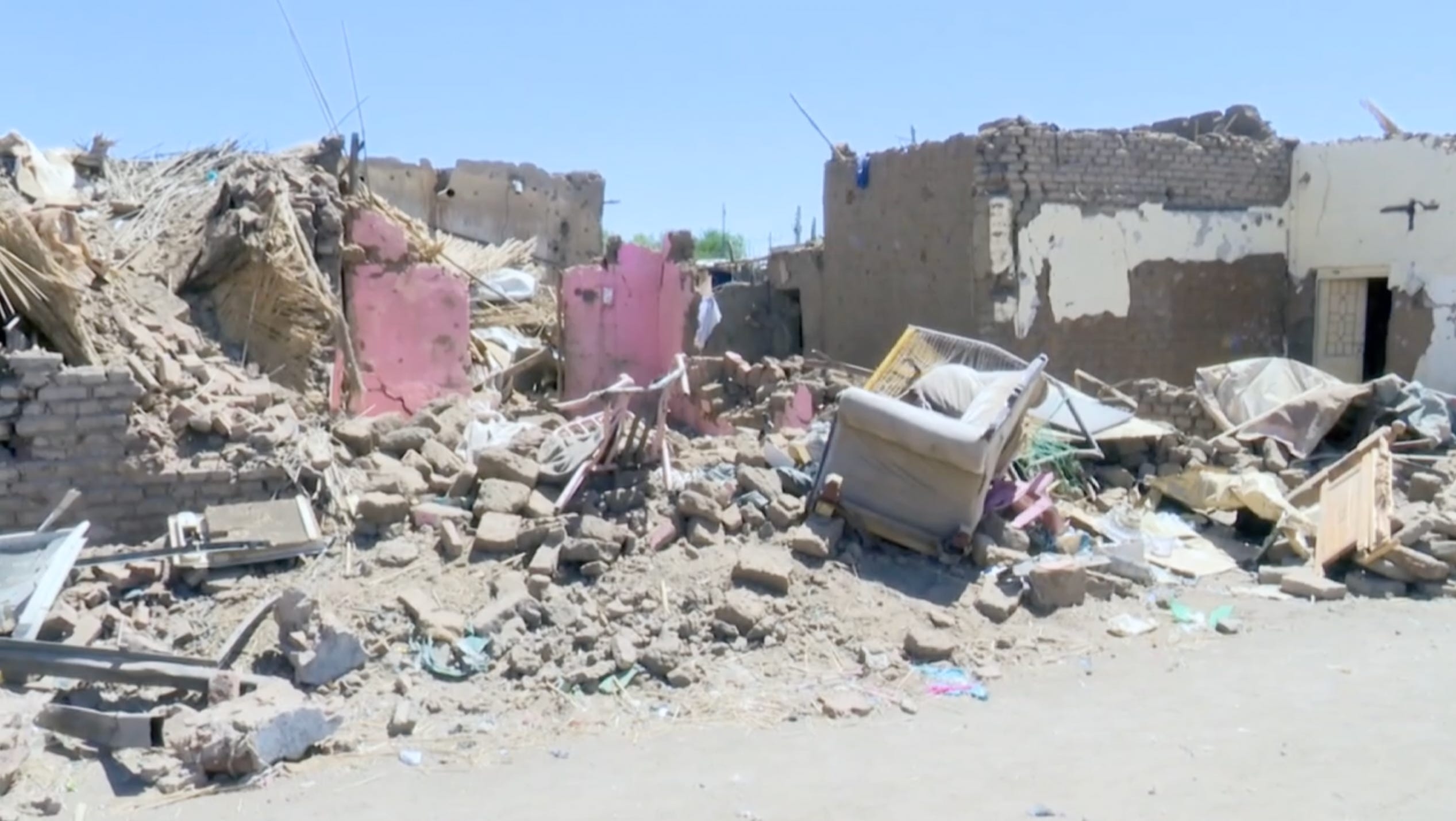
An apparent airstrike destroyed houses and allegedly killed several children in the Soba suburb of Sudan’s capital Khartoum on April 1.
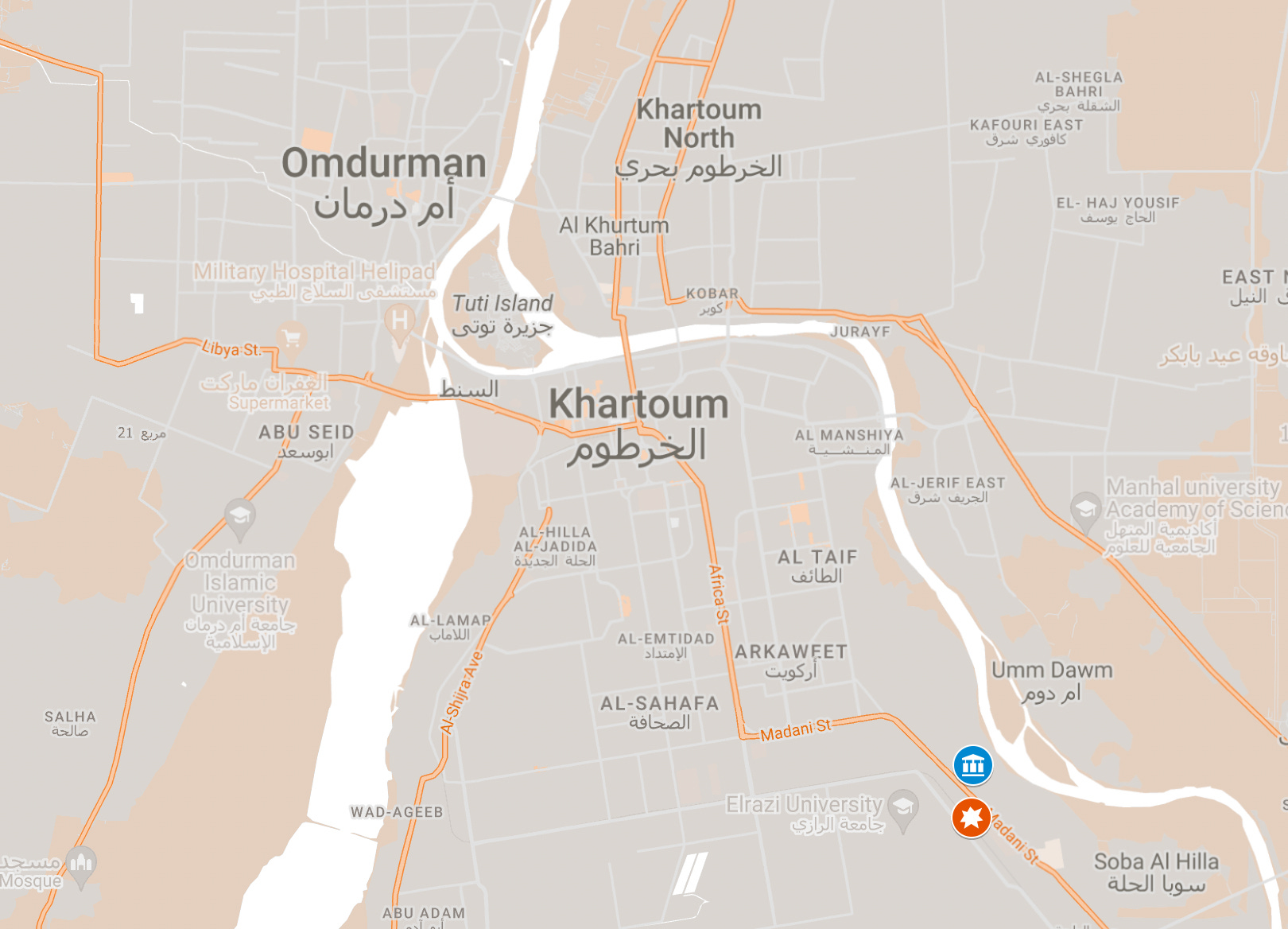
The attack took place 1.1 km from the United States embassy, which diplomatic personnel evacuated in April a year ago. Several other airstrikes have targeted this area, including one in January that hit a UNICEF warehouse.
Witnesses and survivors in a video filmed in Soba Station Block 1 testified that their houses were destroyed, saying there were no Rapid Support Forces (RSF) soldiers in the area, making civilians the only victims.
“I was at work, [I returned to find] my three kids were killed, small kids: 18 years old, 14 years old and 5 years old. I am a mother of martyrs,” said one of the women. “My son was disabled and [as you see] that’s his wheelchair inside the house. He was inside the house. My son, 5 years old, and my daughter, her age is 14 years old, were cooking inside the kitchen. You can see how our kitchen is destroyed like that.”
The video was shared and produced by the media arm of RSF, making it difficult to know if the witness testimonies are reliable or perhaps were coerced or incentivized. Nevertheless, through geolocation we were able to confirm the authenticity of the video showing damage to the residential area.

The RSF control Soba and most of Khartoum in general. Both RSF combatants and civilians have died in airstrikes in various parts of Khartoum since last year.
Another victim of the airstrike, speaking in the same video (0:42–1:16), said that her son had just been married 24 days before the attack and was an “innocent civilian.”
“He was killed in the airstrike without any reason. We live off casual work, we don’t have anything. Now this is our home destroyed and this is my son, newly married, who was killed with henna [on his hands]. My cousin is wounded in his leg. Two families, two homes, are here destroyed. We don’t have anything left.
She claimed that in total 24 people died.
The fourth speaker (1:59–2:11) said that her husband’s legs were broken in the attack. “I want this war to be stopped in the shortest possible time because we are the victims. There are no victims other than the civilians in this war.”
Anger at junta leader
Victims blamed the Sudanese military ruler Abdel Fattah al-Burhan for the airstrike. The woman who said she lost three children said, “I want to tell him [Burhan] that, inshallah God will not forget [what you have done]. Inshallah a burning fire will happen to you from the toe to head. I did nothing. I am an innocent human being, and these are my children I depend on... (tears welling up).”
Similarly, the woman whose son had just been married called Al-Burhan a “butcher,” saying, “You killed my son who was married for just 24 days. I hadn’t yet celebrated with him, and he hadn’t done anything, but you killed him.”
The third speaker in the video (1:17–1:42) said, “Mr. Burhan, I am telling you that what you have done to us is a very big sin that I don’t even think Allah will forgive, because all the people who died are all innocent. For me, the whole of my house is destroyed. It was only because I was not in it, I would have been a martyr among them.”
One of the women expressed hope for the RSF to win the war, saying her three-year-old son was killed in the airstrike, and a grandson. “Those of the RSF helped us. They buried our children and helped us. God bless and help them here on earth. Burhan, may God deal with him… God willing the RSF will win.”
RSF have tried to exploit popular anger at airstrikes in parts of Darfur and Khartoum State to recruit and gain support for their war effort. The paramilitary began fighting the Sudanese army in April 2023, claiming they were only defending themselves.
In the first hours of this war, the RSF attacked the presidential palace, key airbases, the state broadcaster, and other institutions, suggesting they had planned a coup d'état to take power by force.
Elements of the Sudanese Air Force survived RSF’s initial attacks, including Soviet-era fighters, some Chinese-made planes, and Antonov cargo planes that are used to drop barrel bombs and other crude explosive devices.
Related coverage:
Exclusive: RSF fighters shot at U.S. Embassy Khartoum, looted residences

Members of the Rapid Support Forces (RSF) looted vehicles and buildings at a U.S. embassy residential complex on May 13, 2023, according to an informed source. They also tried to break into the U.S. Embassy itself on May 26.
Airstrike kills women and children at busy Khartoum market

Haunting images of two toddlers screaming over the bodies of dead Sudanese women didn’t make the news this week. The women were among dozens killed in a blast at a crowded Khartoum market on November 24, a week ago. Now in its eight month, Sudan’s civil war is destroying a country larger than Ukraine, amid evidence of unrelenting war crimes by both sides in the conflict. Yet not one international news organization covered the story of the market bombing. Even Sudan’s own Arabic-language press paid scant attention to the attack.
Women killed in Khartoum bombing

An explosion in Sudan’s capital Khartoum on Wednesday, September 27, killed at least seven civilians, including five women, according to geolocated video of the aftermath. The explosion took place on Africa Street near Sports City, in an area controlled by the Rapid Support Forces (RSF).
Other news in brief
Forces from the Sudan Liberation Movement factions led by Mustafa Tambour and Minni Minawi, which are allied with the Sudanese army, arrived in Al-Fau, a town near the frontline between Gedaref and Al Jazira states.
Junta leaders have continued regular visits to infantry division headquarters in various cities. SAF Commander-in-Chief Lt Gen Abdel Fattah al-Burhan and Assistant Commander-in-Chief Yasser al-Atta both visited Shendi, while Deputy Commander in-Chief Shamsaddin Kabbashi was in Gedaref on Thursday. Here is a short video of Kabbashi participating in an iftar meal with soldiers in Gedaref.
As the food crisis worsens in Darfur, many residents are eating locusts as a survival mechanism. This video was shared via Darfur Victims Support from Kalma IDP camp.
The UN World Food Programme said Friday that it had brought food to Darfur for the first time in several months, emphasizing, however, that it was “not enough as millions struggle to have even a basic meal a day.” Two convoys crossed the border from Chad into Darfur in late March, carrying food and nutrition assistance for around 250,000 people facing acute hunger.
37 trucks carrying 1,300 metric tons of supplies crossed into West Darfur from Adre in Chad last week, and 16 trucks with around 580 metric tons entered North Darfur from Chad’s Tina border crossing on March 23. Another six trucks with 260 metric tons of food reached the area from Port Sudan a few days later.
In a news release, WFP stated: “These are the first cross-border convoys of WFP assistance to reach Darfur following lengthy negotiations to reopen these routes after the authorities in Port Sudan revoked permissions for humanitarian corridors from Chad in February.”
Humanitarian organizations and donors are planning to convene in Paris for a conference later this month. Donor pledges are expected to be announced.
Musa Hilal survived an attempt on his life in North Darfur.