
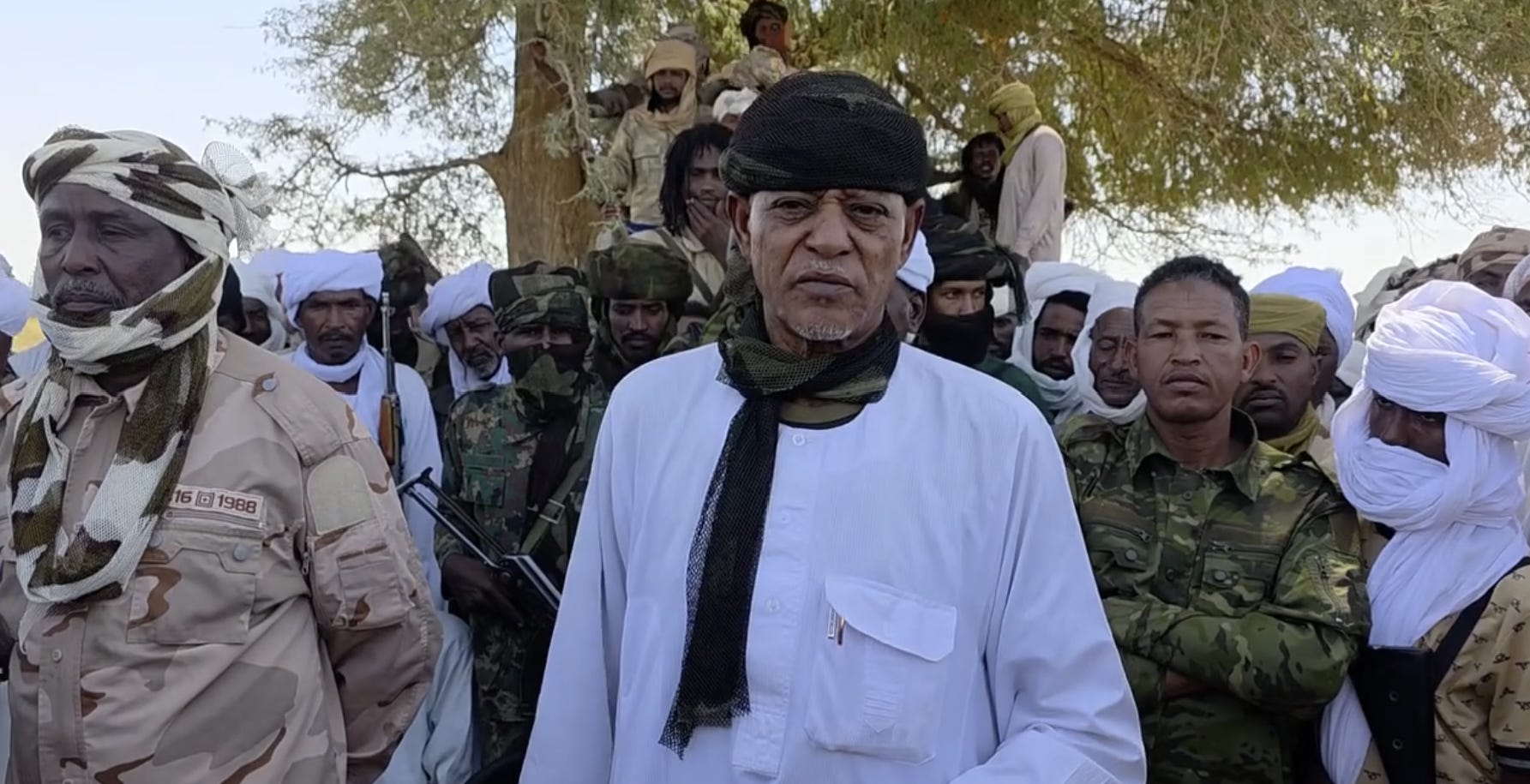
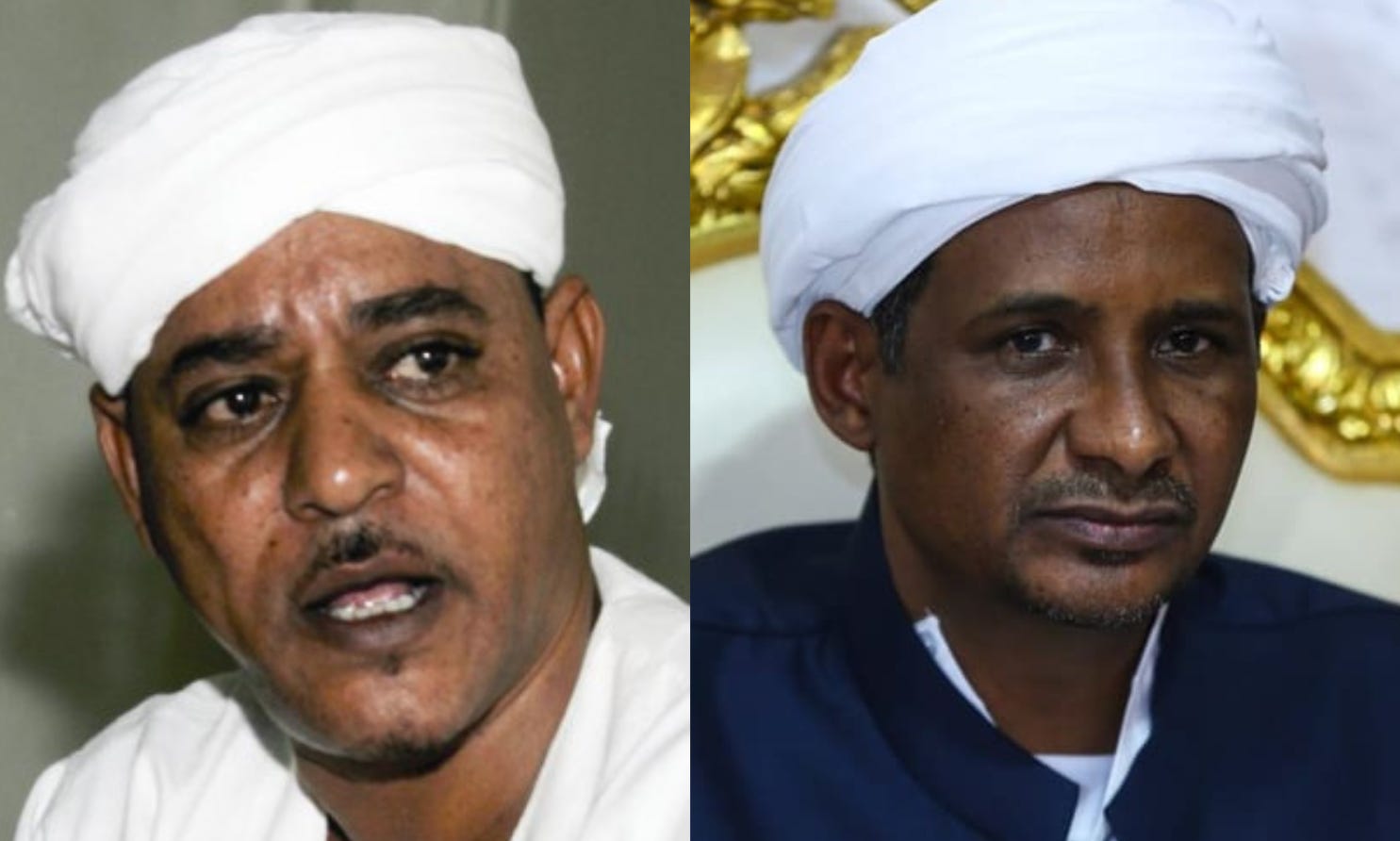
The Rapid Support Forces (RSF) on Monday seized control of Misteriha, the stronghold of Arab tribal leader Musa Hilal, a longtime rival and critic of RSF leader Mohamed Hamdan Dagalo.
The intra-Arab fighting in Darfur is taking place within the wider conflict between the Sudanese Armed Forces (SAF) and the Rapid Support Forces (RSF), a regional paramilitary that mutinied in 2023. Although these two actors dominate headlines and shape media narratives, the conflict also encompasses a complex configuration of local, regional, and ideological armed groups that are either allied with one of the main belligerents, independent, or loosely affiliated in one way or another.
Hilal has an independent power base near the mountainous enclave at the heart of the region, Jebel Marra (which is controlled by another independent faction, the Sudan Liberation Movement led by Abdel Wahid al-Nur). Though independent, Hilal also is likely receiving support from Sudan’s military in the form of weapons and money, consistent with past patterns of proxy warfare and Hilal’s own history of working with military intelligence.
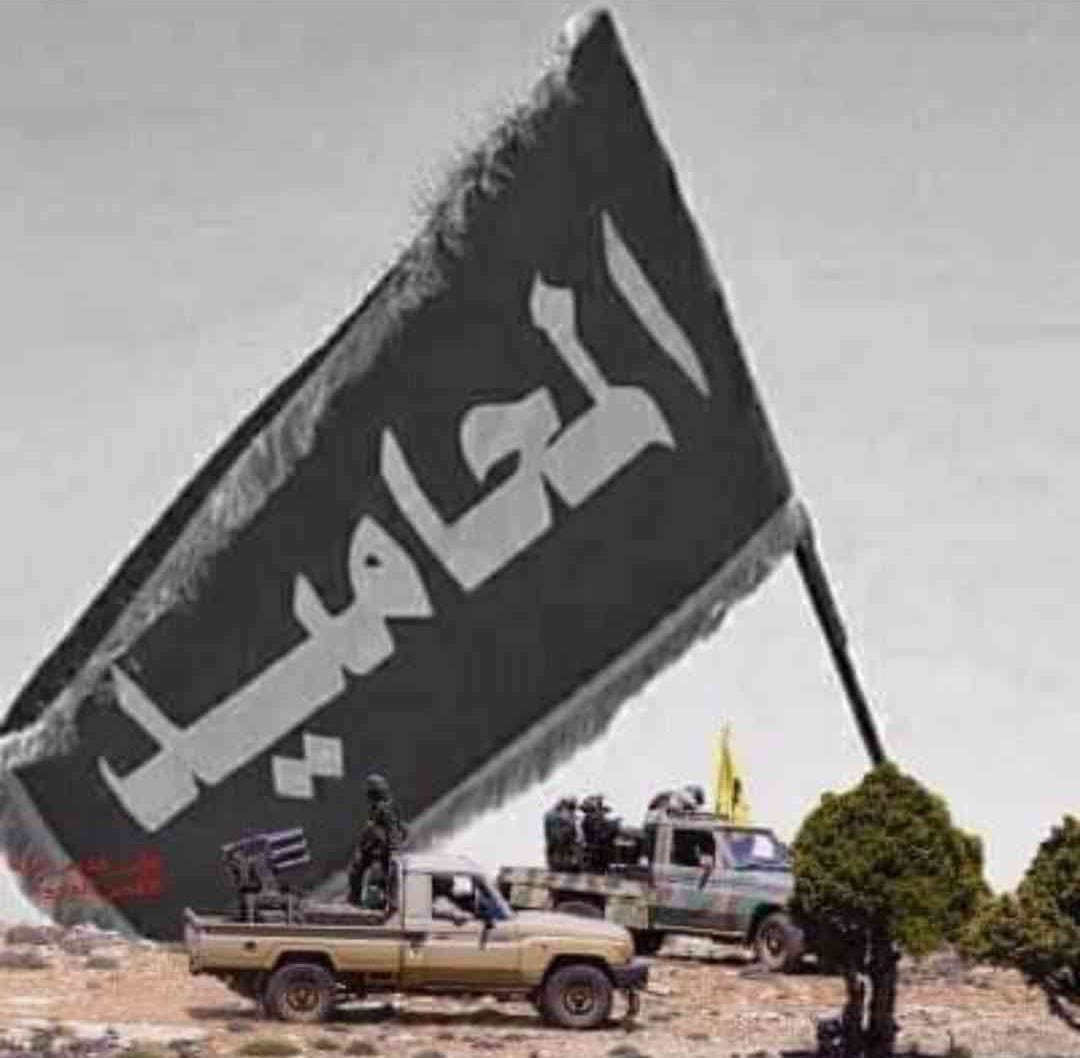
The assault on Misteriha followed a Sunday evening drone strike targeting Hilal’s guest house during a Ramadan iftar gathering. There are conflicting reports regarding the casualties resulting from the strike. The town, long associated with Hilal’s Mahamid tribal militia, had remained outside direct RSF authority since the outbreak of the ongoing civil war in April 2023. By midday Monday, RSF fighters were inside a compound identified as Hilal’s guest house, broadcasting footage of their presence.
The offensive could consolidate the RSF’s control over Darfur, but it also risks stoking internal dissent or fragmentation. Hilal’s constituency overlaps with that of the RSF; he is a tribal leader from the same Rizeigat Arab tribe that dominates within the RSF. Conflict videos verified by Sudan War Monitor earlier in the war (2023-2024) indicate that some of Hilal’s commanders and troops have fought alongside the RSF in Khartoum, El Fasher, and elsewhere.
Furthermore, this fighting raises the likelihood of Sudan’s conflict spilling into Chad, since Hilal’s Rizeigat Mahamid tribe inhabits both sides of the border, and his fighters also have a history of involvement in Libya.
Chad’s government and security services are internally divided over which side to support in Sudan’s conflict, and several noteworthy cross-border clashes have taken place in recent weeks. In 2012, a daughter of Musa Hilal, Amani Musa Hilal, married the late Chadian President Idriss Déby, father of Chad’s current ruler, according to Arabic-language press reports at the time.
The marriage reportedly involved a $26 million dowry and coincided with a rapprochement between the Sudanese and Chadian governments after a long era of proxy warfare.
Background to the Feud
The immediate trigger for this latest fighting appears to be a video circulated by Hilal’s supporters days earlier, in which the sheikh criticized the top leaders of the RSF. Formerly, however, the RSF and Hilal were part of the same Arab coalition fighting for the government in the 2000s and early 2010s.
The RSF originated as a loose coalition of government-backed ethnic militias in the early 2000s, recruited from the nomadic Arab tribes of Darfur to counter insurgents recruited mostly from the non-Arab tribes of Darfur. Colloquially called the Janjaweed, these militias burned villages, killed thousands, and were accused of attempting genocide against minority tribes.
In 2013, the Janjaweed militias were given legal status under a single umbrella organization, the RSF, under the leadership of Mohamed Hamdan Dagalo, a war chief of the Mahariya branch of the Rizeigat Arab tribe. Over the next decade, Dagalo continued his ascent to power, aided by his patron President Omar al-Bashir, and then by a new foreign patron after Bashir’s fall, the government of the United Arab Emirates.
Meanwhile, Hilal, a leader within the Mahamid branch of the Rizeigat, began to distance himself from the Sudanese government. He declared himself the leader of a new armed movement, the Revolutionary Awakening Council, and seized control of gold mines in the Jebel Amer area, putting him at odds with the Sudanese government and the RSF.
In 2017, RSF forces stormed Misteriha after Musa Hilal resisted integration into RSF command structures. Hilal and three sons were arrested and transferred to Khartoum. His imprisonment deepened his feud with the RSF, even before the start of the current civil war. Some of his troops left Sudan and went to Libya, where they fought as mercenaries, before eventually returning to Sudan. Hilal remained detained for about three years until after the 2019 overthrow of Islamist rule. His return to Darfur restored him as a leader among the Mahamid, though without the support of the broader paramilitary apparatus controlled by Dagalo.
Unsurprisingly, Hilal refused to side with Dagalo after the outbreak of war between the Sudanese Armed Forces (SAF) and the RSF in 2023. Instead, he announced his support for the military in 2024, though he also called for a ceasefire and he managed to avoid significant fighting with the RSF—until now. He attempted to position himself as a third force in Darfur — an Arab alternative to the SAF-allied Joint Force (which is largely Zaghawa) and the military itself, which had been driven out of most of Darfur.
Drone Attack and Assault on Misteriha
Yesterday, several Sudanese media outlets reported that a drone attack on Misteriha on killed and injured several figures within Hilal’s military organization. Unverified reports suggested one or more of his sons were captured or wounded. On the other hand, sources close to the Revolutionary Awakening Council told Radio Dabanga that Hilal was not in the area at the time of the drone attack or the subsequent storming of the town.
Some reports suggest that Hilal may have arrived in Chad. Multiple sources confirmed the killing of Abdullah Omar, the omda (local chief) of the Mahamid, during the attack.
In a statement issued late Sunday addressing the bombardment, the Revolutionary Awakening Council accused the RSF of carrying out intensive drone strikes on Misteriha. The council said the area’s hospital was struck three times, Hilal’s guest house was targeted, residential homes were hit twice, and a mourning tent was struck while condolences were being received. The council rejected reports of Hilal’s death:
“We confirm to public opinion that Sheikh Musa Hilal Abdullah, Chairman of the Sudanese Revolutionary Awakening Council, is safe and in good health and was not injured. Reports of his death are false. We strongly condemn this barbaric and brutal behavior and the treacherous and cowardly attack on the Misteriha area.”
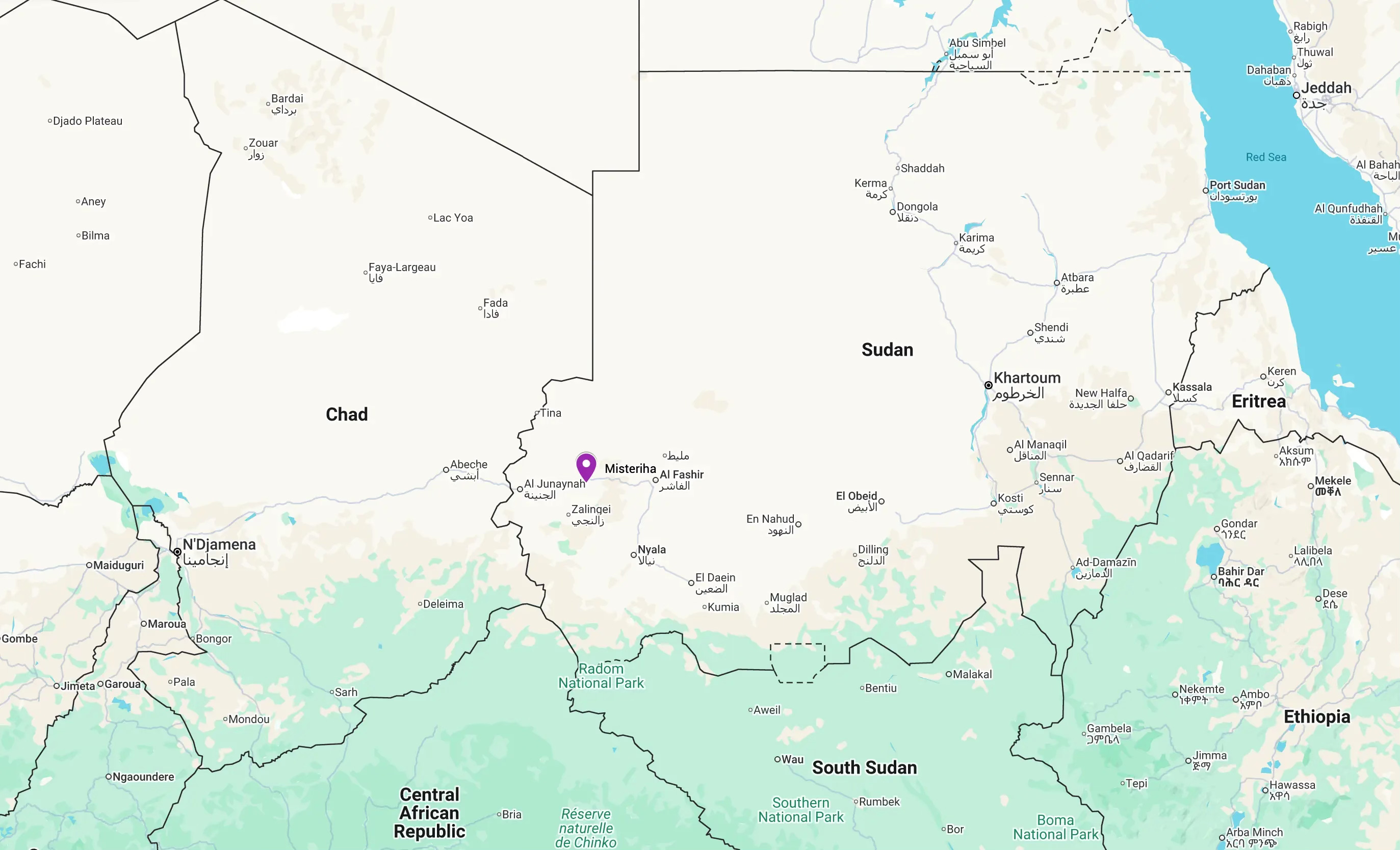
Mustariha lies northwest of Jebel Marra, north of Central Darfur, and east of West Darfur, areas largely under RSF control. The Jebel Marra massif and neighboring Tawila locality remain under the influence of neutral former Darfur rebel factions, including the Sudan Liberation Movement led by Abdel Wahid al-Nur (SLM-AW).
To the north of Mustariha lies the town of Kutum, approximately 28 kilometers away, located in North Darfur. Kutum was previously home to the 22nd Infantry Brigade of the former 6th Infantry Division, whose main base remained in El Fasher until a deadly RSF assault in October last year. Mustariha therefore sits within a broader RSF-dominated corridor, surrounded on most axes by territory held by the RSF.
Sudan War Monitor geolocated footage of RSF personnel at Hilal’s guest house here Misteriha, and additional RSF vehicle movement, confirming RSF operational control of the town following the assault. There was no statement from the Sudanese army regarding either the drone strike or the RSF takeover of the town at the time of publication of this article.
Power Struggle Within the Mahamid
The present escalation followed weeks of mounting tension. The RSF recently sponsored a tribal gathering aimed at appointing new leadership within the Mahamid section of the Rizeigat, a move that Hilal’s supporters viewed as an attempt to dilute his authority.
In response, groups of Mahamid fighters left RSF ranks and traveled to Misteriha, where Hilal publicly welcomed them and used the gathering to issue pointed criticism of the RSF leadership. In his speech, Hilal condemned what he described as efforts to divide the Mahamid and impose loyalty through coercion. He said:
“There are people outside the framework of Mahamid who are seeking to dismantle Mahamid. I believe that if a man is successful [in anything], he should use that for the betterment of his community and tribe. He should not use [that success] to sow discord, create disintegration, disputes, strife and problems, pay money for the cause of destroying Mahamid.”
“I was thrown into jail by Omar al-Bashir and the Rapid Support Forces, Hemedti and his commanders. I was jailed for three years and four months. I was imprisoned together with my children and other relatives. While I was away, the community was also tortured and suffered under the Rapid Support Forces. They think we don’t know that, but even the little children knew everything that had happened to the people.”
“After I was released from prison, Hemedti, Abdelrahim [Dagalo], and I took an oath of peace. I told them that ‘Do not hurt us and we will not hurt you.’ Even today, I remain committed to the pledge I gave them. We have rights that should have been returned to us as a result of that arrangement, but they did not return them until two years later.”
“We also sat and discussed these issues, and we told them that political paths are a matter of choice. I told them that I am not convinced by their war project, and that I also have people within the Awakening Council who are not convinced by this war project. I told them that you, as a government, a president and his deputy, started the war that has destroyed Sudan, which means you must solve it yourselves.”
“We are not part of it and we will not participate in it again. We do not want to get involved in anything. We are not among those who had an idea about this war, and we do not even know the basic facts about it, nor are we among those who ‘cook’ in the political kitchens. That is why we did not get involved in it.”
‘As for political positions and ideological convictions, there is freedom. For example, I can be a member of the Umma Party, or I can be a member of the Islamic Front. Even if we are from the same house, what is wrong with having freedom of thought?’
“It is a shame that you, as a leader of an institution like the RSF, tell people, ‘Either follow me or I will kill you.’ What kind of Sharia is this? Is this the Sharia of God or the Sharia of the ruler? I consider this to be political ignorance. These people are implementing the Jewish fascism. Muammar Gaddafi spoke about it a long time ago, and now it has appeared here.”
Hilal first declared political support for the SAF in April 2024, a year after the outbreak of war in Khartoum. In a speech delivered in North Darfur, he endorsed state institutions and criticized unnamed militias as mercenary forces. Though he did not explicitly name the RSF at the time, the remarks were widely understood as directed at Daglo’s command. Despite that stance, Hilal largely avoided direct military confrontation over the past year.
Related Coverage:

Relations between Hilal and the RSF had even shown intermittent signs of accommodation. In February 2024, RSF commanders reportedly paid financial compensation to Hilal for vehicles and assets seized during the 2017 takeover of Misteriha. Tribal intermediaries were said to have facilitated those discussions. The current assault therefore marks a clear reversal of any previous rapprochement.
From a military standpoint, the RSF’s operation in Misteriha aims to eliminate a semi-autonomous pocket that could serve as a rallying point for dissenting elements within the RSF’s tribal base. If the operation proves to be successful, it will serve as a warning to other potential internal challengers. On the other hand, continuing resistance in the area, or cross-border attacks by Hilal’s men, could encourage more dissent and defections from the RSF in Darfur.
Hilal’s immediate plans are unclear. If it is true that he has crossed into neighboring Chad, he could seek help from Chad’s ruler Mahamat Idriss Déby, or from his own tribal networks in Chad. Those networks could provide him with temporary refuge, logistical support, or a platform for political regrouping. Another possibility is that he could link up with Joint Force troops farther north in the Tine border area.
Last week, clashes erupted in Tine and the surrounding area between the RSF and the Joint Force. Chadian army soldiers sympathetic to the Joint Force also joined in the fighting, despite Chad’s own position of nominal neutrality and the covert cooperation between Déby’s government and the RSF.
Videos from Misteriha, North Darfur
Video showing RSF soldiers at Musa Hilal’s guest house, here: 13°33’10.18”N 23°50’50.13”E.
In the following video, RSF soldiers are seen driving through Misteriha, just after Musa Hilal’s guest house, here; 13°33’16.90”N 23°50’36.95”E.
In this video, which due to lack of visual markers we couldn’t geolocate, a user wrote on X (Formerly Twitter), saying: “Mustariha is burning.”
In this video, RSF soldiers are seen in a celebratory mood chanting “Ashaws Fowq (“Strong men [of the RSF] above”) and “from inside Misteriha.” This video was geolocated to approximately the same location referenced above.
Thank you for all your reporting on Sudan & the consequences of the genocide @Sudan News Sweep
Have you heard about the longest refugee protest in history, happening right now on Agadez in Niger, led by Sudanese people, for more than two years continuously?
My article below explains more 👍✊
https://wagingnonviolence.org/2026/07/agadez-niger-longest-refugee-protest/