Israeli and American attacks on Iran have sent waves of controversy and concern throughout Sudan, as militants expressed admiration for the Iranian resistance and vowed to support the Iranian cause, even as Sudanese diplomats, military leaders, and the influential Sudanese Islamic Movement adopted a more measured position.
The new war in the Middle East has divided Sudanese public opinion, driven up prices of food and fuel, disrupted humanitarian logistics, and raised questions about the trajectory of Sudan’s own three-year civil war.
The vast majority of Sudanese commentators are critical of the U.S.-Israeli attacks on Iran, but they differ over how to respond to the conflict, with many arguing that Sudan should focus on its own internal problems.
Only a small minority in Sudan has called for active participation in the new war in the Middle East. Among these is Al-Naji Abdullah, an Islamist militant who often preaches in Sudanese army uniform.
“We stand with Iran, and I say this on behalf of the mujahideen across all of Sudan, with their various brigades and different formations. We say to our brothers in Iran: if the Americans and the Zionists deploy ground forces in Iran, by God, we will cross the Red Sea for them… we will send all our brigades there,” he said on March 3 in a video that quickly went viral.
Al-Naji Abdullah is an associate of the late Dr. Hassan al-Turabi, considered the most influential Sudanese politician of the 1990s. He was a leader of the Popular Defense Forces during the long war in South Sudan. Nicknamed “prince of the mujahideen” by his admirers, Al-Naji has become an influential promoter of the Al-Baraa Ibn Malik Corps, an auxiliary of the Sudanese army.
Surrounded by a crowd of fighters affiliated with the Sudanese Armed Forces (SAF), Al-Naji framed his support for Iran as a matter of obedience to God and resistance to oppression:
“We know God’s command that whenever an oppressed person calls upon us for help, victory becomes our duty. Any oppressed person who seeks our protection, by God, our rifles are ready and legitimate for that purpose. Our artillery is prepared and stocked. Even our drones—we have obtained advanced types of drones…”
“We fight under the banner of God, the One and Only. And by God we say to them: you all should understand this: Sudan used to be a calm and peaceful country, but Sudan today is a country of jihad and fighting. There will be no retreat from that path.”
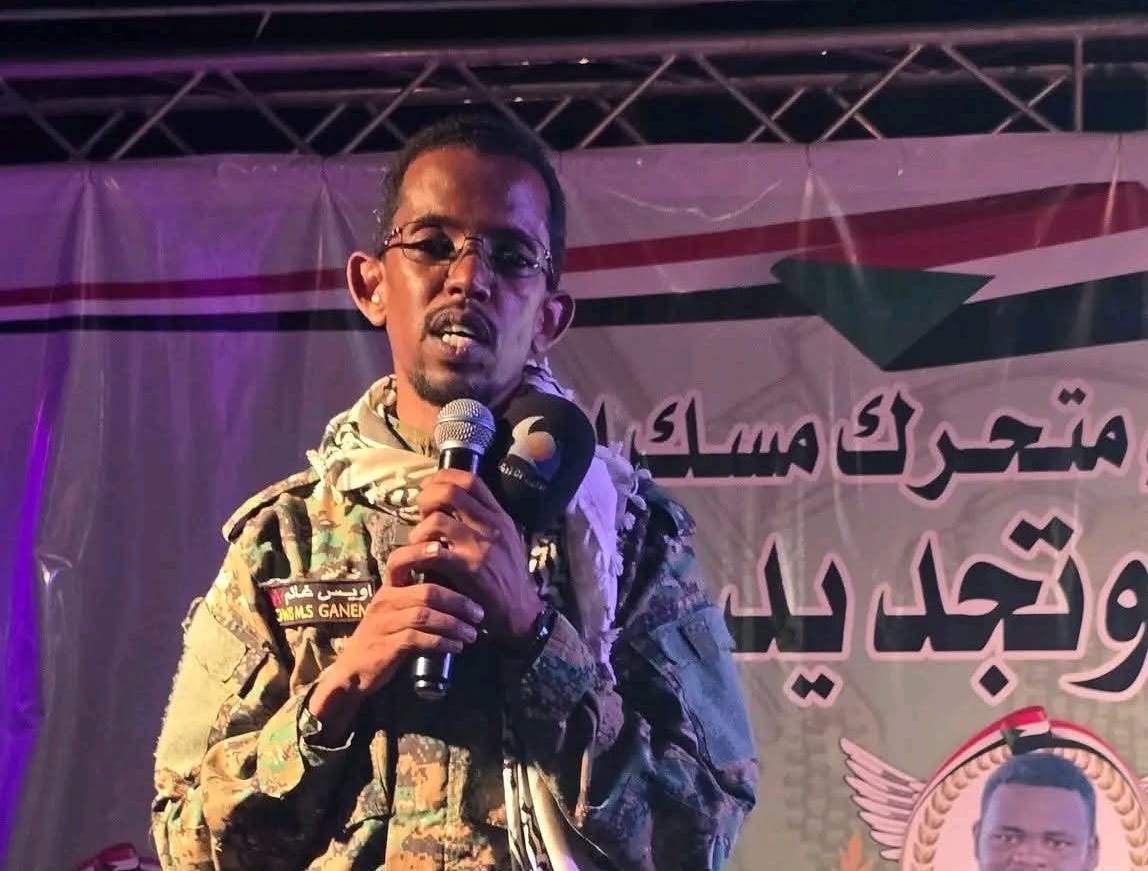
As he spoke, Al-Naji was flanked by a child in a military uniform and other promoters of Al-Baraa Ibn Malik, including Owais Ghanem, a young influencer, preacher, and commander in the group’s capital sector.
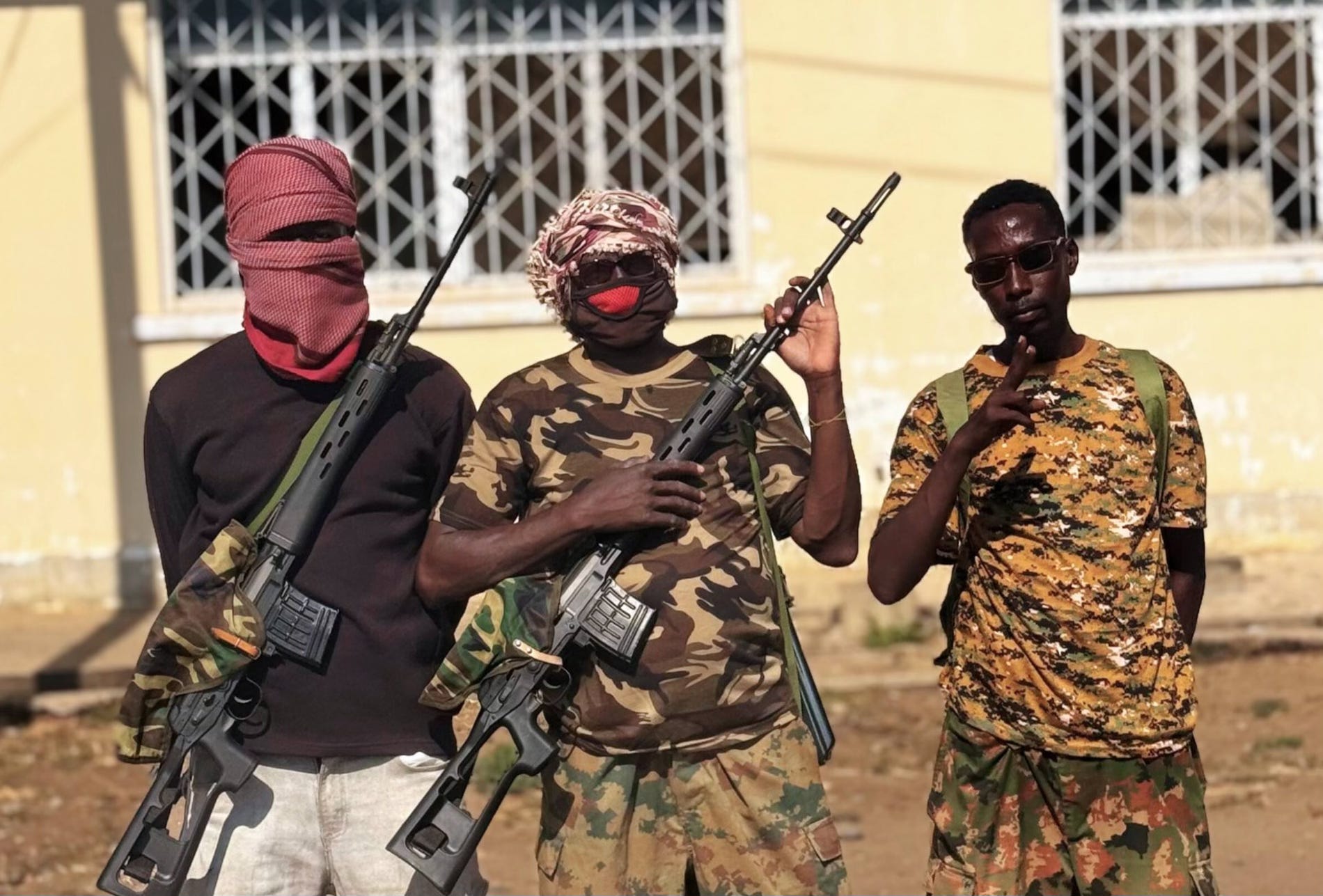
Millions of Sudanese boys and young men have dropped out of school and university to fight in the civil war, fostering a culture of violence that could endure for generations — threatening not only Sudan’s internal stability but also that of the wider region. Numerous groups in the Sudanese civil war are employing child soldiers, including the RSF, Sudan Shield, the Joint Force, SPLM-North, and Al-Baraa Ibn Malik.
Al-Naji Abdulla (foreground), appeared in recent videos wearing a uniform of the Sudanese General Intelligence Service and singing jihadist songs alongside members of Al-Baraa Ibn Malik in North Kordofan State. This song by the Palestinian poet Jihad al-Turbani proclaims, “We have not faltered; we have not falted, we are the descendants of Al-Muthanna (an early Islamic conqueror).”
Another prominent Islamist, Al-Naji Mustafa, who also typically preaches in a military uniform, gave a speech praising Iran and condemning Israeli aggression. He further addressed the Sunni-Shia Muslim divide, downplaying it, and alluded to a Zionist-American conspiracy that is behind the problems of both Sudan and Iran. He praised the Iranian government for executing suspected spies in the wake of the Israeli-American attacks, and called for the prompt executions of Sudanese dissidents (details below).
Pro-Iran speech of Al-Naji Mustafa at a mosque in Sudan:
Videos of these speeches went viral and were spread not only by supporters of these clerics but also by critics, particularly by Emirati media, such as Sky News Arabia and UAE-linked social media influencers. Following the outbreak of the Iran war, these media networks have intensified a campaign attempting to portray the Sudanese government as closely linked to Iran. This effort may have played a role in the U.S. State Department’s controversial decision, announced March 9, to designate the Sudanese Islamic Movement and Al-Baraa Ibn Malik as foreign terrorist organizations.
Meanwhile, the Sudanese government has attempted to tamp down on the most militant expressions of support for Iran, redirecting attention toward domestic enemies and expressing solidarity with Arab states.
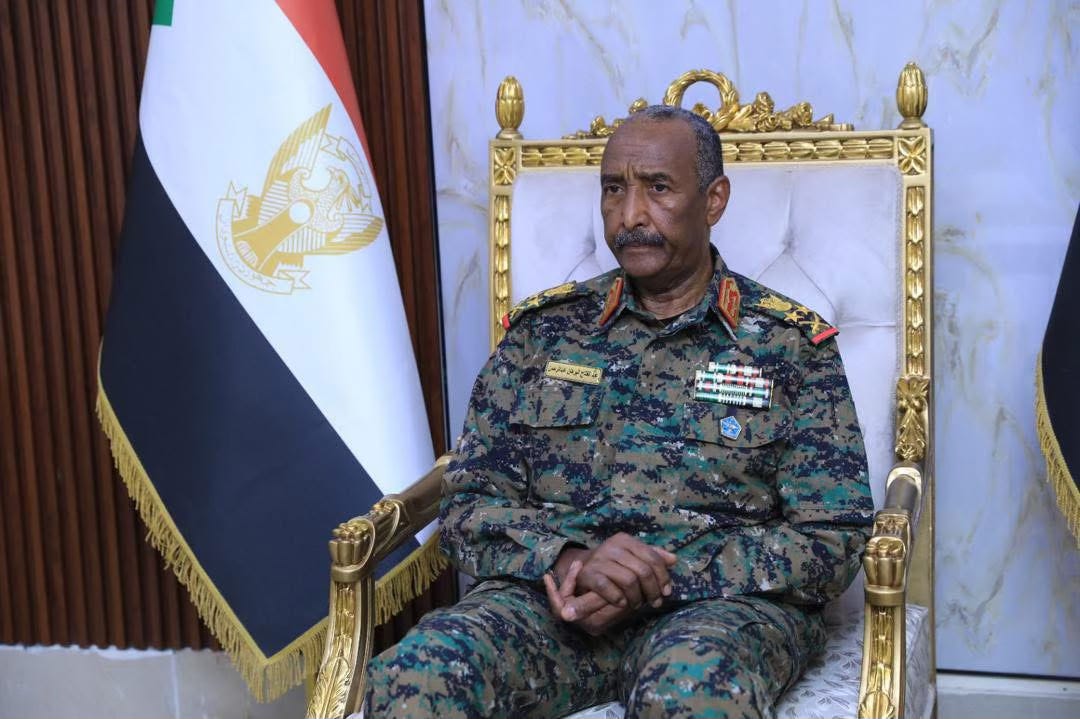
The head of the military council that rules Sudan, General Abdelfattah Al-Burhan, issued a stern warning March 4, saying: “We say to the clowns who appeared yesterday [Al-Naji and his group] that we will not allow any group to speak on behalf of the Sudanese Armed Forces. We will not forgive and will not tolerate anyone who makes insulting statements against the Sudanese state, and we will send him to his natural place [prison]…”
“The war in the Middle East saddens us as Sudanese. We have been burned by the fire of war, and no Sudanese can encourage war.”
Similarly, on the same day, Ali Karti, the secretary-general of the influential Sudanese Islamic Movement, issued a statement emphasizing the need for a domestic military agenda, not an international one.
“The Sudanese Islamic Movement reiterates its firm position of focusing on defending Sudan and its people against the forces of evil that have united against it. Its leadership and membership remain committed to this [domestic] orientation, and any other statements that contradict this approach do not represent the movement nor express its position.”
Karti, a former foreign minister, condemned both Israeli-American attacks on Iran and Iranian attacks on Arab states, calling for solidarity within the Muslim ummah against the Zionist aggressors (full statement below).
Al-Burhan’s government appears particularly anxious not to alienate Saudi Arabia and Qatar, which have historically been key financiers of the Sudanese state, and which now are deeply affected by the ongoing war in the Gulf.
Last week, Sudan’s Foreign Ministry issued a statement condemning “blatant and illegal Iranian aggression against the State of Qatar, the Kingdom of Bahrain, the State of Kuwait, and the Hashemite Kingdom of Jordan” — but made no mention of attacks against the UAE.
There is little sympathy in Sudan for the United Arab Emirates (UAE), which has supplied weapons and equipment to Sudan’s RSF, fueling conflict in the country and drawing widespread international censure. Since February 28, the UAE has come under waves of Iranian drone and missile attacks — eliciting cheers from some Sudanese and condemnation from others.
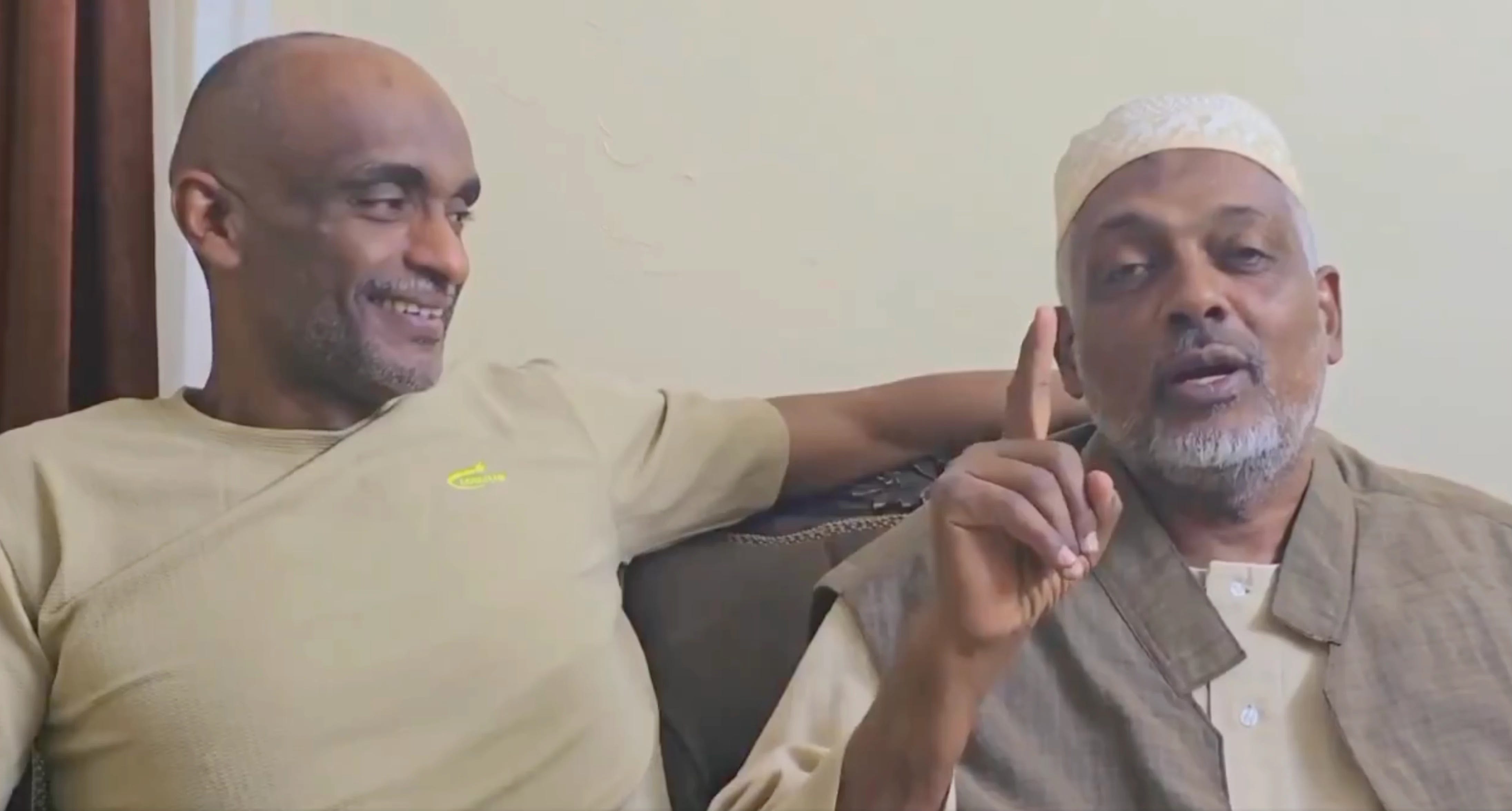
Meanwhile, Al-Naji Abdullah appears to have taken a partial hiatus from public speaking, amid rumors of his arrest, which turned out to be false. The government also made a show of having allegedly arrested Al-Naji Mustafa, but it is unclear how long he was detained, if at all. Both Najis appeared recently together in a video, confirming that neither is detained at present.
The alleged government crackdown on these clerics is likely to be only temporary and performative. Sudan’s regime cannot sever ties with its militant auxiliaries without risking serious internal tensions and potentially its own downfall. These groups are too large, too popular, and too deeply embedded in the Sudanese state to be challenged, controlled, or absorbed.
In particular, Al-Baraa Ibn Malik has grown exponentially since 2023, acquiring advanced weaponry, manpower, and popular support that rivals that of the army itself. The Sudanese government continues to rely on the group as a leading auxiliary in fight against the RSF. Just days after delivering his warning message to pro-Iran militants, General Abdel Fattah Al-Burhan visited a region in White Nile State used extensively by Al-Baraa Ibn Malik as an operational headquarters and training grounds.
Producing analysis and reporting of this kind requires considerable labor, expertise, and a team effort. That is why we ask readers to subscribe to support our work. As a public service, we make available much of our content for free, but portions of it are paywalled to ensure sustainability of the project.
Al-Burhan’s Assistant Commander-in-Chief, Yasser Al-Atta, last week announced plans to absorb Al-Baraa Ibn Malik into the regular forces eventually, but this commitment appears to be largely symbolic, with no concrete steps taken in that direction. Al-Atta has previously praised the Islamist paramilitary and established a reputation for himself as an outspoken Islamist, even as other members of the junta cultivated a more apolitical style.
Some commanders are concerned about the growing prominence of Al-Baraa Ibn Malik at the Kordofan front, which threatens to eclipse the army’s own role in the conflict. The group has portrayed itself as the vanguard in the struggle against the Rapid Support Forces, acting decisively and courageously even as the regular forces hesitate or linger in the rear.
Al-Baraa Ibn Malik units were among the first to enter Dilling and Kadugli earlier this year, during a relief operation to lift the siege of those cities. They have also embedded themselves within certain units of the Joint Force, the army’s mobile auxiliaries from Darfur, giving them a place at the vanguard of the recent operation against the town of Baraa in North Kordofan State.
Institutionalist vs. Internationalist Divide