
Wave of Arrests Targets Former Financial Officials in South Sudan
Detentions come amid economic crisis and leadership transition concerns
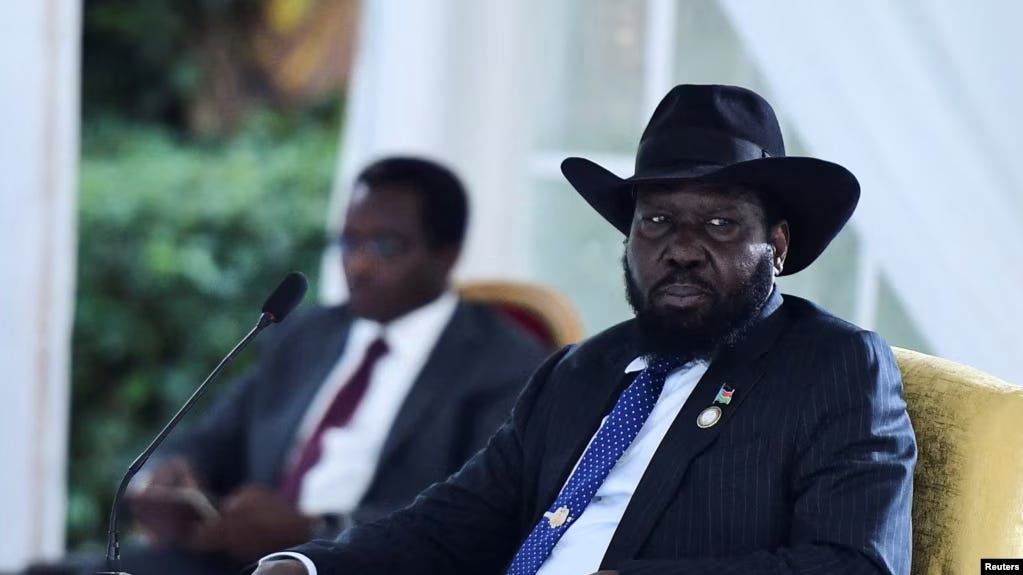
A wave of arrests targeting senior state figures in South Sudan has intensified political uncertainty in the country. Among those detained are individuals once closely linked to President Salva Kiir Mayardit, amid worsening economic conditions and renewed fears of conflict relapse.
Security forces in recent days have detained several high-ranking officials associated with South Sudan’s financial and petroleum institutions, moves critics say reflect mounting pressure within the government as the country struggles with fiscal collapse, insecurity and weakening state authority.
The latest arrest occurred Friday night when former finance minister Bak Barnaba Chol was intercepted near the Ugandan border town of Nimule while allegedly attempting to leave the country, reportedly carrying $30,000 and millions of South Sudanese pounds in cash.
Chol was detained along an informal crossing route outside the official Elegu border post after traveling on a commercial motorcycle commonly used to bypass immigration controls, according to local media. The cash was reportedly discovered concealed in a travel bag.
His arrest followed the earlier detention of former Finance and Planning Minister Marial Dongrin Ater, who was apprehended on Thursday morning in Rumbek, Lakes State, and transported under armed escort to Juba by road after reportedly declining instructions to present himself to authorities.
Former central bank governor Moses Makur Deng Manguak was also transferred to custody at National Security Service (NSS) headquarters, also known as ‘Blue House’, after initially being placed under house arrest shortly after returning from medical treatment abroad, according to sources familiar with the matter.
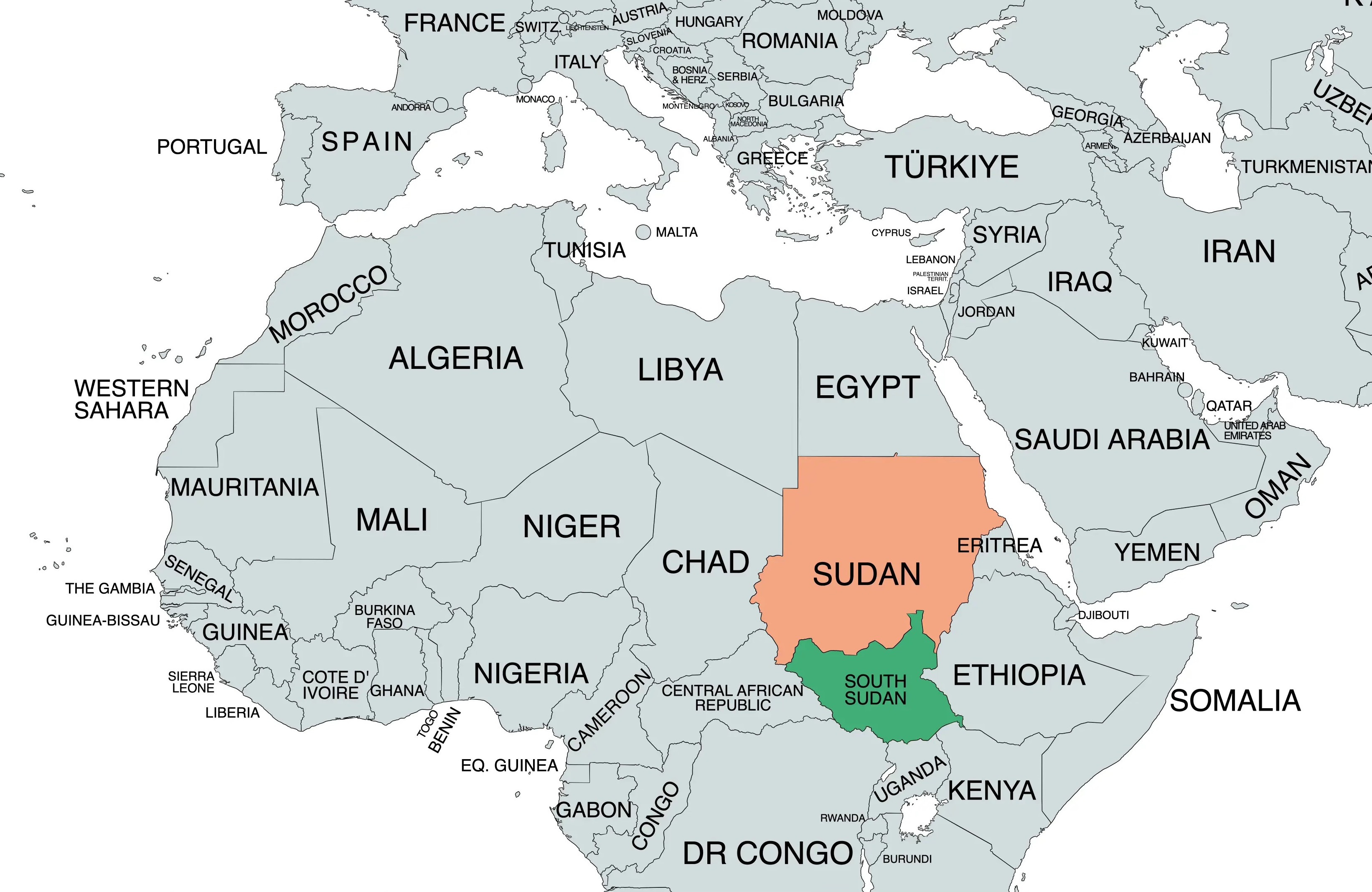
The border between Sudan and South Sudan is one of the world’s newest — and one of its most porous. The two countries’ fates remain deeply entangled. Sudan War Monitor covers both sides of that story. If you find this coverage useful, please consider a paid subscription.
Authorities have additionally detained Maj. Gen. Manasseh Machar Bol, a senior intelligence officer formerly assigned to the petroleum ministry, and Deng Lual Wol, a former petroleum undersecretary who was reportedly held after appearing for questioning before security officials.
The arrests follow the earlier detention of businessman and former vice-president Benjamin Bol Mel, a prominent presidential ally whose house arrest late last year was widely interpreted by political observers as signaling internal tensions within South Sudan’s ruling establishment rather than action against opposition figures.
Government authorities have not publicly disclosed charges against most of those detained, nor provided a unified explanation for the arrests, fueling speculation that the campaign reflects internal political recalibration amid intensifying economic strain.
South Sudan’s economy has deteriorated sharply in recent years, shaped by declining oil revenues, currency depreciation and delayed public-sector salaries that have eroded confidence in state institutions and deepened hardship among ordinary citizens.
The country’s economic system is operating within a wartime political economy in which access to oil income, foreign exchange and state contracts have historically been concentrated among political and military elites rather than governed through transparent institutions.
Control over financial institutions has long been central to political power in South Sudan, where patronage networks formed during years of civil war continue to influence revenue distribution and access to public resources.
President Kiir has frequently responded to crises by dismissing and replacing senior officials, sometimes within weeks or days of appointment, creating a pattern of rapid leadership turnover that critics say has undermined institutional continuity without addressing structural corruption.
Kiir has repeatedly stated that he is “looking for solutions” to the country’s economic challenges, a phrase that has become the subject of public ridicule among South Sudanese citizens who view repeated leadership changes as failing to address systemic corruption or economic decline.
Growing Risk of Civil War Relapse
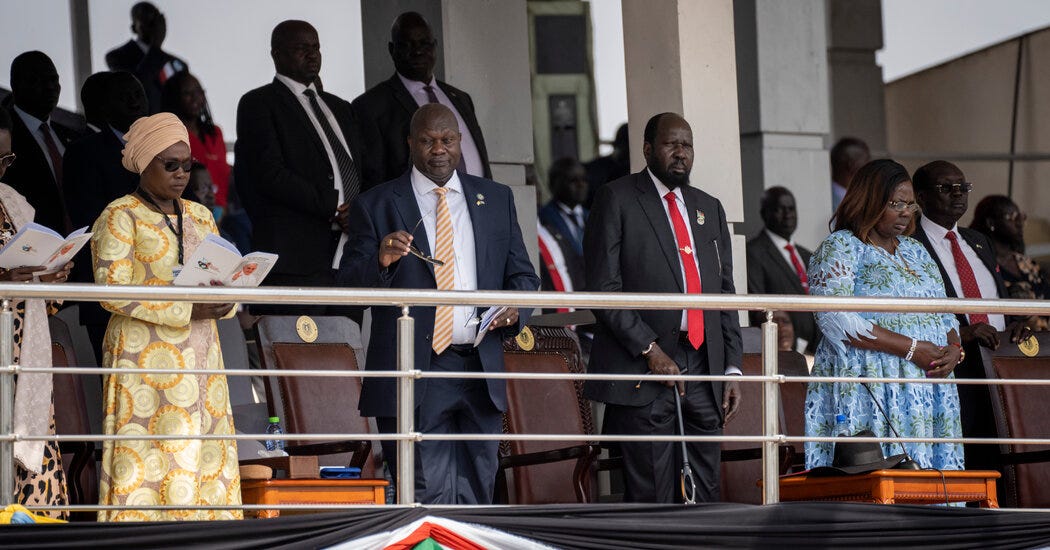
The latest arrests come at a time when South Sudan’s already fragile 2018 Revitalized Agreement on the Resolution of the Conflict in South Sudan (R-ARCSS) is showing signs of near collapse following the detention of opposition leader and First Vice President Riek Machar in March 2025 and the subsequent breakdown of relations between former civil war rivals within the unity government.
Machar remains in detention and is currently facing trial proceedings that his political allies and opposition groups have dismissed as a “sham trial,” arguing that the process lacks political legitimacy and undermines the power-sharing framework established under the peace agreement. The U.S. State Department’s Bureau of African Affairs has also criticized a new government-backed dialogue process as “farcical,” given that Machar remains detained.
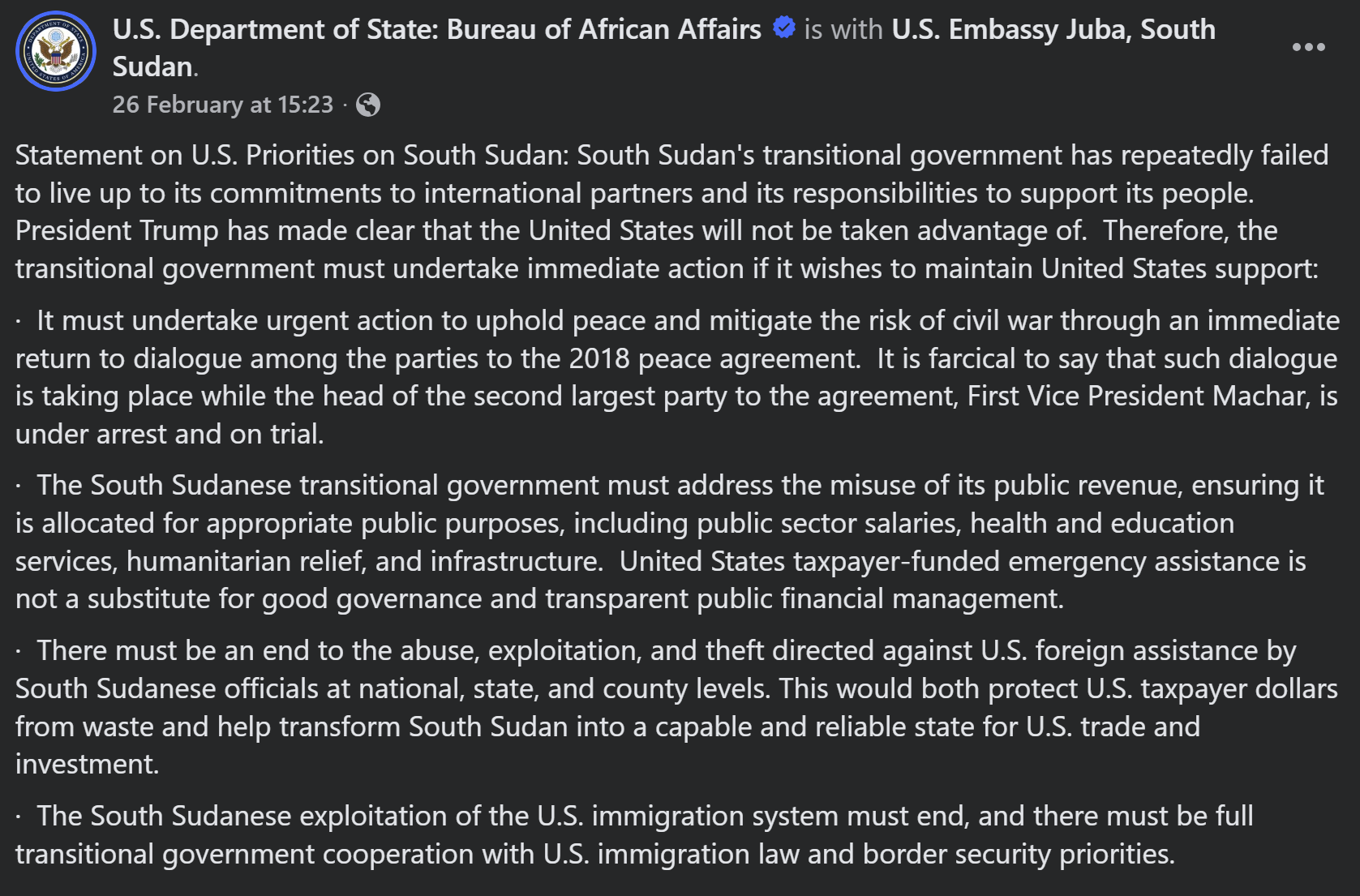
Since Machar’s arrest, large-scale hostilities have re-emerged between forces aligned with the main peace signatories, with sustained clashes reported across Jonglei State, Central Equatoria, Unity State and parts of Upper Nile, signalling a sharp deterioration in security cooperation among former wartime rivals.
Opposition officials aligned with Machar have increasingly declared the peace agreement effectively defunct, accusing government forces of abandoning unified command arrangements and reversing transitional security provisions intended to stabilize the post-war political order.
A new report released on Friday by the United Nations Commission on Human Rights in South Sudan warned that the country’s political and military leadership is actively driving the country toward renewed large-scale conflict and potential mass atrocity crimes through the systematic dismantling of the 2018 peace agreement.
Presenting its findings before the UN Human Rights Council in Geneva, the Commission said government forces had carried out widespread attacks against civilians during 2025, including unlawful killings, aerial bombardment of civilian areas and medical facilities, conflict-related sexual violence and the forced recruitment of boys.
The investigators said such acts could amount to war crimes and crimes against humanity under international law and were conducted with authorization or tolerance from senior political and military officials.
Yasmin Sooka, chair of the Commission, further linked escalating violence — particularly attacks affecting opposition-aligned communities in Jonglei and other conflict-affected regions — to the detention and prosecution of opposition leaders, including First Vice President Riek Machar, warning that repression of political space, entrenched corruption, and continued military offensives have rendered credible elections unlikely and placed South Sudan at what it described as a “dangerous crossroads” risking state failure.
“Last March, the President declared South Sudan would not return to war. To the contrary, we have seen an alarming regression. Government forces have since carried out widespread and systematic attacks against civilians, including unlawful killings, indiscriminate, disproportionate aerial bombardment of civilian homes and medical facilities in violation of the principles of distinction, proportionality and precaution under international humanitarian law.”
“The Commission also documented incidents of conflict-related sexual violence and the abduction and forcible recruitment of boys; conduct prohibited under the Convention on the Rights of the Child, its Optional Protocol and customary law. Taken together, these acts may constitute war crimes and crimes against humanity under international law,” said Yasmin Sooka, Chair of the Commission.
Fighting in several regions has triggered new displacement waves and disrupted humanitarian supply routes across conflict-affected areas.
Humanitarian agencies warn that renewed insecurity, combined with economic collapse and worsening hunger, is forcing civilians to abandon rural livelihoods and seek refuge in urban centers, displacement sites, and neighboring countries amid declining access to food and basic services.
According to the United Nations, approximately 76 percent of South Sudan’s population — more than nine million people — now require humanitarian assistance, reflecting the cumulative impact of conflict, displacement, economic deterioration and climate shocks affecting agricultural production.
Concerns over leadership stability intensified following President Salva Kiir’s appearance at the recent African Union summit in Addis Ababa, where observers noted his visibly weakened movement and subdued public remarks.
At the same time, critics have renewed scrutiny of alleged corruption linked to state revenue collection systems and public finances, including claims that companies associated with members of President Kiir’s family — including Adut Salva Kiir — have held interests connected to national revenue collection platforms.
Government officials have not publicly responded to those allegations, and no formal investigations have been announced involving individuals linked to the presidency, even as authorities continue detaining former financial officials in what remains an opaque security campaign.
Exiled activist Michael Wani wrote on Facebook that the arrests appeared to confirm long-standing accusations of corruption within government institutions but questioned whether accountability would extend beyond former officials now in detention.
“We’re now being vindicated because President Kiir knows his real enemies now. I also wonder whether he’ll arrest members of his immediate family too who’re engaged in looting too. If he wants to deal with LOOTING in the Country, President Kiir needs to clear his own house too. Most of them are responsible in spearheading the scheme,” Wani said.
Previous anti-corruption campaigns in South Sudan have rarely produced prosecutions, often ending with quiet political settlements and the eventual release and restoration of detained officials back into government.
Sudan War Monitor covers Sudan’s civil war and its impact on the wider region. South Sudan’s fragility is part of that story. If you find this coverage useful, please consider a paid subscription — most of our content is free to read, but paid subscriptions fund continued coverage and investigations.


