

ANALYSIS
Sudan’s military government has fully restored diplomatic ties with Iran, ending an eight-year rupture instigated by Saudi Arabia.
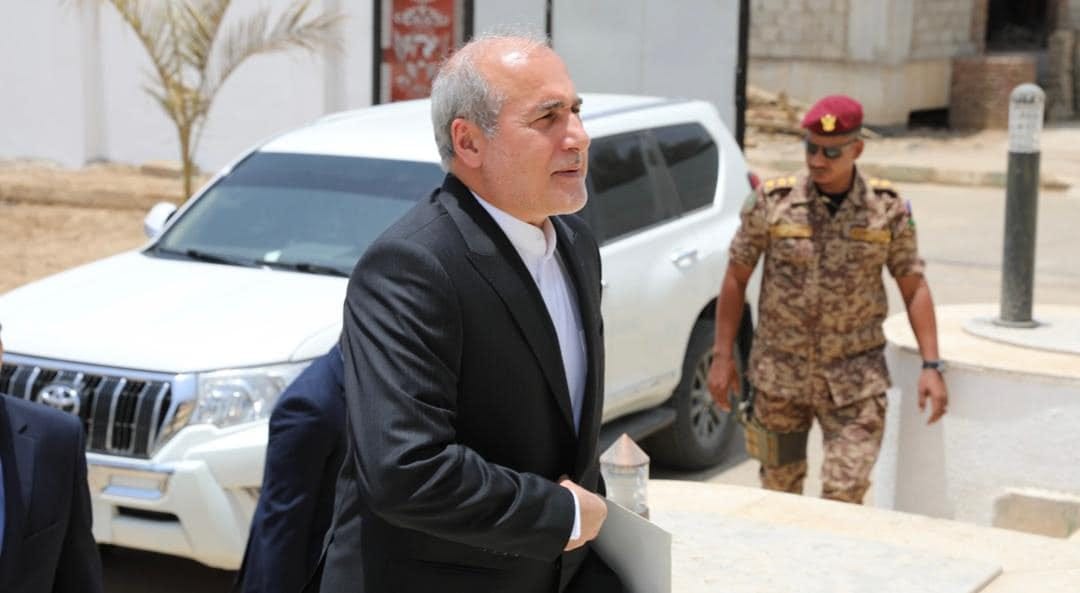
In separate meetings, Lieutenant General Abdel Fattah al-Burhan, Sudan’s military ruler, received the credentials of Iran’s new ambassador, Hassan Shah Hosseini, and dispatched a Sudanese ambassador to Tehran, Abdelaziz Hassan Saleh.
Ahead of the ceremony Sunday, Iranian diplomats and operatives already had rented dozens of apartments in Port Sudan—at a time when Western and Arab states mostly have withdrawn their embassies from the country.
Additionally, Iran’s Revolutionary Guard Corps dispatched several cargo flights to Sudan, allegedly bringing attack drones and other weapons.
These developments coincide with a phase of growing cooperation among Arab regional powers to pressure Sudan’s military government to end the nation’s ongoing civil war though negotiations—an option that the military regime has rejected.
The Arab powers have given little assistance to Sudan’s military government, which is fighting for its survival against the Rapid Support Forces (RSF), a paramilitary originating in the country’s western Darfur region.
Based in Port Sudan, Sudan’s military junta has lost control of most of the capital Khartoum, vast parts of western Sudan, and two states in the nation’s agricultural heartland. If it continues to lose territory, it will rule over little more than a rump state along the Red Sea coast and the northern states neighboring Egypt.
So what does Iran stand to gain from normalization of relations with Sudan? What could this mean for the geopolitics of the region and the security of the Red Sea? And could Iranian military assistance change the course of the civil war in Sudan?
Past cooperation between Iran and Sudan
Relations between Sudan and Iran flourished in the mid to late 1990s, amid tense relations with Egypt and Saudi Arabia. Sudan’s ruling National Islamic Front played host to the Saudi dissident Osama Bin Laden and the Egyptian Islamic Jihad, which attempted to assassinate Hosni Mubarak in 1995, with the support of Sudanese intelligence.
Sour relations with Arab neighbors forced Sudan’s National Islamic Front to turn farther afield for military and economic assistance in its wars against secular rebel groups operating in southern and western Sudan. Iranian military hardware and training bolstered the Sudanese war effort well into the 2000s.
However, after 1999 Sudan worked to repair relations with Arab states and turned increasingly to China for economic and military assistance, reducing the importance of ties with Iran.
In the end, Sudan proved to be an unreliable partner for Iran. After attacks on Saudi diplomatic missions in Iran in 2016, Sudan joined other Arab states in severing relations with the Islamic Republic.
Relations cooled further after the Sudanese revolution of 2019, as successive transitional governments sought improved relations with Israel. Shortly before the outbreak of the civil war in Sudan in April 2023, Sudan and Israel announced a tentative agreement to normalize relations, angering Iran.
Iran’s government was therefore cautious when Sudanese envoys approached it for military assistance throughout the past year. Nevertheless, a series of contacts and diplomatic visits culminated in yesterday’s exchange of ambassadors.
Timing of the diplomatic exchange
The announcement of the ambassador exchange initially came from the Sudanese side—not the Iranian side—with Sudanese state media taking the lead in trumpeting the development. Sudan’s own ambassador to Sudan hadn’t even left for Iran yet.
The exact timing of the announcement apparently therefore was chosen by Sudan, though Iran clearly already had been prepared and willing to participate. The two sides had jointly telegraphed the normalization last October, but didn’t follow up on it until now. Iran’s ambassador reportedly arrived in Port Sudan several weeks ago.
The ambassador swap took place just three days after a phone call between Al-Burhan the UAE president, who extended an olive branch to the Sudanese leader, after accusations that the UAE had supported the Rapid Support Forces. It also came two weeks after a visit by Saudi Arabia’s deputy foreign minister to Port Sudan.
The timing suggests that the Port Sudan regime is trying to signal dissatisfaction with Arab regional diplomacy. It could be a way of trying to “play both sides,” embracing the Iranians to pressure the Arab states into changing their policies.
In this case, the restoration of ties with Iran is merely tactical and not geopolitically important in the long term. It’s also possible, however, that this marks a decisive turn back toward Iran, the beginning of a long-term military relationship, and conversely the start of a new phase of tensions with regional neighbors, particularly Egypt and Saudi Arabia.
Sudan’s Foreign Ministry Undersecretary Hussein al-Amin said on Sunday, “This is the beginning of a new phase in the course of bilateral relations between the two countries.”
Iran’s maritime interests
Sudan’s civil war has wrecked the country’s economy and worsened an already severe fiscal crisis and trade imbalance. Sudan therefore has little to offer Iran financially in return for weapons. Iran easily could find more profitable markets for its arms exports, particularly Russia. This means that Iran will support Sudan only if it perceives a strategic benefit in doing so.
That strategic logic is likely to be found in the proximity of Sudan to the Red Sea and to Iran’s declared adversary, Israel. The Red Sea is one of the world’s busiest shipping lanes. It is particularly important for Israel, as well as for Iran’s regional rival, Saudi Arabia.
Although Iran has no direct coastline with the Red Sea, it nevertheless threatens the waterway indirectly through its relationship with Ansar Allah, also called the Houthis, who control parts of Yemen.
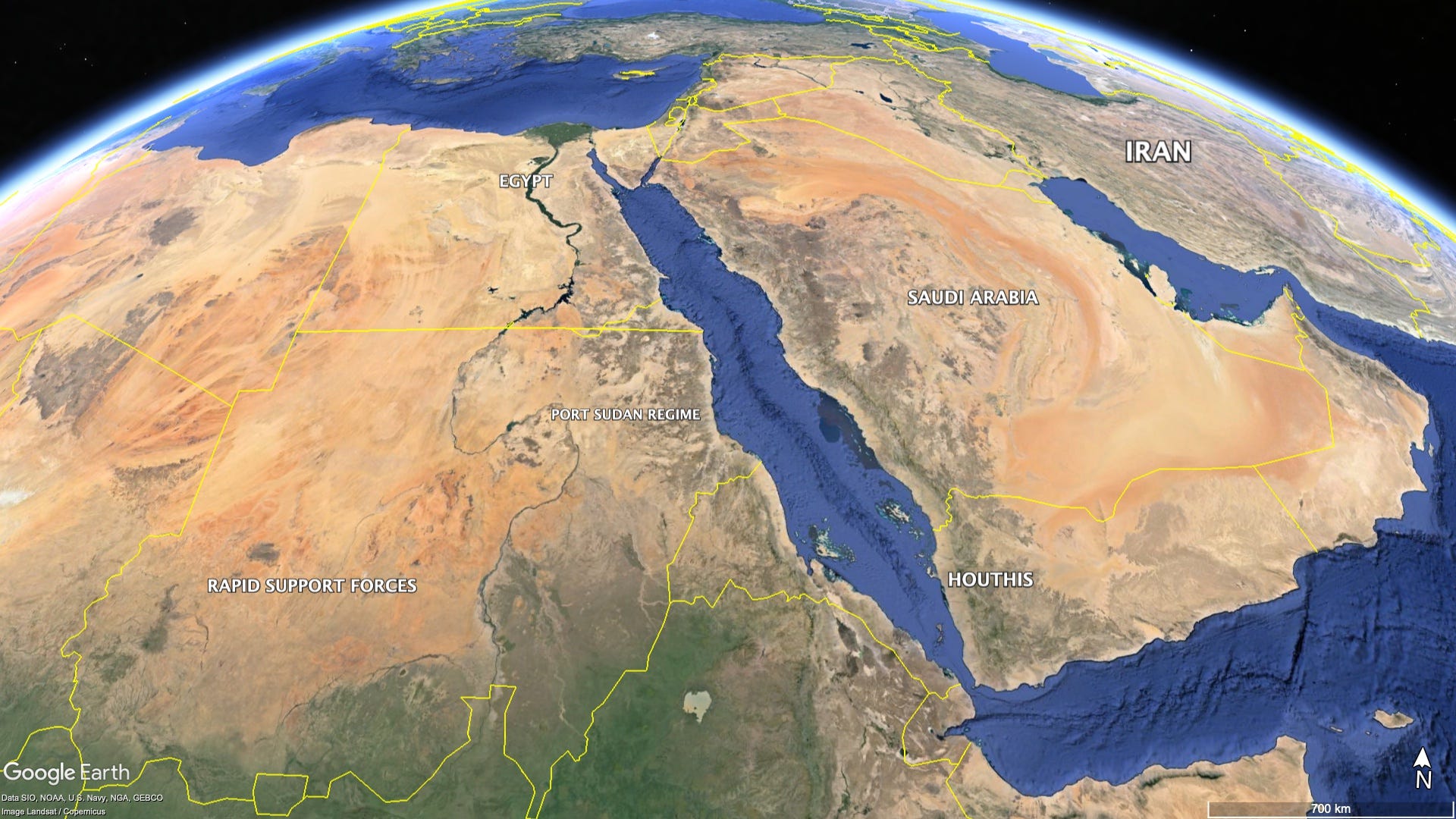
Iran has provided drones, missiles, and other equipment to the Houthis, who in turn carried out attacks on ships traveling through the Red Sea to Israel, as well as vessels flagged to other countries with no connection to Israel. These attacks have spiked global freight rates and caused thousands of cargo ships and tankers to divert south around the Cape of Good Hope.
In March, The Wall Street Journal reported that Iran asked Sudan for permission to build a permanent naval base on the Red Sea coast. This would give Iran a presence on both the west and east sides of the Red Sea, threatening shipping in the event of a regional war.
Although the Sudanese military regime reportedly rejected this specific request, the relationship between Iran and the Sudanese military regime is still developing and it’s too early to tell what concessions the Sudanese will be willing to make. The source of the leak was a Sudanese intelligence officer, and the leak itself could have been part of an ongoing bargaining process.
Could Iranian support turn the tide in Sudan’s war?
Open source monitoring has revealed the use of some Iranian weaponry in the ongoing Sudanese civil war, including advanced Muhajer-6 drones, and there have been several confirmed cargo flights operated by Iran’s Revolutionary Guard Corps. There are unconfirmed reports of Iranian training and provision of tactical equipment for ground troops.
However, some of the Iranian equipment in Sudan stems from military-industrial cooperation pre-dating the current war, so it is not easy to tell how much Iranian equipment has reached the frontlines and how much of it is new, rather than old.
In recent months, Sudan’s military has continued to suffer defeats, suggesting that Iranian weaponry hasn’t yet played a meaningful role in changing the tide of the war. Sudan’s military is suffering principally from problems of morale, tactics, and leadership—not equipment shortages.
Before concluding that Iran is influencing the Sudanese civil war in a significant way, we would need to see more evidence of Iranian equipment and activity by Iranian operatives or proxies, such as the presence of Houthi or Syrian fighters in Sudan.
The next steps to watch for are additional shipments of advanced weaponry, the arrival of more Iranian diplomats and operatives, and eventually the arrival of Iran-backed proxy forces or mercenaries.
The more desperate the situation becomes for Sudan’s military government, the more likely it is that Iran will escalate its involvement. They will have more leverage and influence over a state on the brink of collapse.
We should therefore expect that if the RSF capture Gedaref State, which they are threatening, or Kassala, or win further victories in the Nile Valley, that Iran could begin mobilizing more weaponry and personnel into the Sudanese coastal region.
Arab states could respond to Iranian measures by escalating their own diplomatic efforts. After the first Iranian cargo flights late last year, the UAE and Egypt convened secret talks between the Sudanese warring parties in Manama, Bahrain. These negotiations quickly collapsed, however, after Islamist hardliners in the Sudanese military and security apparatus leaked news of the talks and criticized the negotiations.
Overall, Sudan’s diplomatic outreach to Iran signals a determination to continue pursuing a “military solution” in what appears to be an unwinnable war. The continuation of fighting in Sudan threatens not only the security of the Red Sea but also the overall stability of Sudan’s neighbors, particularly Chad, South Sudan, and the Central African Republic. The longer that the war continues, the worse the humanitarian crisis will become, and the more likely that external powers will intervene.