
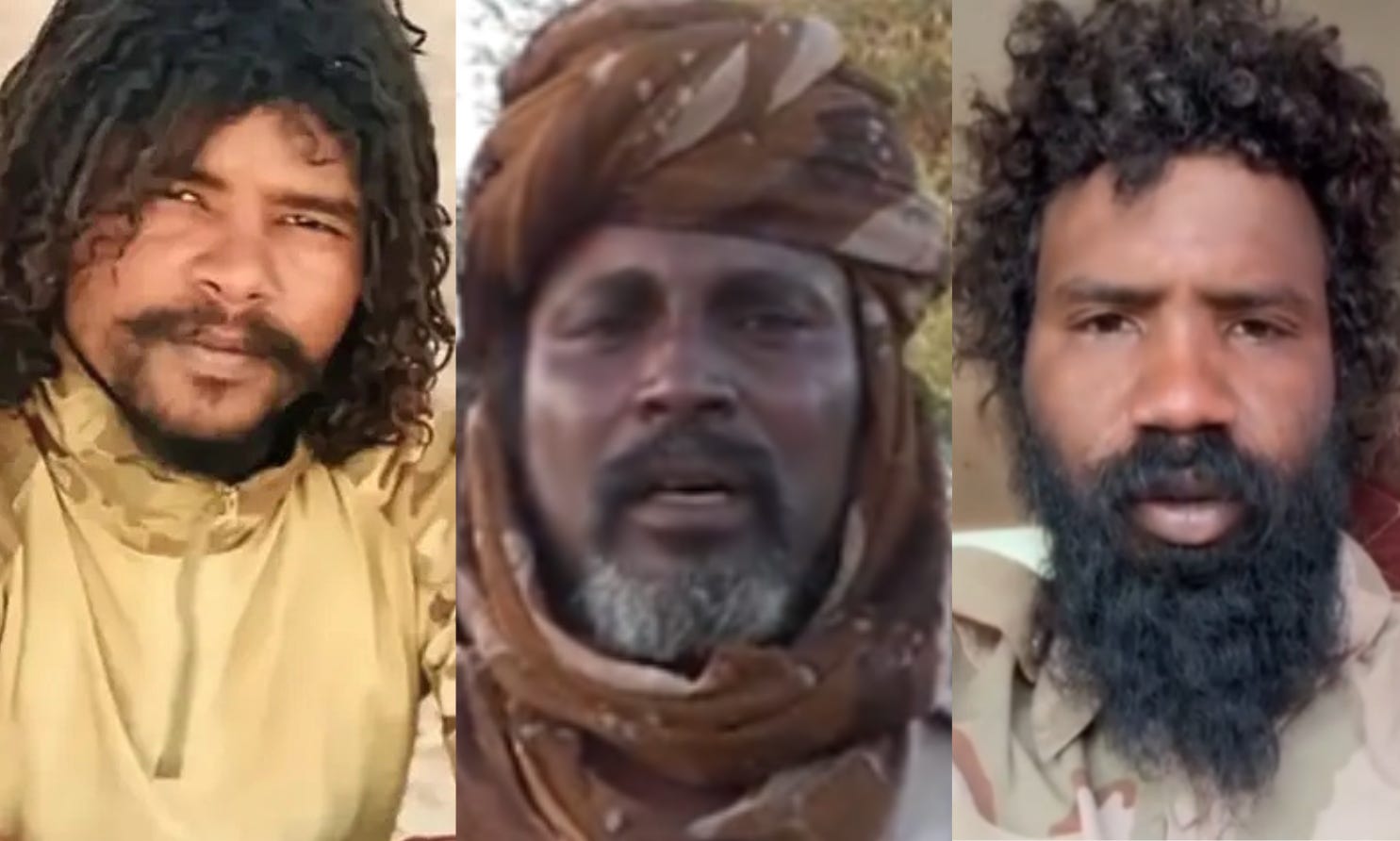
The United States on Thursday imposed sanctions on three Rapid Support Forces (RSF) commanders linked to executions, ethnic killings, and systematic abuses carried out during and after the siege and capture of El Fasher, North Darfur’s capital.
The U.S. Treasury designated RSF Brig. Gen. El-Fatih Abdallah Idris Adam, better known by his notorious nickname “Abu Lulu,” North Darfur commander Maj. Gen. Gedo Hamdan Ahmed Mohamed (also known as “Abu Shok”), and field commander Tijani Ibrahim Moussa Mohamed (also known as “Al Zeir Salem”), citing their roles in siege operations and post-capture violence following the RSF takeover of the city on October 26, 2025.
Treasury said RSF forces carried out executions, torture, and sexual violence during and after the fall of the city.
The sanctions follow earlier designations imposed by the European Union and the United Kingdom, which also listed Abu Lulu, Gedo, and Tijani for their roles in atrocities linked to the El Fasher campaign. The coordinated measures across the United States, EU, and UK identify the same operational commanders involved in field-level operations during the siege and capture.
The sanctions come amid a war that has killed more than 150,000 people and displaced over 14 million across Sudan since April 2023, making it one of the largest displacement crises globally.
The U.S. designation comes just hours after a UN Independent International Fact-Finding Mission reported that RSF operations during the siege and capture of El Fasher bore the “hallmarks of genocide,” citing ethnically targeted killings, sexual violence, enforced disappearances, and starvation tactics directed primarily against the non-Arab Zaghawa and Fur communities.
The mission said the 18-month siege deliberately deprived civilians of food, water, medical care, and humanitarian assistance, weakening the population through starvation and confinement before the October 2025 takeover.
Investigators concluded that the scale, coordination, and public endorsement of the operation by RSF leadership demonstrated that the killings and abuses were part of a planned and organized campaign, with genocidal intent described as the “only reasonable inference” based on the pattern of executions, ethnic targeting, and deliberate destruction of civilian life conditions.
“The Mission concludes that the violence committed by the Rapid Support Forces in and around El-Fasher forms part of a coherent, widespread, and escalating course of conduct directed, in particular, against the Zaghawa and the Fur, in the context of a prolonged siege followed by a takeover marked by brutal atrocities.”
“The evidence establishes a widespread and systematic pattern by the Rapid Support Forces of killings, ethnically targeted rape and other forms of sexual and gender-based violence, arbitrary detention, torture and cruel treatment, enforced disappearances, extortion, and forced displacement, combined with the deliberate imposition of conditions of life incompatible with survival, including starvation and the destruction of medical care. These acts were committed with knowledge, organisation, and repetition, and were accompanied by dehumanising and exterminatory language.”
“Taken together, the scale, severity, and cumulative impact of the acts by the Rapid Support Forces, assessed in light of patterns of targeting, conduct, and inferred intent, present indications pointing to genocide in and around El-Fasher,” the experts said.
Execution videos and command responsibility
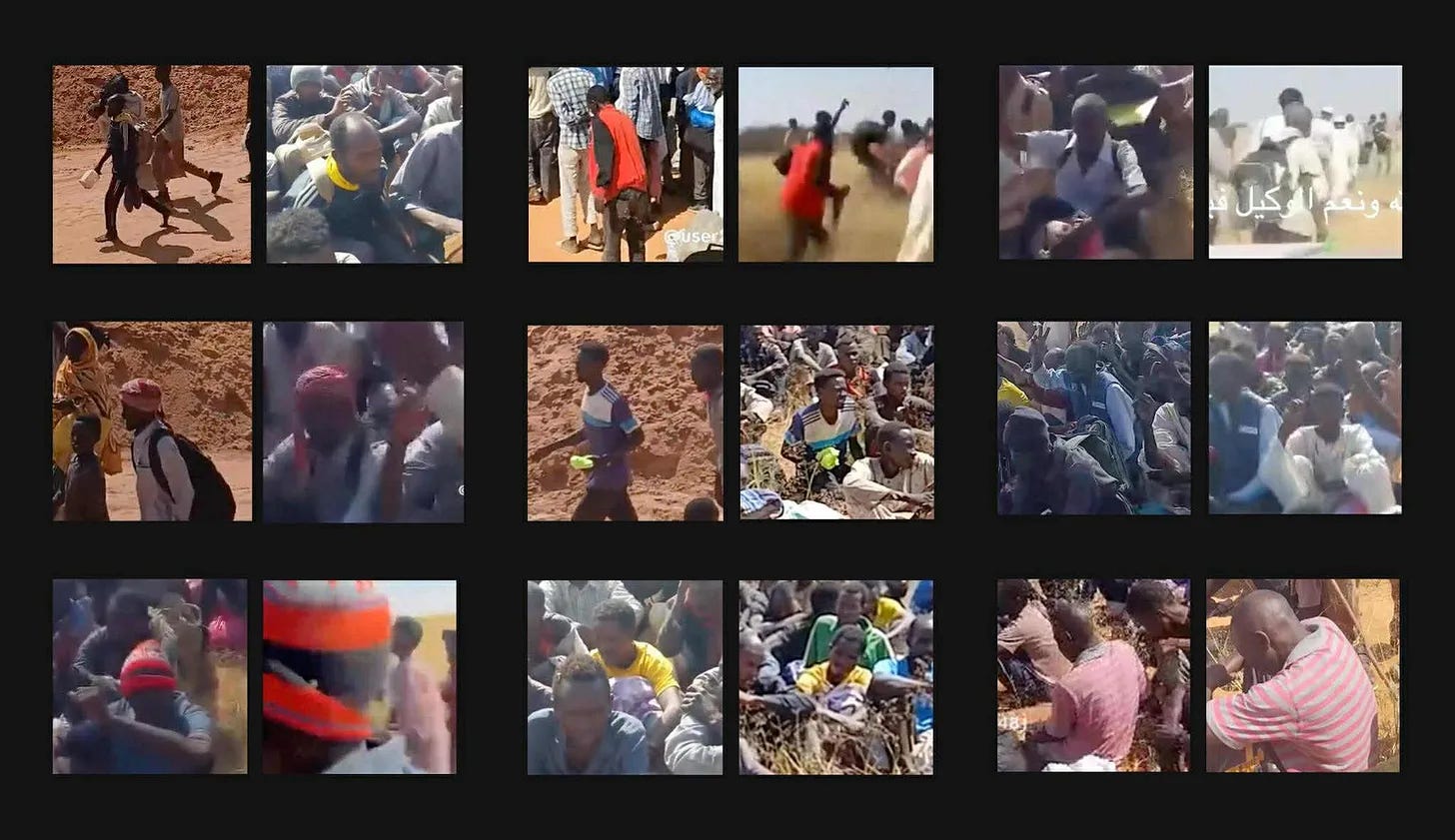
Open-source intelligence investigations by Sudan War Monitor and partner organizations show Abu Lulu personally carrying out executions of detainees at multiple locations across El Fasher.
Verified videos show detainees seated on the ground, unarmed and under RSF control, while Abu Lulu interrogates them about tribal affiliation and military status. In several recordings, such as the one below, Abu Lulu shoots unarmed detainees at close range after mocking them.
Other geolocated footage shows groups of detainees forced to sit inside defensive trenches surrounding the city while RSF fighters subjected them to racial insults and threats. Victims included civilians and disarmed combatants who were no longer participating in hostilities at the time they were executed.
Treasury said Abu Lulu interrogated and abused detainees before executing them, linking him directly to grave violations committed during RSF clearing operations inside the city.
“Elfateh Abdullah Idris Adam (Idris), also known as “Abu Lulu,” is an RSF brigadier general who filmed himself in El-Fasher killing unarmed civilians and bragging about killing thousands. Idris interrogated, mocked, and verbally abused civilian and surrendered SAF captives, questioning them about their tribal affiliation, making them recite pro-RSF statements, and in some cases, threatening to rape them. Idris then executed the captives by shooting them with his rifle at close range while they were defenseless positions,” the Treasury said.
Gedo and Tijani held command authority during the siege and capture of El Fasher and were filmed inside captured SAF military installations following the city’s fall. Their presence at the SAF’s 6th Infantry Division headquarters confirmed their operational role during the takeover and consolidation phase.
Treasury said both commanders were responsible as senior RSF leaders whose forces carried out killings, detentions, torture, and sexual violence against civilians during and after the siege.
“Gedo Hamdan Ahmed Mohamed (Gedo), also known as “Abu Shok,” is an RSF major general who has served as the commander for North Darfur since 2021, and Tijani Ibrahim Moussa Mohamed (Tijani), also known as “Al Zeir Salem,” is an RSF field commander.”
“During their respective tenures as RSF leaders, the RSF besieged and captured El-Fasher, and its fighters were documented massacring thousands and committing abductions, torture, and sexual and gender-based violence. Gedo and Tijani were filmed at an abandoned SAF base in El-Fasher following its capture by the RSF,” it said.
From May 2024 to October 2025, RSF forces encircled El Fasher and constructed defensive berm fortifications that blocked supply routes and humanitarian access.
The siege trapped approximately 260,000 civilians inside the city under starvation conditions, while artillery bombardment and ground assaults progressively weakened military and civilian resistance. Satellite imagery and field reporting confirm that supply routes were cut, preventing food, water, and medical aid from reaching the population.
On October 26, 2025, RSF units entered the city and seized the headquarters of the SAF’s 6th Infantry Division, the final army position in Darfur. Verified videos show RSF fighters inside the compound shortly after its capture, confirming the collapse of organized SAF defense.
Following the takeover, RSF units conducted search and clearing operations across residential areas, hospitals, and civilian facilities, where video and satellite evidence show bodies in multiple locations.
Ethnic targeting and pursuit of fleeing civilians
The UN Independent Fact-Finding Mission reported that RSF operations in El Fasher bore “hallmarks of genocide,” citing systematic targeting of the non-Arab Zaghawa and Fur communities.
Investigators documented killings, sexual violence, enforced disappearances, and starvation tactics used against civilians based on ethnic identity. Survivors reported RSF fighters identifying victims by ethnicity during detention and execution operations.
The fall of El Fasher triggered mass civilian flight toward Tawila, approximately 60 kilometers east of the city. Humanitarian estimates indicate that about 70,000 civilians fled during and after the RSF takeover, but fewer than 10,000 reached Tawila safely.
Geolocated footage and survivor accounts show RSF fighters intercepting fleeing civilians along escape routes, separating men from families, detaining individuals, and carrying out executions or ransom kidnappings.
Satellite imagery and drone footage show bodies along escape corridors outside the city, confirming pursuit operations beyond the urban perimeter. Survivors described RSF patrols using vehicles and mounted units to track fleeing civilians across open terrain. Many civilians attempting to escape were captured, killed, or disappeared during these pursuit operations.
Sudan War Monitor is a collaborative of journalists and open source researchers tracking the events of Sudan’s war and the search for solutions. We’re building a platform to battle disinformation and warmongering and amplify the voices of victims, humanitarians and peacemakers.
Strategic impact and international attribution
The capture of El Fasher gave the Rapid Support Forces control of all five Darfur state capitals, eliminating the last Sudanese Armed Forces stronghold in the region and consolidating RSF territorial dominance across western Sudan. With the fall of the SAF’s 6th Infantry Division headquarters on October 26, 2025, the RSF secured uninterrupted operational depth across North, West, Central, and South Darfur. This territorial consolidation allows RSF command to redeploy units toward active frontlines in Kordofan and along remaining SAF defensive corridors.
The coordinated sanctions imposed by the United States, European Union, and United Kingdom represent the most direct international attribution of responsibility to RSF field commanders involved in the siege and capture of El Fasher. They establish legal accountability frameworks that could support future prosecutions or additional restrictions targeting the RSF command structure.
However, the practical impact of these sanctions on the sanctioned commanders themselves is likely to be limited. Field commanders operating inside Darfur typically do not maintain assets in Western financial systems and rarely travel internationally under their real identities.
Their operational authority, financial access, and mobility are primarily sustained through local resource networks, internal RSF logistics systems, and regional supply channels rather than formal international banking or travel mechanisms.
As a result, the sanctions are unlikely to directly constrain the battlefield activities or movement of Abu Lulu, Gedo, or Tijani within RSF-controlled territory. Instead, their immediate effect lies in formalizing international attribution of responsibility and restricting any future attempts by these individuals to engage with international financial systems or diplomatic channels.
The designations also increase political and legal pressure on the RSF leadership by documenting command-level involvement in atrocities committed during one of the most consequential military operations of the Sudan war.


I remember writing about the fall of El Father last year. I'm glad to see finally some traction from the international community against the RSF even if it is just sanctions.