
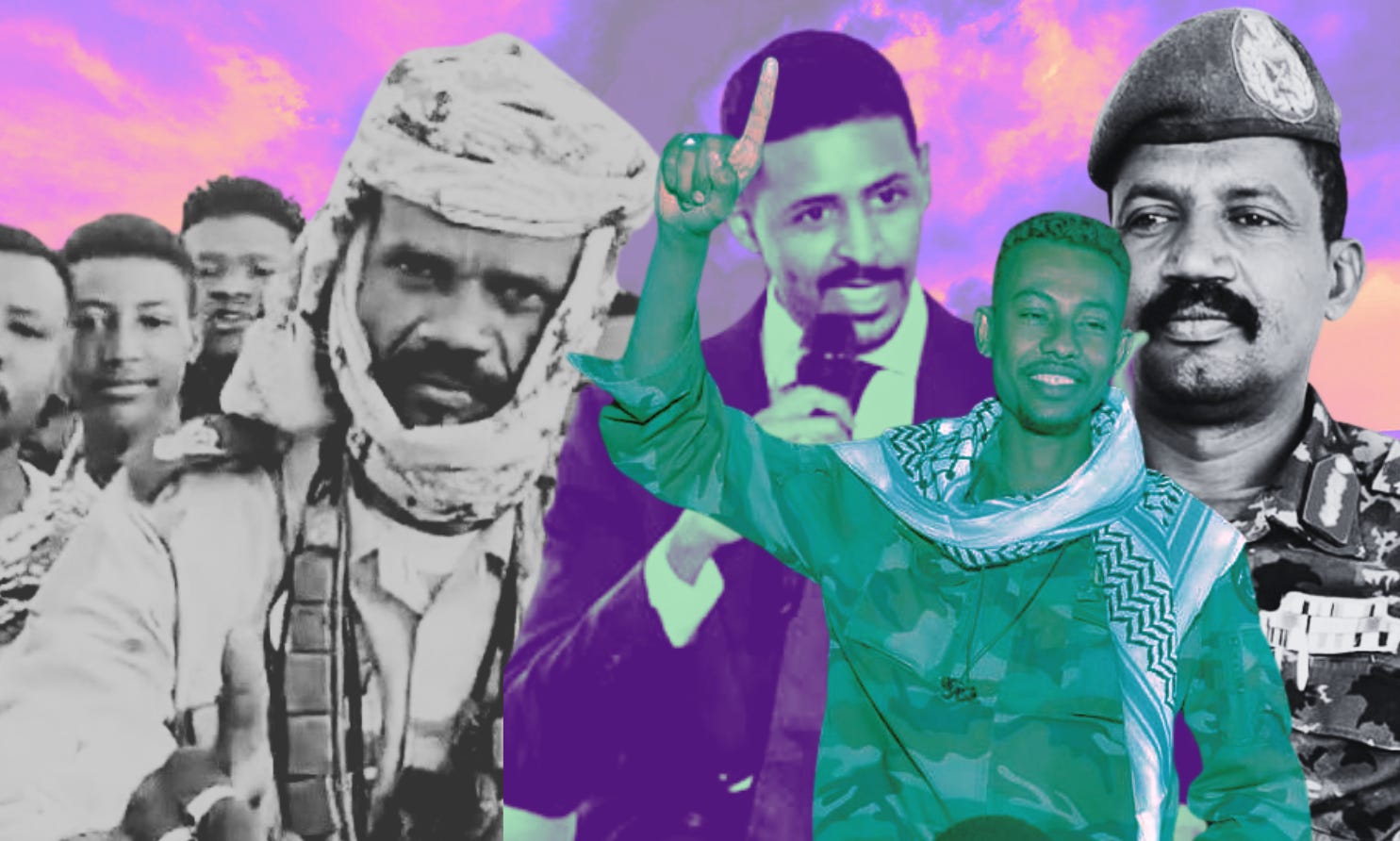
Western nations have ramped up punitive measures against Sudan’s warring parties, with the United Kingdom and European Union issuing consecutive rounds of sanctions targeting field commanders, financiers, and mercenary brokers accused of fueling the conflict.
The coordinated designations aim to dismantle the logistical and financial networks sustaining the Sudan Armed Forces (SAF) and Rapid Support Forces (RSF) as the conflict enters its third year.
Britain’s Foreign Office announced the blacklisting of six individuals on Thursday, a move coinciding with Foreign Secretary Yvette Cooper’s visit to the Chad-Sudan border where she witnessed the humanitarian fallout of the violence first-hand.
Among the notable targets are three Colombian nationals—Claudia Oliveros, Mateo Duque, and Alvaro Quijano—accused of orchestrating the recruitment of South American military veterans to fight for the RSF.
The UK list extends beyond combatants to financial enablers, designating Mustafa Ibrahim Abdel Nabi, director of al-Khaleej Bank, for allegedly facilitating the RSF’s war chest through illicit funding channels.
London stated these measures are designed to disrupt the “war machine” by targeting the supply chains of money and manpower that allow both sides to continue operations despite international condemnation.


On the battlefield level, the UK sanctioned RSF commander Hussein Barsham for mass atrocities in Darfur, while also targeting Abu Aqla Keikal, the military commander leading the SAF-allied Sudan Shield Forces.
Hussein Barsham is an ethnic Misseriya Arab who was previously sanctioned by the EU in July 2025 for mass atrocities before receiving today’s UK designation. He gained notoriety for capturing West Kordofan’s Baleela airport in October 2023—an event cited in a Sudan War Monitor war crimes investigation—and has survived multiple brushes with death, including a late 2025 drone strike in Lagawa that killed Major General Hashim Didan.
“The Secretary of State considers that there are reasonable grounds to suspect that Hussein Barsham is an involved person under the Sudan (Sanctions) (EU Exit) Regulations 2020 because he, as a Commander in the RSF, is or has been responsible for promoting the commission of serious violations of international humanitarian law in Sudan, and engaging in grave breaches such as targeted executions,” the UK government said in the sanctions listing.
Keikal, an ethnic Arab from the Butana region of Al-Jazirah State, is a pro-SAF militia commander who was previously allied with the RSF until October 2024. He is accused of directing abuses during a SAF advance in central Sudan in late 2024 and early 2025, a period in which we also documented violence against civilians in agricultural farmlands locally known as “Kanabi” in the lead up to the SAF capture of Al Jazirah State.
“The Secretary of State considers that there are reasonable grounds to suspect that Abu Aqla Mohamed Kaikal is an involved person under the Sudan (Sanctions) (EU Exit) Regulations 2020 because he is or has been responsible for, engaging in, providing support for, or promoting the commission of serious violations of international humanitarian law in Sudan, namely grave breaches such as violence against persons, specifically the Kanabi people, on the basis of their ethnicity or religious beliefs,” the listing said.
These British designations follow a similar move by the European Union on January 29, which sanctioned seven individuals linked to the warring factions, including Al-Goney Hamdan Dagalo, the younger brother of RSF leader Mohamed Hamdan Dagalo.
The EU also listed Abu Zaid Talha al-Misbah, commander of the Al-Baraa bin Malik Corps fighting alongside the army. The Baraa bin Malik Corps (formerly brigade) is a hardline Islamist paramilitary that has integrated into the SAF operations, serving as a key auxiliary force in high-intensity fronts. Al-Misbah’s designation by the European Union targets the army’s controversial reliance on ideological brigades linked to the former regime, with Brussels citing his “command responsibility” for grave violations of international humanitarian law.
The EU specifically accused al-Misbah’s forces of carrying out summary executions of civilians during operations in Khartoum North in September 2024 and in Gezira State in January 2025, atrocities that investigators say were committed with impunity as the brigade operated outside the formal military chain of command.
The diplomatic escalation comes as the UK assumes the presidency of the UN Security Council, seeking to leverage the sanctions to push for a ceasefire amid the world’s largest displacement crisis. Cooper described hearing “unimaginable violence” from refugees in Adre, emphasizing that while aid is crucial, there must be accountability for the rape, killing, and starvation used as weapons of war.
“At the Sudan-Chad border this week, I met women and children who have suffered unimaginable violence, and barely escaped with their lives. For their sake, and the millions of other civilians caught in the middle of this conflict, we urgently need a ceasefire, and safe access for humanitarian relief agencies to reach all those in need.”
“But we also need to ensure that there is a price to pay for the military commanders who have allowed these atrocities to take place, and the callous profiteers who have fuelled this conflict with the supply of mercenaries and weaponry.”
“Through these sanctions, we will seek to dismantle the war machine of those who perpetrate or profit from the brutal violence in Sudan, and we will send a message to every individual responsible for commanding these armies and committing these atrocities that they will one day be held to account,” the UK foreign minister said.
Western designations are moving from top-level political figures to mid-ranking operational commanders and external facilitators essential to the daily grind of the war. However, with many targets operating outside formal Western banking systems, the immediate impact on the ground remains uncertain as fighting continues to devastate large parts of Sudan.
Sudan War Monitor is an independent publication covering Sudan’s civil war through OSINT, reporting, Arabic-language sources, and political-military analysis. We publish maps, verified videos, news, and investigative reporting.
The Mercenary Connection
A novel component of the latest UK sanctions package is the focus on transnational mercenary networks, specifically highlighting the recruitment of South American fighters to bolster RSF ranks. Claudia Viviana Oliveros Forero, Mateo Andres Duque Botero, and Alvaro Andres Quijano Becerra were designated for their roles in recruiting former Colombian military personnel to train and fight for the paramilitary group.
This marks the first time Western powers have explicitly sanctioned individuals for facilitating the “Latin American pipeline” into Sudan’s civil war, a phenomenon that has drawn increasing scrutiny from intelligence agencies.
These designations aim to sever the link between the RSF’s gold-funded war chest and the global market for private military contractors, which has allowed the group to maintain technical proficiency despite heavy losses.
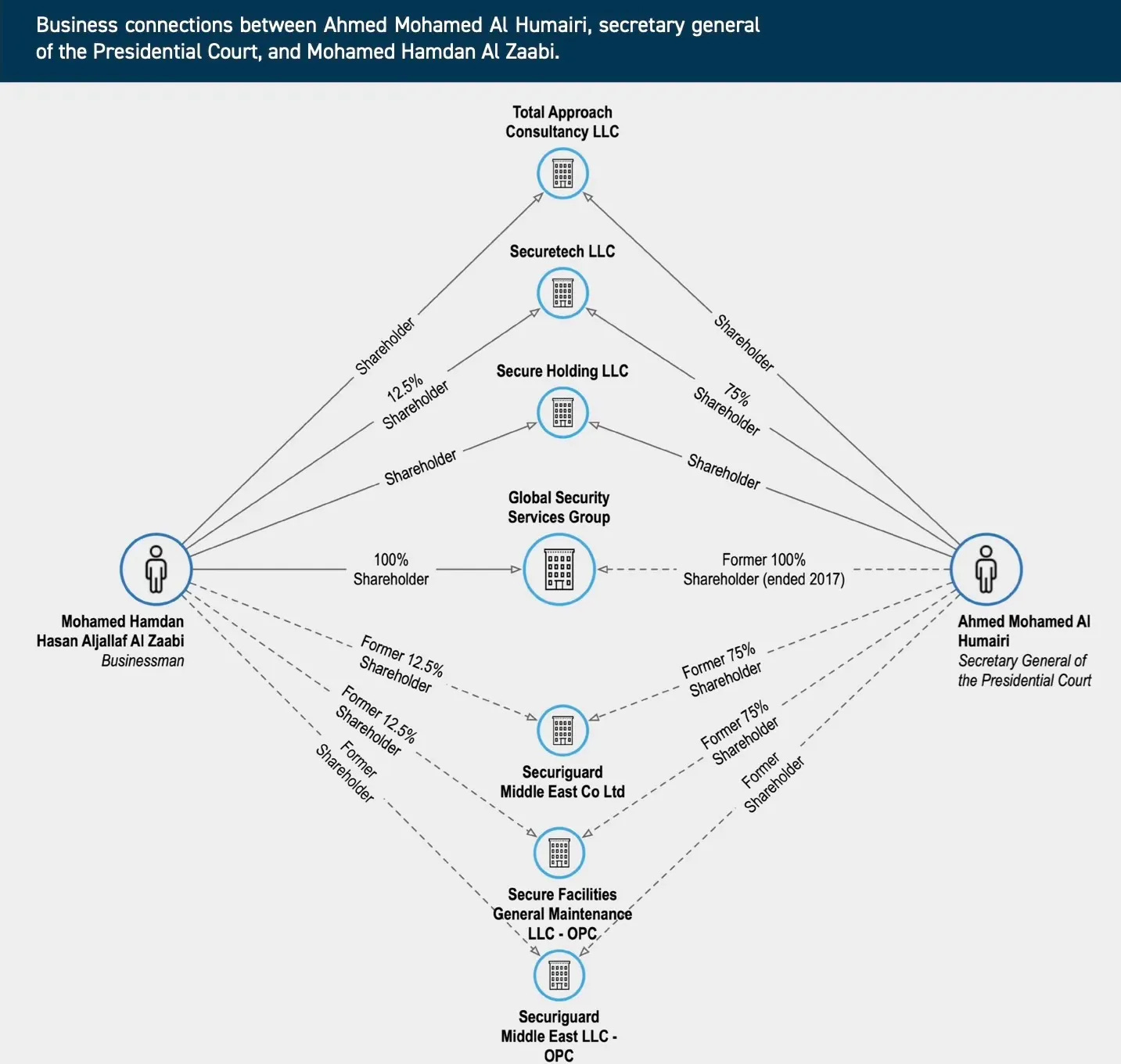
The Sentry, a non-profit research organization that tracks corruption, previously identified the network behind this recruitment in an investigative report published in late 2025, which exposed the role of Global Security Services Group (GSSG) in funneling South American fighters to the RSF.
The investigation established that one of the newly sanctioned individuals, former Colombian army officer Col. Alvaro Andres Quijano Becerra, acted as a key recruiter for GSSG, a firm with deep ties to the United Arab Emirates’ security apparatus. The UK’s decision to blacklist Quijano, alongside Claudia Oliveros and Mateo Duque, effectively confirms the existence of this “Latin American pipeline” that we reported was supplying technical expertise to the paramilitary forces at a critical juncture in the war.
According to the American research organization, the mercenaries were not merely foot soldiers but highly trained specialists who provided the RSF with advanced capabilities in drone warfare and combat medicine. The investigation documented how these recruits were rotated through UAE-controlled facilities in Puntland, Somalia, and trained in Abu Dhabi before being deployed to North Darfur.
Following these revelations, Colombia itself moved to restrict mercenary flows, enacting new legislation to discourage and penalize mercenarism.
The influx of Colombian mercenaries to Sudan occurred at least a year before the fall of El Fasher, providing the RSF with a tactical edge during the decisive siege of the state capital.
The Sentry investigation also traced the corporate ownership of the recruitment firm directly to the upper echelons of the Emirati government. Corporate records reviewed by Sudan War Monitor and The Sentry linked GSSG to Ahmed Mohamed Al Humairi, the Secretary-General of the UAE’s Presidential Court. While the UAE has officially denied involvement in the conflict, the sanctioning of these specific brokers by the British government signals a growing international recognition of the illicit supply chains that have allowed the RSF to sustain its military campaigns in Sudan.

